

Current job openings for excavator operators can be found in different areas, with requirements varying by location and project.
This guide will show how to search through Indeed, review typical pay and benefits, understand requirements, and present machinery and safety experience when applying.

4.8/5
Indeed: app to search job openings for excavator operators with fast hiring
The first thing you must know is that finding equipment operator work depends on location, recent postings, and how quickly you can respond when a suitable position appears.
For this situation, Indeed (iOS/Android) gives access to current listings from a phone, with filters that narrow the search by job title, location, pay, schedule, and other preferences.
Meanwhile, for job openings for excavator operators, users can search ‘excavator operator’ or related construction roles and then refine the results by city or ZIP code.
And then, Indeed (iOS/Android) also provides recommended jobs based on profile information and previous search activity.
The app supports resume uploads, applications from a saved resume, job alerts, employer messages, and application tracking.
Those features are useful when an employer is hiring quickly, since candidates respond to new listings and interview messages without waiting until they are back at a computer.
Step-by-step: how to find excavator operator jobs using the app
Indeed lets you narrow a broad job search by position, location, pay, and how recently an opening was posted.
For job openings for excavator operators, those filters are useful for separating active local opportunities from older or less relevant listings.
See how to search for job openings for excavator operators directly from the app:
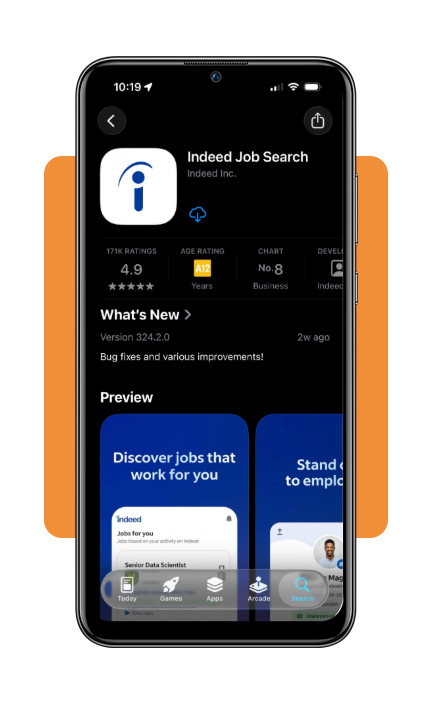
Step 1: open Indeed and start a job search
To begin with, download Indeed from the App Store or Play Store, open the app, and sign in to your account.
Step 2: search for excavator operator positions
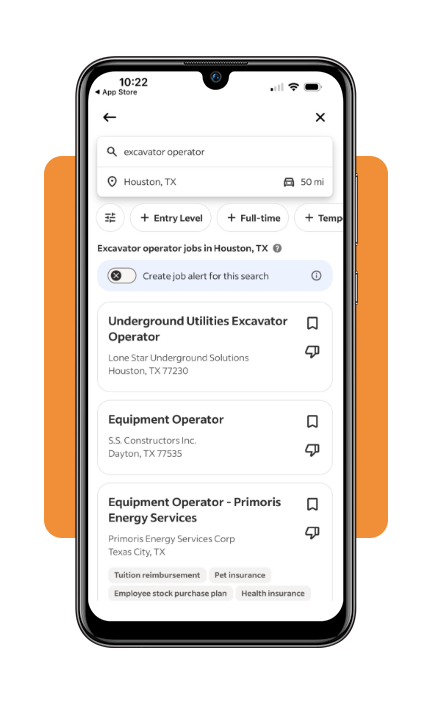
Once opened, tap the ‘Find jobs’ search field and enter ‘excavator operator’ as the job title or keyword. Then add the city, state, or ZIP code where you want to work.
Step 3: narrow the results with filters
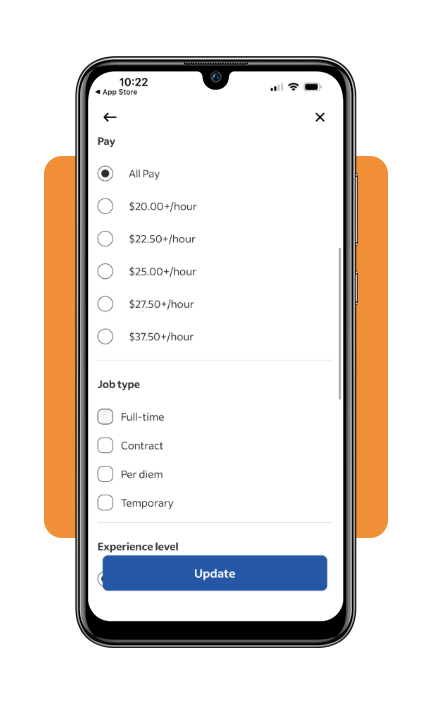
After tapping ‘Search,’ use the filters above the job listings to reduce the results. You can filter by salary, date posted, job type, distance, experience level, and other criteria.
Selecting a recent posting date can be particularly useful when the goal is to focus on openings that may still be actively recruiting.
Step 4: save or apply for the positions that fit
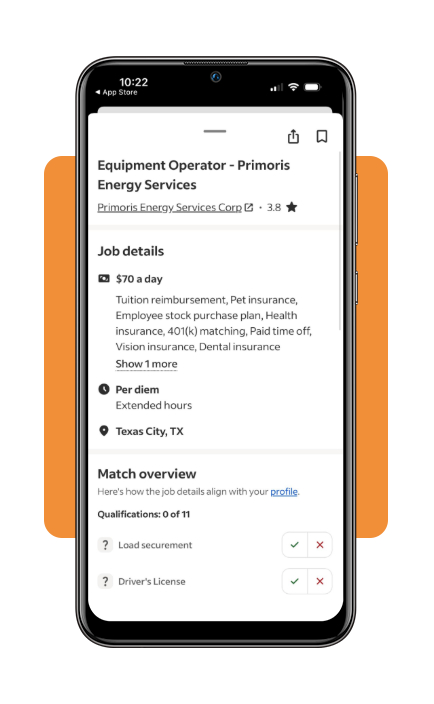
When you find a suitable opening, you can save it for later or start the application from the listing.
Average hourly pay, overtime, and benefits
As we previously mentioned, payment for excavator operators will vary considerably according to location, experience, equipment handled, and the type of construction project.
That makes the hourly rate only one part of the compensation package worth checking when comparing job openings for excavator operators.
In addition, overtime adds noticeably to weekly earnings in jobs with long shifts or demanding project schedules.
Nevertheless, benefits also differ by employer, but current listings commonly advertise health, dental and vision insurance, paid time off, retirement plans, and life insurance.
Excavator operator salary in the USA
Indeed (iOS/Android) currently reports an average base salary of $27.33 per hour for excavator operators in the United States, based on about 2,600 salaries from job postings.
Reported pay ranges from approximately $18.87 to $39.57 per hour, showing how much compensation can change between positions.
According to Indeed, some of the higher-paying cities currently include Columbus, Ohio, at about $33.81 per hour, Denver, Colorado, at $33.28, and Phoenix, Arizona, at $30.98.
Experience with specific machinery, utilities, grading, or larger construction projects can also affect the rates employers advertise.
Overtime deserves separate attention when reviewing an offer.
Under the Fair Labor Standards Act (FLSA), covered nonexempt employees generally receive at least 1.5 times their regular rate for hours worked beyond 40 in a workweek.
Additionally, state laws can provide additional protections, while extra pay simply for nights or weekends depends on the employer or employment agreement.
That is why two positions with similar base rates sometimes result in different overall compensation.
Required heavy equipment certifications and licenses
The good news is there is no single federal license required to work as an excavator operator in the United States.
Usually, these types of requirements depend on the employer, project, equipment involved, and any state or local rules.
In most cases employers are responsible for providing appropriate safety instruction and ensuring workers understand the hazards associated with the equipment they use.
Still, some job openings for excavator operators may ask for an OSHA 10 or OSHA 30 card. That’s important since these courses provide general workplace safety training.
A Commercial Driver’s License (CDL) may also be required when the job includes driving qualifying commercial vehicles or transporting equipment on public roads.
Practical training also strengthens a candidate’s preparation for building experience with different machines and job-site procedures.
Thankfully, Insiderbits has a heavy equipment training guide that explores options for developing these skills.
For that reason, applicants should check each listing for requirements related to previous equipment experience, safety training, OSHA cards, CDL credentials, or site-specific qualifications.
Machine types, site duties, and daily operations
If you still don’t know, some job openings for excavator operator jobs can involve much more than digging.
Depending on the project, operators work with standard excavators, mini excavators, backhoes, loaders, bulldozers, or other equipment used to prepare construction sites.
In addition, operators need to coordinate machine movements with ground crews.
When it comes to daily work, it includes inspecting the machine before operation, monitoring its condition during the shift, and reporting mechanical problems.
Additionally, basic cleaning and maintenance are also part of the position, depending on the employer.
Since duties vary between road construction, utilities, building projects, mining, and other worksites, applicants should read job descriptions carefully.
Experience with more than one type of heavy equipment can also expand the range of positions they are qualified to pursue.
Can a heavy equipment operator get a loan?
Solely working as a heavy equipment operator doesn’t prevent someone from qualifying for a loan.
When it comes to this, approval depends on the applicant’s financial profile rather than on the occupation itself.
It is common for lenders to consider income, existing debts, credit history, and the ability to handle the new monthly payment.
One common measure is the debt-to-income ratio (DTI), which compares monthly debt payments with gross monthly income.
For operators who regularly earn overtime or have variable schedules, the lender may also look at how stable and verifiable that income is.
Mortgage lenders, for example, are required to consider and document factors: income, employment, debts, and credit history when evaluating ability to repay.
So, whether the goal is a personal, auto, or home loan, having steady documented earnings and manageable existing debt can strengthen the application.
However, the exact requirements, interest rate, and amount available will still vary by lender and loan type.
Tips to highlight machinery experience and safety compliance
A strong application for job openings for excavator operators should show how long you have worked with heavy equipment and also what machines you can operate.
On your resume, mention equipment you have worked with, and describe some duties, including trenching, grading, land clearing, material handling, or utility work you have done.
Safety experience, like the OSHA training, site-safety courses, CDL credentials, or other relevant qualifications, plays an important part.
Whenever possible, add measurable details, such as years of experience, project types, machine sizes, or the environments where you worked.
This gives employers a clearer picture of your abilities than simply listing ‘heavy equipment operator’ as a previous position.
In the end, a resume that connects machinery knowledge with safe work practices makes it easier for employers to see how quickly you could adapt to the job site.
4.8/5
Take the next step toward an excavator operator job
Job openings for excavator operators can lead to solid opportunities in construction, infrastructure, utilities, and other industries that depend on heavy equipment.
Knowing how to search effectively, compare pay, and understand the required qualifications can help you focus on positions that fit your experience.
Machinery knowledge matters, but employers also look at safety training, licenses when required, and the ability to handle daily site responsibilities.
What truly matters is a clear resume that shows both operating experience and compliance with safety procedures can strengthen your application.
Enjoyed this article? Save Insiderbits to your favorites and discover the most useful tech tips.