

Preparing for your written driving test can feel intimidating when facing dozens of traffic laws, road signs, right-of-way rules, and safety regulations.
Whether you are a first-time teen driver getting a learner’s permit or an adult renewing your driver’s license, thorough preparation is key to passing on your first attempt. Read on Insiderbits.
Written driving test: find your state’s official guide
The best place to start preparing for your Written Driving Test is your state’s official driver’s handbook.
Published by state motor vehicle agencies, these guides cover the traffic laws, road signs, and licensing rules you may be tested on.
Pairing the handbook with regular practice questions and a consistent study routine can help you feel more prepared on exam day, though no study method can guarantee a passing score.
Because driving laws vary by state, relying on generic national study guides alone can leave you unfamiliar with rules that apply where you live.
Your state’s official driver’s manual focuses on local requirements, from parking regulations and traffic signals to specific road rules and licensing procedures.
For example, the California DMV Driver Handbook explains California’s traffic laws, including rules on cell phone use while driving, lane splitting, and parking restrictions.
Using the handbook for your state helps you focus on the information most relevant to your exam instead of studying rules that may not apply to your license.
Step-by-step: build a study plan from the handbook
Preparing for your Written Driving Test doesn’t mean memorizing an entire driver handbook in one sitting.
Breaking the material into shorter, focused study sessions over one to two weeks can make it easier to retain key rules, understand road signs, and feel more confident on test day.
Here’s a step-by-step plan to help you study at your own pace and get ready for the exam.
Step 1: download your state’s current official handbook
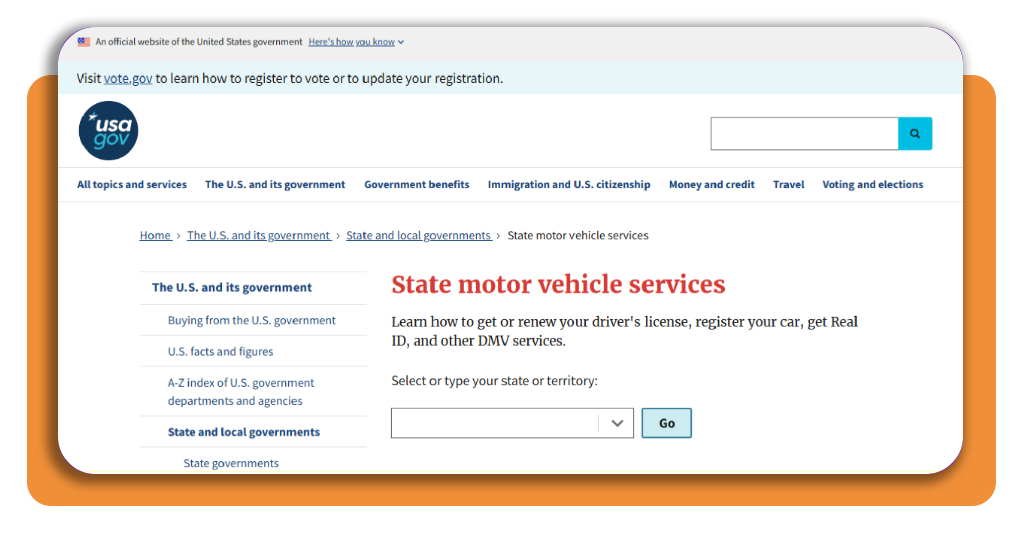
Visit your state’s motor vehicle website or use centralized government portals like USA.gov Motor Vehicle Services to obtain the latest edition of your state’s driver’s manual.
Step 2: divide the manual into reading sections
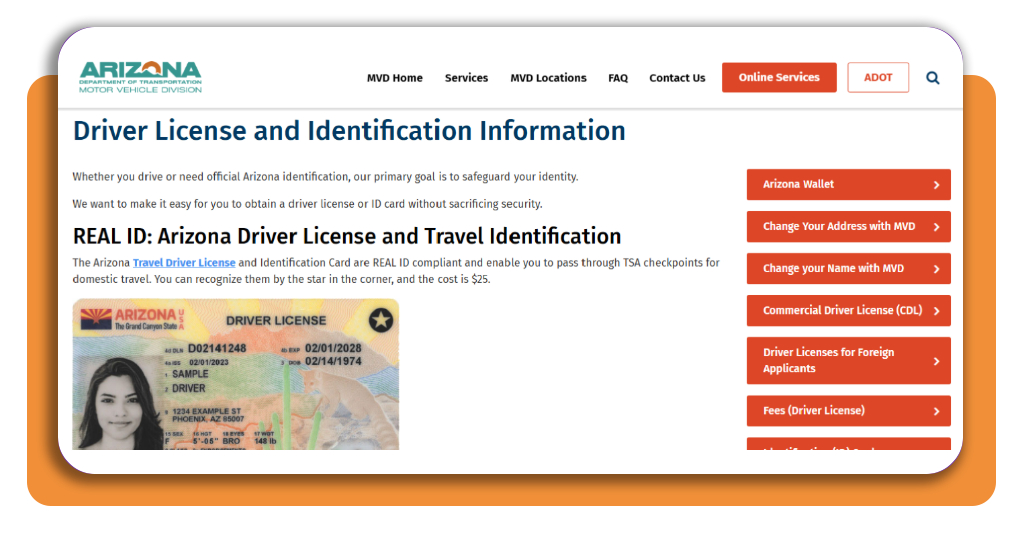
Chunk your studying into specific categories. Spend sessions learning road sign shapes and colors before moving into more complex intersection rules or parking distances.
Step 3: highlight key numbers, laws, and measurements
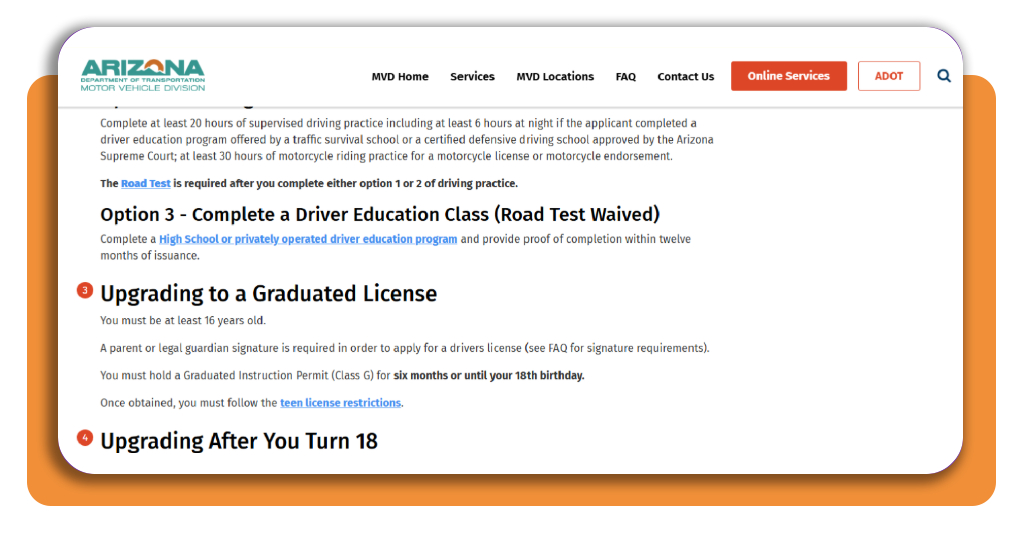
Written tests frequently assess exact numerical rules—such as stopping distances, parking feet from fire hydrants, and penalty fees. Write these figures down on flashcards for daily review.
Step 4: verify retention with state practice tests
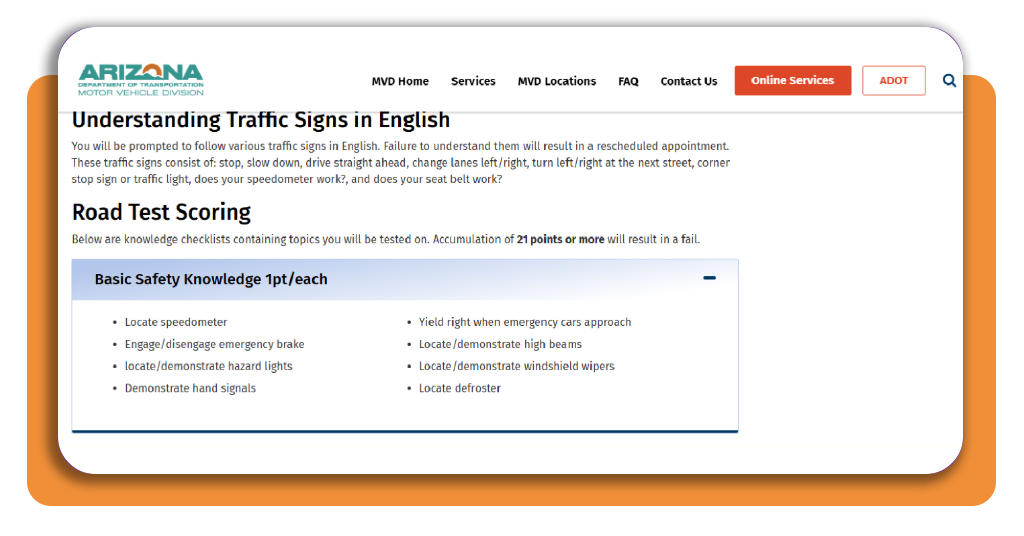
Take practice quizzes after completing each section. Review any incorrect answers directly in the handbook to reinforce key concepts before test day.
Review rules and check your progress with sample questions
Testing your knowledge with sample exam questions is an effective way to identify weak areas before sitting for the official test. Sample questions generally fall into three primary categories:
- Road sign recognition: identifies regulatory, warning, and guide signs by shape, color, and symbol (e.g., yield triangles, school zone pentagons, and construction orange signs);
- Right-of-way scenarios: tests who proceed first at uncontrolled intersections, 4-way stops, left turns against oncoming traffic, and roundabout entries;
- Safe driving adjustments: evaluates required headlights usage, hydroplaning recovery steps, maintaining safe following distances, and navigating school buses with extended stop arms.
Preparing for your Written Driving Test?
Explore our guide to the best driver’s license exam apps to discover useful study tools, practice tests, and digital flashcards that can help you review road rules and feel more confident before test day.
Where to access your state’s current official handbook
Accessing your state’s official driver’s manual is completely free through government channels:
- Official state DMV websites: every state motor vehicle agency provides direct PDF downloads or digital HTML reader views of their current driver’s handbook;
- USA.gov state portal: you can locate your specific state agency website using the official directory at USA.gov State Motor Vehicle Services;
- California DMV handbooks: if testing in California, download the official digital handbook directly from the California DMV Portal;
- Physical DMV office locations: many state branches provide printed hard copies of their driver’s handbooks free of charge or for a nominal fee at local customer service centers.
Keep studying and explore guided driving preparation
Studying your state’s official handbook builds the foundation for passing your written driving test, but combining your reading with guided preparation tools reinforces concepts and prepares you for real-world driving scenarios:
- Driver education video modules: platforms like YouTube host state-certified driving school channels (e.g., Smart Drive Test) that visually break down complex maneuvers, right-of-way scenarios, and parallel parking steps;
- Flashcard and audio study guides: tools like Quizlet feature user-generated and certified flashcard decks covering exact state speed limits, BAC thresholds, and fine schedules, allowing you to study on the go;
- Virtual driving simulators: free interactive web tools and mobile apps let you practice navigating 4-way stops, roundabouts, and hazard perception scenarios before you ever sit behind the wheel.
US written driving test stats: pass rates and effective study methods
Over 30 million Americans take a written driver’s license or permit knowledge test each year across all 50 states.
Data analyzed from state Department of Motor Vehicles (DMV) records shows that approximately 61.7% of applicants pass on their first attempt, while roughly 38% fail.
Pass rates vary significantly by jurisdiction—ranging from around 40% in stricter states like California and Oregon to over 70% in states with lower scoring thresholds like New York.
National first-try pass rate (~61.7%)
According to multi-year analyses of state DMV data, nearly 4 out of 10 test-takers fail their initial attempt due to underestimating state-specific traffic laws, parking distances, and zero-tolerance alcohol thresholds.
While 32 states enforce a standard 80% passing score (e.g., answering at least 20 out of 25 questions correctly), pass marks range from 70% in states like New York and Massachusetts up to 88% in Maryland.
Method 1: state DMV handbook reading
Candidates who read their state’s manual from cover to cover achieve significantly higher first-time pass rates, as all state exam questions are drafted strictly from official handbook text.
Method 2: active recall with practice quiz apps
Successful test-takers use state-specific mobile practice test apps to simulate real exam conditions, time constraints, and multi-choice question phrasing.
Method 3: target flashcards for numerical rules
Passing candidates dedicate specific study time to memorizing numerical variables—such as legal Blood Alcohol Concentration (BAC) limits, parking distances from fire hydrants, school bus stopping rules, and speed limits.
Build confidence behind the wheel
Start with your state’s official driver’s manual, then use practice apps, flashcards, and driving scenario videos to reinforce what you’ve learned.
These tools can help you prepare for the written exam while building a better understanding of road signs, traffic laws, and safe driving decisions.
The goal isn’t just to pass the test, but to develop the knowledge and habits you’ll rely on every time you get behind the wheel.