

Worried about a new symptom but unsure what it could mean? An AI symptom checker can help you organize your symptoms and understand possible explanations before speaking with a healthcare professional.
Ada uses AI, medical knowledge, and clinical evidence to assess the information you provide and generate a personalized report. Insiderbits explains how to use the app safely as a first step toward understanding your health.

4.9/5
Which is the best AI symptom checker app?
One option is Ada – Check Your Health (Android | iOS), a free app designed to help users assess symptoms and understand possible causes.
The platform uses probabilistic reasoning technology to analyze the symptoms and health information you provide. It then compares this information with a database of diseases and conditions to generate possible explanations.
Ada (Android | iOS) says its technology combines medical knowledge with intelligent technology and has been developed with input from medical experts.
The company currently reports more than 15 million users and more than 30 million completed symptom assessments.
However, an AI symptom checker should not be treated as a diagnostic tool.
Ada specifically states that it cannot provide a medical diagnosis and is not intended to replace a doctor or qualified healthcare professional.
Features available in the Ada – Check Your Health platform
The main feature is the symptom assessment, which asks questions about your symptoms and relevant health information.
The system then generates a report with possible causes and their likelihood based on the information provided.
Ada (Android | iOS) also provides access to a medical library with information about health conditions and symptoms.
The company says its medical content is based on clinical findings, epidemiological data, management guidelines, and peer-reviewed scientific publications.
Step-by-step: how to perform a symptom assessment
Using an AI symptom checker starts with providing accurate information about what you’re experiencing.
The assessment works through a series of questions before generating a report with possible explanations.
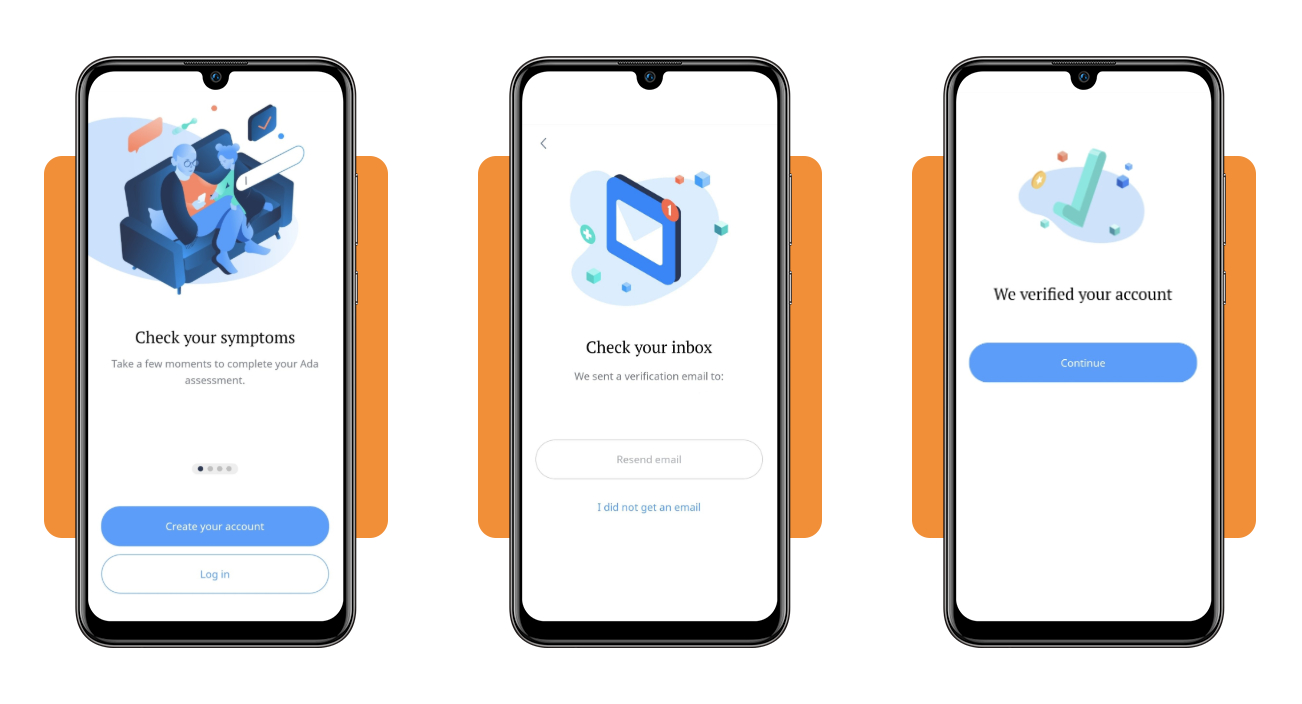
Step 1: create your Ada account
Start by creating an account on Ada (Android | iOS). Enter the required information and complete the registration process.
After signing up, check your email inbox for Ada’s verification email and follow the instructions to verify your email address.
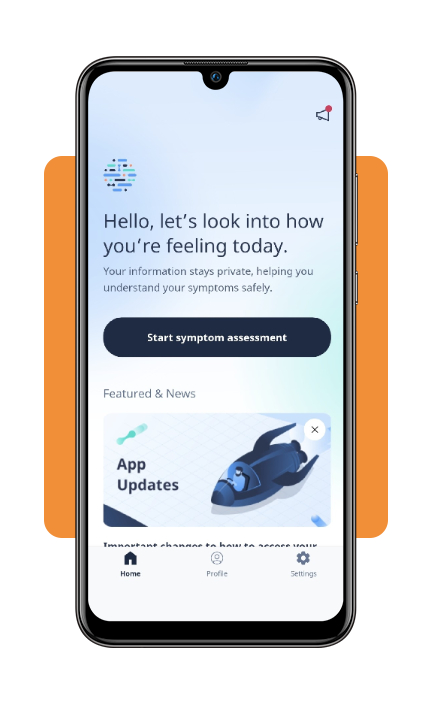
Step 2: start your symptom assessment
Once your account is verified, start the symptom assessment. Ada will ask you to enter the symptom that is bothering you most. Choose whichever symptom comes to mind first.
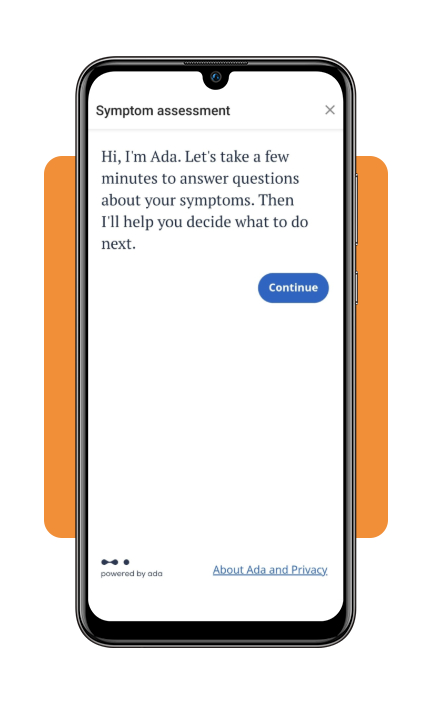
Step 3: answer the assessment questions
Ada (Android | iOS) will then ask you a series of questions about your symptoms. Answer each question as accurately as possible. Your answers will be used to generate your assessment report.
Step 4: open your assessment report
When you have completed all the questions, Ada (Android | iOS) will confirm that there are no more questions and give you the option to open your assessment report. Select ‘Open report’ to view your results.
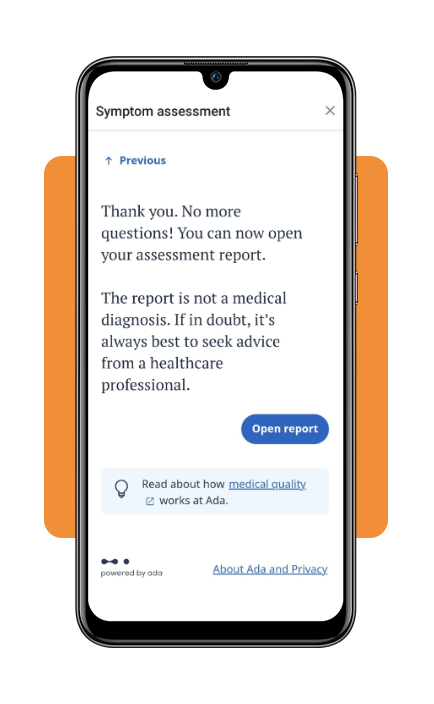
Ada (Android | iOS) notes that the assessment report is not a medical diagnosis. If you have concerns or are unsure about your symptoms, seek advice from a healthcare professional.
Telemedicine platforms for professional medical consultations
An AI symptom checker can help you organize information about your symptoms, but sometimes the next step is speaking directly with a healthcare professional.
Telemedicine platforms allow patients to consult healthcare professionals remotely through online or mobile services.
Depending on the platform and the type of service, patients may be able to schedule video consultations, communicate with providers, request prescriptions, or receive follow-up care.
GoodRx’s overview of telehealth services includes platforms such as Teladoc, Doctor On Demand, and MDLive. See the GoodRx guide to popular telehealth apps.
Another option is to compare telemedicine services based on availability, pricing, insurance coverage, specialties, and appointment times.
If you’re looking specifically for a way to connect with a healthcare professional remotely, check Insiderbits’ telemedicine app guide.
You can also explore additional telemedicine options through this guide to telemedicine apps.
Best apps for real-time health monitoring
Symptom assessment is only one part of digital health.
Other apps can help users monitor information such as physical activity, sleep, heart rate, nutrition, or other health-related measurements.
Health-tracking apps can be useful for identifying patterns that you can later discuss with a healthcare professional.
However, the type of information available depends on the app and the connected device.
Sonar Health’s overview of health-tracking apps includes options designed for different types of monitoring. Explore the best health-tracking apps.
When choosing a health-monitoring app, consider what information it tracks, whether it integrates with your devices, how your data is handled, and whether the information can be exported or shared with your healthcare provider.
4.9/5
Use AI as a starting point, not a diagnosis
An AI symptom checker can be useful when you don’t know how to organize what you’re experiencing.
Ada (Android | iOS) asks questions about your symptoms and health information, analyzes the answers using its medical reasoning technology, and provides possible explanations in a personalized report.
That can make it easier to understand what information may be relevant before speaking with a doctor. Still, the technology has clear limits.
Ada(Android | iOS) explicitly says its assessment is not intended to provide a diagnosis or replace professional medical advice.
If you have severe, rapidly worsening, or potentially life-threatening symptoms, do not wait for an app assessment. Seek urgent medical attention or contact your local emergency service.
For less urgent concerns, an AI symptom checker can be a convenient way to organize your symptoms and prepare questions for your next medical consultation.