
Local donations have become easier to organize thanks to apps that bring neighbors together around a simple idea: one person’s unwanted item can be another person’s lucky find.
These platforms make it possible to give away usable furniture, clothes, household essentials, and other everyday items directly to people nearby, all for free. Read on Insiderbits.

5/5
What is the best app for local donations to low-income families?
Buying household essentials, furniture, baby gear, and clothes can quickly stretch an already tight budget.
For low-income families, finding affordable resources and community support can make a real difference, especially when everyday expenses leave little room for unexpected needs.
That’s where local donations can help: instead of paying for items someone else no longer needs, neighbors can pass useful belongings directly to people who can put them to good use.
Unlike traditional resale marketplaces, The Freecycle Network™ is a nonprofit platform (iOS | Android) dedicated to giving away and finding used items for free.
It connects people through local, volunteer-moderated groups, with a focus on reuse and reducing waste. The idea is: one neighbor posts something they no longer need, and another gets the chance to give it a second life.
Through the official mobile app, members can browse nearby listings marked ‘OFFER’ or publish ‘WANTED’ posts when they’re looking for something specific.
No shopping cart, neither price negotiations—just a way to connect with people in the community and exchange usable items.
Key features within the Freecycle app
Freecycle (iOS | Android) makes local donations easier by giving community members a place to offer items, request things they need, and coordinate exchanges with people nearby. Its main features include:
- Local community groups: join a Town group connected to your area, where members can post items and requests. These groups are supported by volunteer moderators who help maintain community guidelines;
- Offer and Wanted posts: list usable items you no longer need with an “OFFER” post, or create a WANTED post to ask for something specific, such as a stroller, work clothes, or kitchenware. Someone nearby might have exactly what you’re looking for;
- In-app messaging: contact other members through Freecycle (iOS | Android) to discuss an item and arrange pickup details without having to share your phone number or email address in the listing;
- Notifications and alerts: keep track of new posts and items that match your interests, so you don’t have to refresh the app all day hoping that the perfect find will appear.
Step-by-step: how to look for items near your area
Finding local donations and free essentials near you can be as simple as opening an app on your phone and checking what people nearby are giving away.
From furniture and clothing to everyday household items, these platforms make it easier to discover useful finds without stretching your budget.
Step 1: download the app and join your local Town group
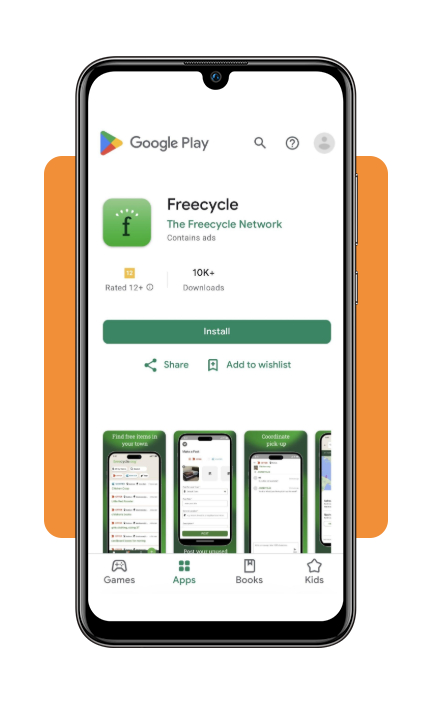
Download the app for iOS or Android. Log in or create a free account, then search for and join your specific city or neighborhood Town group.
Step 2: browse local OFFER posts
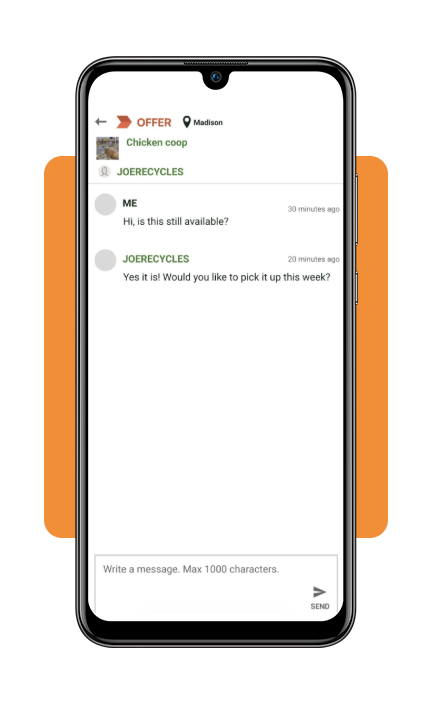
Open the main feed to scroll through available items.
Filter listings by proximity to minimize your travel time for pickup. When you find a needed item, tap “Reply” to message the member directly. State clearly when you are available to collect the item.
Step 3: post a WANTED request for specific needs
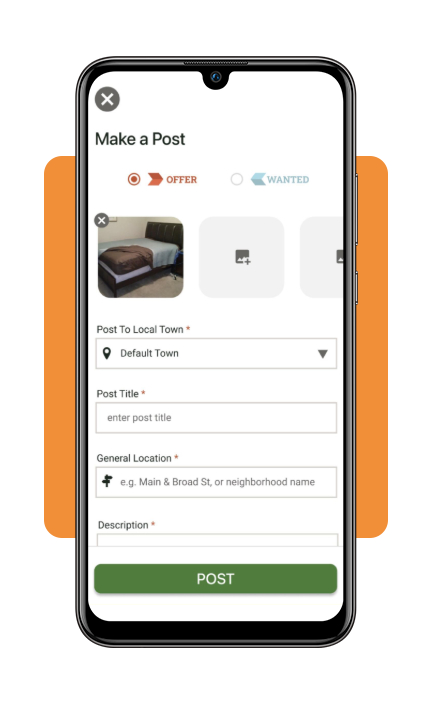
If you cannot find a needed item, tap the + button to create a “WANTED” post (e.g., ‘WANTED: Twin mattress’ or ‘WANTED: Toddler winter coat’).
Top community support programs in the US
Donation apps can help neighbors share useful items, but they are only one piece of the support network available to families facing financial hardship.
Across the US, government agencies and nonprofit organizations offer programs that help cover essentials such as food, housing-related expenses, and utility bills. Ahead, some resources worth knowing:
- Supplemental Nutrition Assistance Program (SNAP): provides monthly benefits through an Electronic Benefits Transfer (EBT) card, which eligible households can use to buy approved food items at participating retailers, including some farmers markets;
- Special Supplemental Nutrition Program for Women, Infants, and Children (WIC): offers nutrition assistance, breastfeeding support, and referrals to health and social services for eligible pregnant and postpartum women, infants, and children under age five. Benefits can include specific foods such as milk and infant formula;
- Temporary Assistance for Needy Families (TANF): provides temporary financial assistance and employment-related support to eligible families with children. Benefits and services vary by state;
- Low Income Home Energy Assistance Program (LIHEAP): helps eligible low-income households manage heating and cooling costs, address energy emergencies, and, in some cases, improve home energy efficiency;
- The Emergency Food Assistance Program (TEFAP): distributes USDA-purchased food to states, which work with local organizations such as food banks, food pantries, and soup kitchens to provide groceries and meals to people in need.
For a broader look at international poverty relief initiatives, nonprofit networks, and charitable organizations around the world, visit The Giving Block’s Poverty Charities Resource.
How to get discounts in local grocery stores
Keeping your grocery bill under control doesn’t mean giving up the foods you enjoy.
A few smart shopping habits can help stretch your household budget, reduce waste, and make each trip to the supermarket more worthwhile. Here are ways to save on your weekly grocery run:
- Leverage store loyalty programs: sign up for free digital store loyalty accounts at local supermarket chains to access exclusive digital coupons, member pricing, and gas rewards points;
- Shop discount grocery and surplus stores: purchase non-perishable goods, pantry items, and household paper products at salvage groceries, dollar stores, or discount chains;
- Double Up SNAP benefits: many local farmers markets participate in ‘Double Up Food Bucks’ programs, matching your EBT spending dollar-for-dollar on locally grown fresh fruits and vegetables;
- Check pharmacy and prescription savings: to lower healthcare expenses and free up food money, review our guide on how to get pharmacy discounts.
5/5
Strengthen your family’s safety net
A local donations app like Freecycle can help families find useful household items at no cost while giving perfectly good belongings a second life in the community.
Pairing these peer-to-peer exchanges with government assistance programs and practical grocery-saving habits can make everyday expenses more manageable.
No single resource solves every budget challenge, but knowing where to look and how to combine available support can help families make the most of what they have.