

Standing at the register while the cashier announces a $180 total for a single prescription hurts, but getting a pharmacy discount could trim that number before you reach for your credit card.
GoodRx compares prices at 70,000+ pharmacies, and in this guide, Insiderbits walks you through each step to lower your next refill bill and keep extra cash in your bank account.

4.8/5
Which is the best app to compare prescription prices and get pharmacy discounts?
GoodRx (Android | iOS) is a prescription savings platform that pulls medication prices and coupons into one place, showing you what pharmacies charge before you reach the counter.
Pharmacies a block apart can quote different prices for an identical prescription, so getting a pharmacy discount from this platform trims that cost before your card comes out.
GoodRx’s parent company reports $85B in savings across its coupons, and you can add your prescriptions to that total from a phone or computer by searching for what you need directly.
Key features within GoodRx
- Price comparison: type in your ZIP code to see what each nearby store charges for your prescription, with results from 70,000+ pharmacies across America;
- Pill tracker and reminders: log your medications and set alerts that nudge you at dose time, which keeps refills and routines on your radar;
- Drug guide: read plain language details about uses, dosage, and side effects for any drug without leaving the platform you use to check prices;
- Online care: book a virtual visit with a provider through ‘Care Direct’ and skip the waiting room for select health conditions and certain prescriptions.
Coupons that work with or without insurance
GoodRx (Android | iOS) doesn’t replace health insurance, and its coupons work whether you carry a plan or not, with savings on drugs at participating pharmacies.
The coupon page marks your purchase as self-pay, which means you compare it against your plan’s copay and pick the price that fits your budget.
Membership perks worth a look
GoodRx (Android | iOS) offers an optional paid ‘Companion’ membership that costs $9.99 for an individual plan or $16.99 for a family plan when you pay for the year up front.
The membership lists 250+ medications at no charge, and checking that list against your prescriptions tells you whether it turns your pharmacy discount into a $0 price tag.
Step-by-step: how to find medication deals in the app
Saving on a refill starts with details you know, like the name of your medication, the dose printed on the bottle, and the pharmacy on your usual route.
Treat each refill as a shopping trip that deserves a price check before you leave home, and GoodRx (Android | iOS) keeps the answers you need on screens built for that.
Once you know where each button lives, snagging a pharmacy discount becomes a routine you can repeat on every refill, from a monthly prescription to a short antibiotic course.
Step 1: download the app or use the website
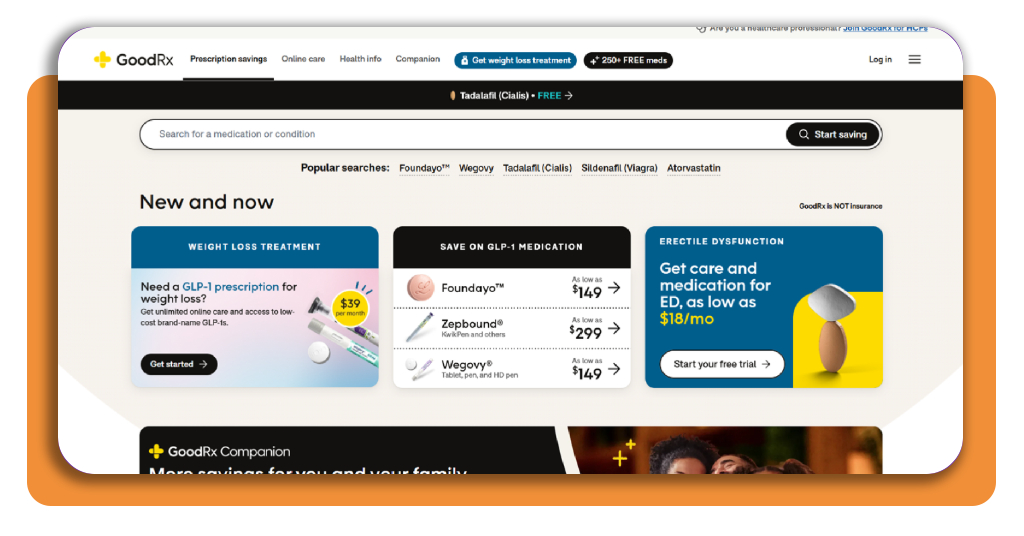
Search ‘GoodRx’ in the App Store or Google Play on your phone, then install the app and open it to reach the home screen with your first search.
If you’d rather skip the install, open the website in any browser on your phone or computer, where a search bar and a ‘Start saving’ button wait for you.
Step 2: create your account
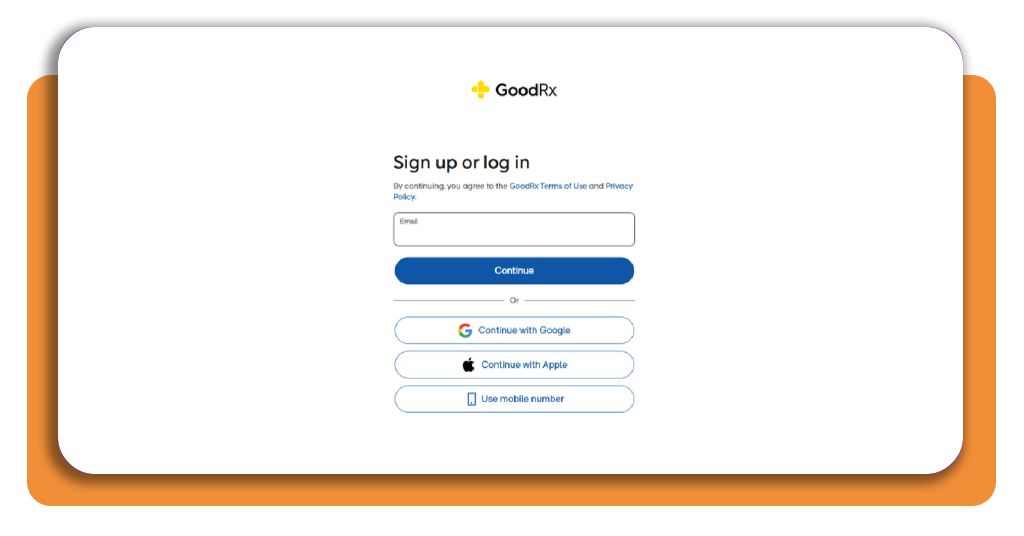
Choose ‘Sign up’, then enter your email address, Google account, Apple ID, or mobile number, picking whichever login you use most on your other apps.
Match your prescription when you enter your legal first name, last name, and birthdate; skip the optional ‘Earn rewards’ box and select ‘Maybe later’ on the membership pop-up.
Step 3: search for your medication and compare prices
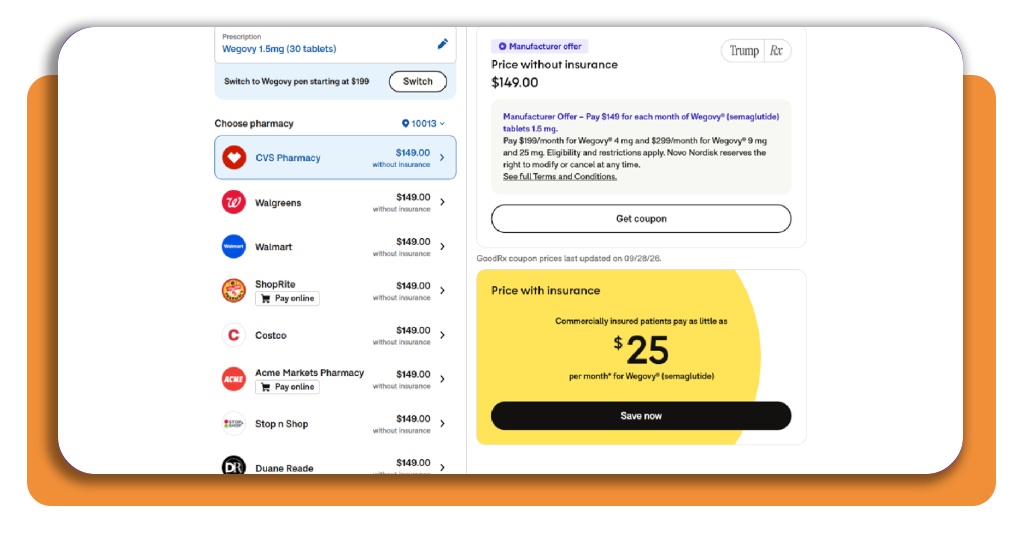
Type your medication into the search bar, choose the dose and quantity from your bottle, and the price page lists every pharmacy beside its cost for that fill.
Check the last updated date under the pharmacy list, compare the listed prices, and press ‘Get coupon’ beside the store where your pharmacy discount fits your monthly budget.
Step 4: show your coupon at the pharmacy
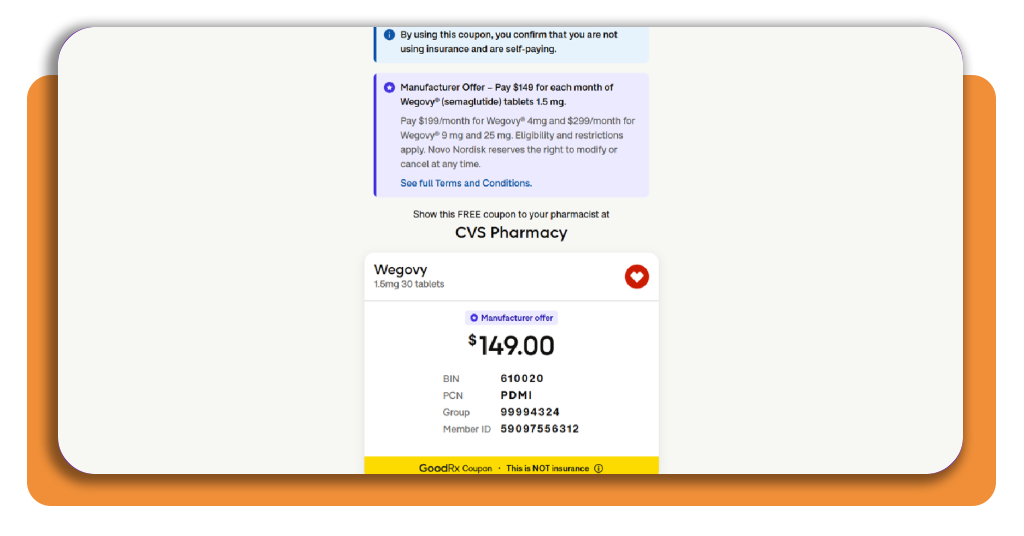
The coupon page lists a BIN, PCN, Group, and Member ID for your pharmacist, and you can print it or send it to your phone before you leave.
Hand the pharmacist your phone or printout at the counter, ask them to run those codes, and confirm the final total on the printed receipt as you pay.
Top health insurance providers
A coupon lowers what you pay for a refill, but a health plan covers the doctor visits, hospital stays, and emergencies that fall outside the pharmacy counter’s reach.
Kaiser Permanente, Aetna, and Blue Cross Blue Shield anchor the conversation whenever you shop for coverage, and each handles insurance in a way that shapes your household’s choice.
Whichever provider you choose, a pharmacy discount can still lower the cost of a medication your plan covers poorly, and you decide which route fits your household budget.
Kaiser Permanente combines coverage and care
Kaiser Permanente serves California, Colorado, Georgia, Washington, and the Mid-Atlantic states, and you need a home address inside one of those regions to enroll in its health plans.
Its member portal keeps your account within reach, while virtual visits, a phone line that answers around the clock, and an in-house pharmacy handle everyday needs.
Aetna plans for individuals and employers
Aetna extends its lineup to family, Medicare, Medicaid, dental and vision plans, giving you room to adjust your coverage as your household, budget and stage of life change.
The company runs a portal for managing your account, and its drug finder checks whether a medication falls under your plan at the pharmacy you use.
Blue Cross Blue Shield local company network
Blue Cross Blue Shield is a federation of independent companies, and the local one in your state handles your plan, plus the Federal Employee Program for federal workers.
BlueCard carries your plan to other states, Blue Distinction flags providers with strong records, and a pharmacy discount gives you another price to weigh against your refill copay.
How to lower monthly healthcare expenses
Healthcare bills reach your budget from several directions, from the premium deducted from your paycheck to the copay at the front desk and the refill at the pharmacy.
Regular sleep, movement, and checkups keep small problems from turning into expensive visits, which puts your habits on the savings list alongside the insurance decisions you make.
Lower expenses come from decisions you control, from the plan you select to a pharmacy discount on your refills, and each trims a different part of your bill.
Review your income and monthly expenses
Start by listing your take-home pay next to fixed bills like rent, groceries, utilities, and loan payments, which shows how much room your budget leaves for medical costs.
Kaiser Permanente reports that 2024 out-of-pocket costs averaged $1,368 for individuals and $6,296 for families, which works out to roughly $114 and $525 a month to set aside.
Match your premium to expected care
Frequent visits, ongoing treatment, or a planned procedure points you toward a premium with strong coverage, which limits what you owe at every appointment and prescription pickup.
A low premium with a large deductible trims your bill, though a big medical event can leave you paying most of it, while a pharmacy discount softens refills.
Choose generics and use cost estimators
Ask your doctor or pharmacist for the generic version of each prescription you take, which delivers the same active ingredient as the brand name for a modest cost.
Before you book a procedure or scan, open your insurer’s cost estimator, enter the service and your location, and compare the estimated prices between several providers near you.
4.8/5
Walk out with a lighter receipt
You now know that GoodRx (Android | iOS) shows a prescription price that changes from one store to the next, and a quick search on your phone can lower the total.
In this guide, Insiderbits showed you how to find a pharmacy discount for refills, read your insurance options, and trim your monthly medical bills with smart everyday habits.
Keep reading Insiderbits for more articles on discount apps and platforms that put extra cash back in your pocket, whether you shop for groceries, gas, travel, or medicine.