

Preparing for the Home Health Aide certification starts with understanding the requirements where you plan to work since HHA training and certification vary by state and employer.
For Medicare home health agencies, federal standards require formal training and competency evaluation, covering infection control, personal care, and patient safety.

4.9/5
What is the app to study for the Home Health Aide certification test?
In this guide, we will highlight Pocket Prep Medical (iOS/Android), a mobile study app for healthcare certification exams.
However, this app should not be presented as a direct HHA test-prep app.
Instead of that, it can serve as a broader medical-study tool if you are also preparing for certifications covered by the platform, like CCMA, CPT, or other listed healthcare exams.
For Home Health Aide certification, your primary study material should come from the training program or employer-approved curriculum tied to the HHA competency evaluation.
Still, Pocket Prep (iOS/Android) can be valuable for developing a regular study routine and reviewing weaker subjects in supported exams.
Key features within the Pocket Prep Medical
When it comes to the main features, Pocket Prep Medical (iOS/Android) includes quiz modes.
Those modes are: Quick 10, Timed Quiz, Missed Questions, Weakest Subject, Build Your Own Quiz, and Question of the Day.
Each practice question includes an explanation, which makes the app more focused on learning the reasoning behind an answer rather than simply memorizing responses.
Also, the app tracks study progress and supports features such as study streaks, exam-date countdowns, and subject-level settings.
Lastly, Basic Prep is free to try with a limited question bank, while Premium unlocks the full question set and additional quiz modes for exams that Pocket Prep actually supports.
Step-by-step: how to study for the HHA exam
There is no single national HHA exam, so your study plan should follow the requirements of the state, training program, or employer where you plan to work.
For Medicare-certified home health agencies, federal training standards cover topics such as communication, vital signs, infection control, patient safety, personal care, and reporting changes in a patient’s condition.
Step 1: download or access Pocket Prep
Firstly, download Pocket Prep (iOS/Android) or access the website to organize study material around the subjects included in the selected professional exam.
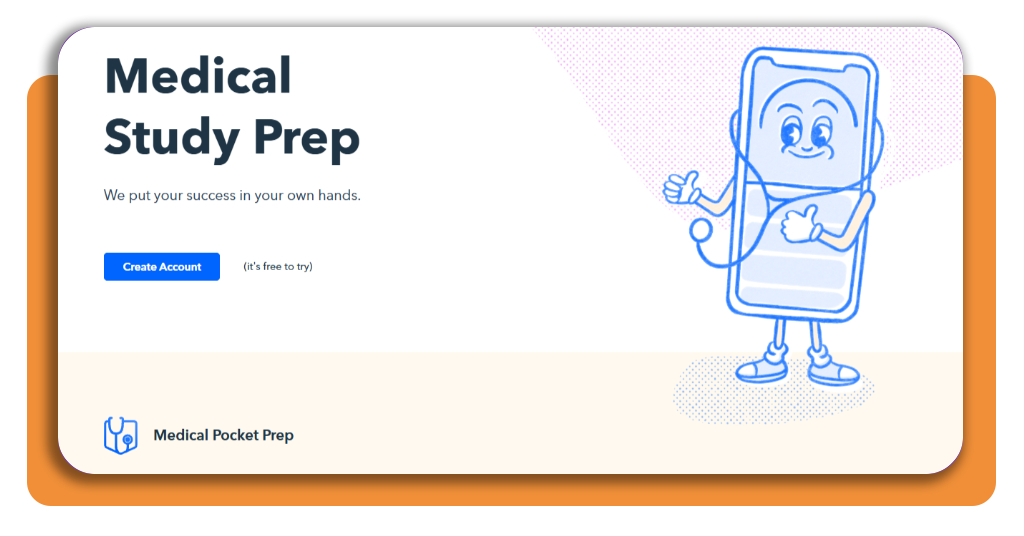
Step 2: study the core HHA subjects
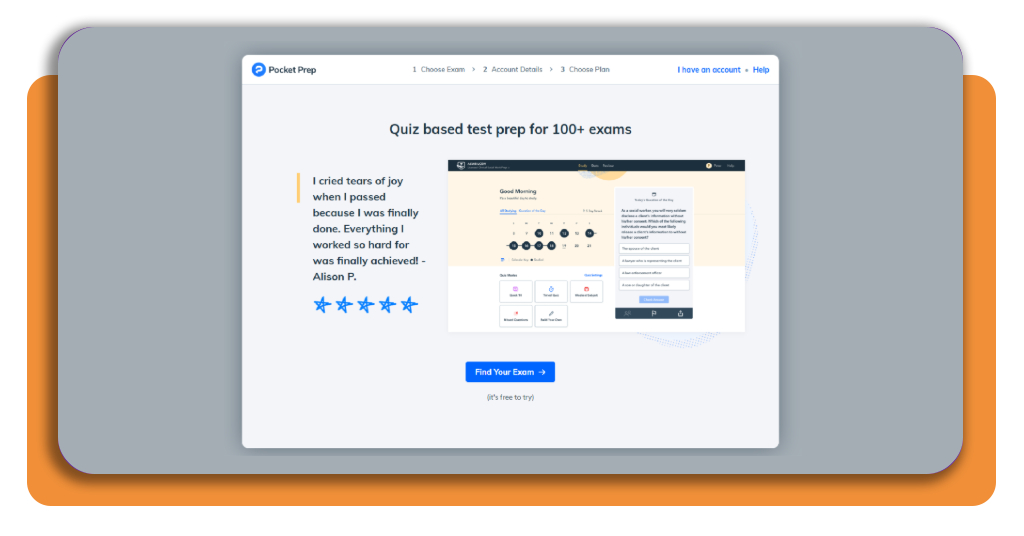
After clicking on ‘create account’, you will be directed to a page to find the exam that fits the Home Health Aide certification.
Step 3: practice questions and weak areas
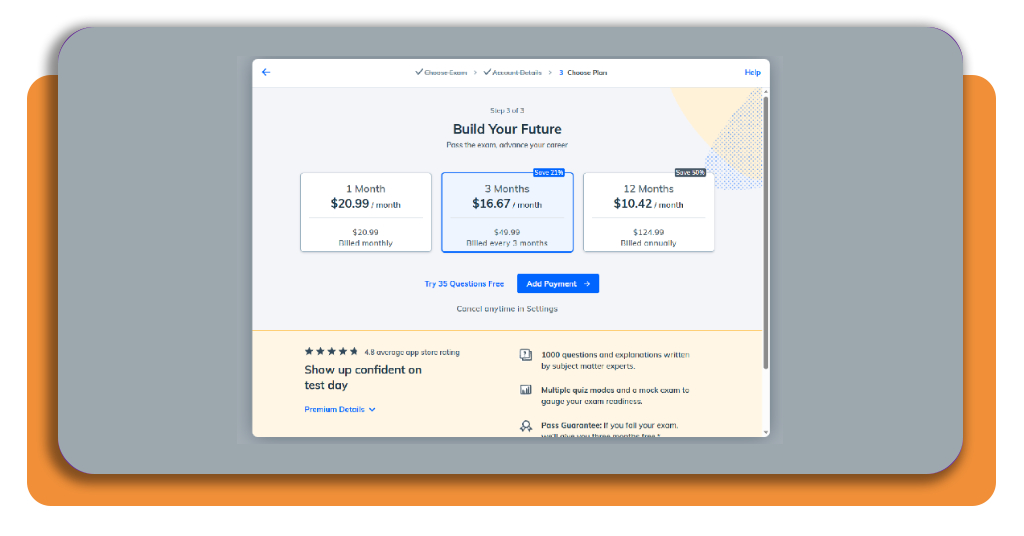
After that, you will need to choose a plan to use practice questions from your training provider and revisit topics you consistently miss.
Step 4: practice the hands-on skills
Don’t prepare only for written questions. HHA competency evaluation can also require you to demonstrate practical skills under supervision.
Top jobs for certified HHAs
Certified HHAs can work in several care settings, with home healthcare services being one of the most common.
In these roles, aides visit clients at home and help with personal care, daily activities, and basic health-related tasks under supervision.
Another option is working in assisted living or continuing care communities, where HHAs support older adults who need regular help but do not necessarily require hospital-level care.
Hospice care is another path, but certified home health usually requires formal training and competency testing, and aides work closely with nurses and other healthcare professionals.
In addition, people with Home Health Aide certification can find jobs in group homes and residential disability facilities depending on state requirements and the employer.
And for a broader overview of the role itself, ShiftMed explains what a Home Health Aide does, including common responsibilities and work settings.
How to boost your hourly wage as an HHA
One of the clearest ways to earn more as an HHA is to build experience and keep your Home Health Aide certification current for the jobs and facilities that require it.
If you are wondering about payment, it varies by setting.
In 2025, home health aides working in nursing and residential care facilities had a median hourly wage of about $17.88, compared with about $17.18 across the broader health care and social assistance sector.
Taking additional training can also expand the jobs you qualify for.
So skills related to dementia care, hospice, mobility support, or other specialized needs may make you more competitive for higher-responsibility roles.
Another option is comparing employers and staffing platforms instead of staying with one agency indefinitely.
Some services offer flexible shifts, weekly pay, and access to different facilities, although requirements and rates vary.
Finally, reliability matters. A strong attendance record and good references can put you in a better position to move into better-paying assignments as your experience grows.
4.9/5
Build a stronger future in home care
Earning Home Health Aide certification can open the door to jobs in home care, assisted living, hospice, and other support settings, depending on state and employer requirements.
Certification is only the starting point, though. Building experience and taking additional training can make you more competitive for better assignments and higher-paying roles.
If you are exploring other career paths as well, our Insiderbits guide to jobs for immigrants in the U.S. covers additional opportunities and ways to find work.
Focus on meeting the requirements where you live, practicing both written and hands-on skills, and treating each new role as a chance to strengthen your healthcare experience.
Enjoyed this article? Save Insiderbits to your favorites and discover the most useful tech tips.