

The simplest way to determine if you have a debt in collections is to review your credit reports on an Experian report.
Read below to learn how to check Experian (iOS/Android) for collection accounts and understand options such as settlement services and financial tools that support a broader debt recovery plan.

4.8/5
Which is the best app to check if you have a debt in collections?
The Experian app (iOS/Android) is the option we recommend for checking whether a debt in collections has been reported to your Experian credit file.
The app provides access to your Experian credit report and FICO Score, so you can review accounts directly from your phone without triggering a hard inquiry.
It is common for collection accounts to appear in the ‘Accounts’ section of the credit report with a collection status.
Depending on what the collection agency has reported, you may see the balance, the collection company, the original creditor, the date it was opened, and part of the account number.
Still, Experian (iOS/Android) should not be treated as a complete database of every debt you owe.
That’s because collection agencies are not required to report to all three major credit bureaus, and some accounts may not appear on Experian at all.
For a broader check, Experian recommends reviewing reports from Experian, Equifax, and TransUnion.
Last, it gives access to a detailed guide on how to find out what you have in collection.
After reading this article, you will know where collection accounts can appear and how to review the information reported about them.
Key features within the Experian mobile platform
The Experian app (iOS/Android) gives users ongoing access to their Experian credit report and FICO Score.
This way, it is possible to return later and see whether reported account information has changed.
Experian (iOS/Android) also provides alerts for changes or suspicious activity affecting the Experian credit file.
If you find a collection account you do not recognize or believe contains incorrect information, Experian also provides access to its dispute process.
Most of the time, accurate collection accounts remain on the credit report for seven years from the original delinquency, while inaccurate information can be disputed.
For someone trying to identify who is reporting a collection, the most useful part of the app is the credit report itself.
It lets you review reported collection accounts privately and the creditor and agency information needed to decide what to do next.
Step-by-step: how to check for debt in collections and view collection agencies
The Experian app (iOS/Android) gives you access to your Experian credit report, where reported collection accounts can appear alongside other credit accounts.
Because not every collection agency reports to Experian, this check should be treated as one part of a broader review of your credit reports.
Read this guide and learn how to check for debt in collections:
Step 1: open the free credit report section
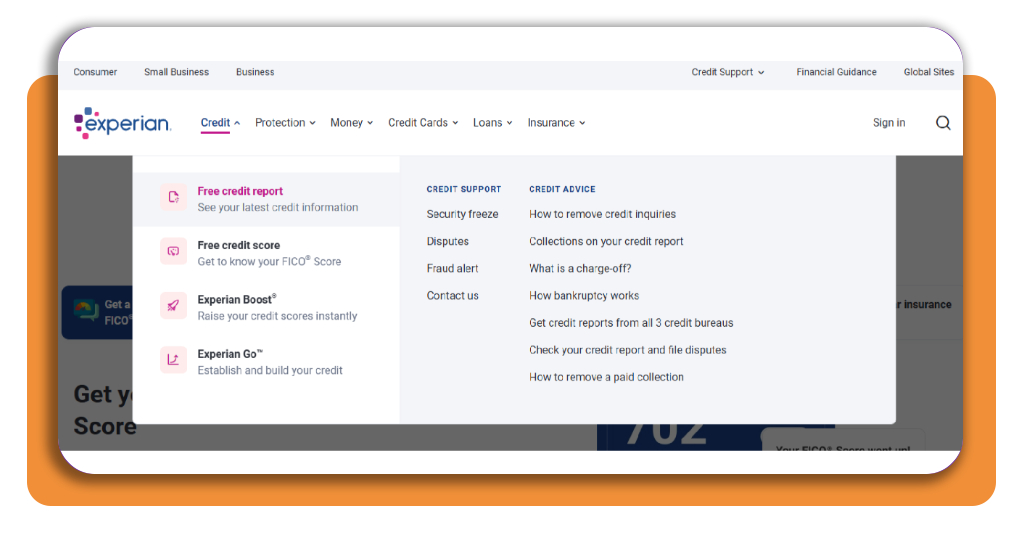
Go to Experian.com or download the app (iOS/Android), open the Credit menu, and select ‘Free credit report’. This takes you to the page where Experian provides access to your current credit information.
Step 2: access your Experian credit report
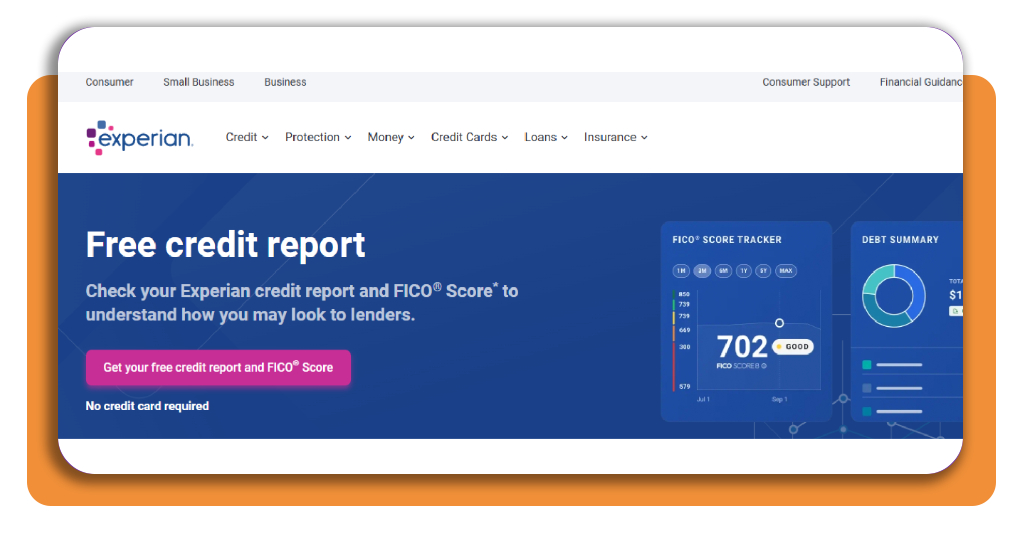
Now, select ‘Get your free credit report and FICO Score’ and sign in to your Experian account. If you do not have one yet, follow the registration process to create a free account.
Step 3: create your account
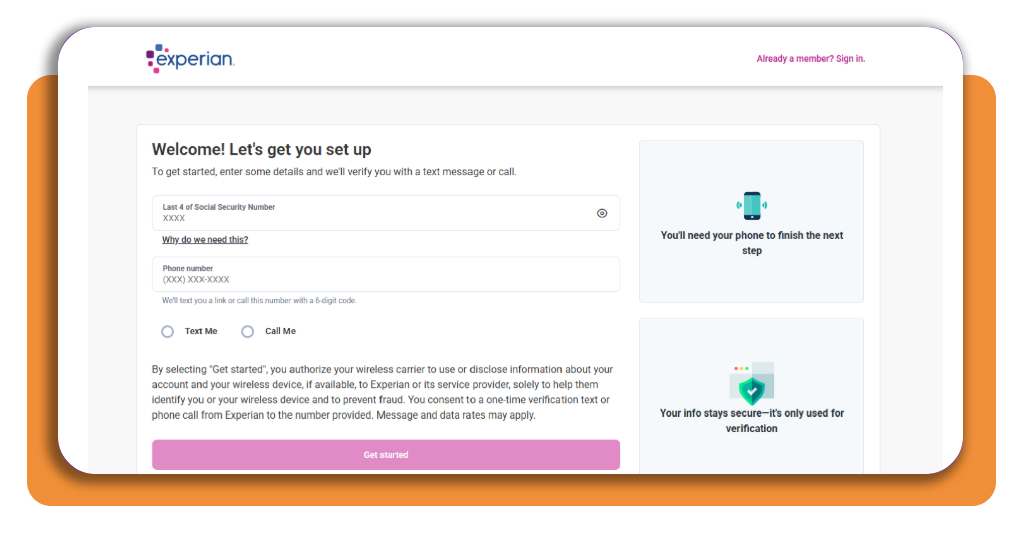
Now, create your account on Experian. The platform will need the last 4 numbers of your SSN and your phone number.
Step 4: open the collection account details
After creating your account, select a collection account to review its information.
The report will show details about the original creditor, current balance, account status, and amount originally owed, helping you identify where the debt came from.
Step 5: find the collection agency information
Finally, continue through the account details and look for Contact Information.
Experian personal credit reports can include the collection agency’s available contact details, although some accounts may provide only a mailing address.
Top debt settlement companies
If a debt in collections is valid and the balance is difficult to repay, a debt settlement company can negotiate with participating creditors in an attempt to reduce the amount owed.
These programs are made for unsecured debts, and most of the time, they involve substantial fees and credit consequences.
We used CNBC Select as a reference, and the platform reports that settlement fees commonly fall around 15% to 25% of enrolled debt.
National Debt Relief
National Debt Relief works with consumers who have at least $7,500 in eligible unsecured debt.
According to CNBC Select, its settlement fee ranges from 15% to 25% of enrolled debt, depending on the amount and the borrower’s state.
The company works with debts like credit cards, personal loans, and certain other unsecured accounts.
Clients deposit money into a dedicated account while National Debt Relief negotiates with creditors, and settlements are only completed when the client approves the proposed terms.
Accredited Debt Relief
Then, Accredited Debt Relief is another company included in CNBC Select’s 2026 comparison.
Its program focuses primarily on unsecured debt, and settlement fees generally range from 15% to 25% of the enrolled balance, varying by state and individual circumstances.
Accredited also provides financial education resources alongside its settlement services.
As with other debt settlement programs, creditors are not required to accept a proposed settlement, so enrolling does not guarantee that a collection balance will be reduced.
The first thing to do here is finding your debt history on your credit report.
Once you have verified the creditor and collection agency, you can compare settlement with a negotiated payment plan or other debt-management options.
Best high-yield savings accounts for debt recovery
In summary, a high-yield savings account will not resolve a debt in collections.
Still, in some cases it can be useful for building an emergency cushion or setting aside money for a negotiated payment or settlement.
The key is to keep those funds accessible while earning interest rather than leaving them in a low-yield account.
Live Oak Bank Personal Savings
Live Oak Bank currently offers a 4.00% APY on its Personal Savings account, with no minimum opening deposit or monthly maintenance fee.
Bankrate highlights it as an accessible online option for savers who want a competitive yield without maintaining a large balance.
That structure can work well when rebuilding finances after collections because smaller amounts can be transferred into a separate savings account over time.
One limitation is that Live Oak does not provide ATM access for this account, so withdrawals generally need to be transferred electronically.
EverBank Performance Savings
EverBank currently pays 3.90% APY on its savings account, with no minimum opening deposit, no minimum balance required to earn the stated APY, and no monthly maintenance fee.
Also, Bankrate notes that EverBank offers checking and other banking products for people who prefer keeping several accounts with the same institution.
4.8/5
Take control of collections before choosing your next move
We just showed that finding a debt in collections is the first step toward dealing with it.
Your credit report is the one that identifies the collection agency, original creditor, reported balance, and account status.
Then, a negotiated payment plan, or professional settlement, can have different costs and credit consequences, so building some savings gives you flexibility during that process.
If unemployment is making repayment harder, this guide to debt settlement for unemployed consumers with additional options to consider when regular income is limited.
Enjoyed this article? Save Insiderbits to your favorites and discover the most useful tech tips.