

Citizenship eligibility can mean different things depending on the path. For people living in the U.S., the common question is whether they meet the requirements to become a citizen through naturalization.
USCIS has a tool that supports that process, helping users assess whether they may qualify for U.S. citizenship based on permanent residence, time in the country, and other naturalization requirements.
Which is the best tool to check citizenship eligibility?
For people trying to understand whether U.S. citizenship eligibility is within reach, the USCIS Naturalization Eligibility Tool is the right place to start.
The platform is official by the American government, so it comes directly from the agency that handles the process.
In other words, the platform can assess whether they appear to meet the basic requirements to apply for naturalization. However, it focuses on the U.S. side of the question.
That said, it doesn’t determine if another country will allow you to keep an existing nationality or obtain citizenship there as well.
In that case, it should not be treated as a complete dual citizenship checker.
What USCIS Naturalization Eligibility Tool does is walk the user through core naturalization factors.
The platform looks at different requirements, like:
- Age;
- Permanent resident status;
- The amount of time spent as a permanent resident;
- Continuous residence;
- Physical presence and other conditions that apply to naturalization.
For most applicants, the rule is at least five years as a permanent resident, while certain spouses of U.S. citizens may qualify after three years, and military service follows separate rules.
In short, the platform gives an official way to check if the basic requirements appear to line up before moving on to Form N-400 and the rest of the citizenship eligibility process.
Key requirements for U.S. naturalization
First of all, we need to make it clear that citizenship eligibility is not based on a single qualification.
USCIS looks at several conditions together, but the requirements can change depending on the applicant’s path to citizenship.
For many applicants, the process starts with lawful permanent resident status.
As we mentioned, the standard route generally requires at least five years as a Green Card holder, while certain spouses of U.S. citizens may qualify after three years.
Residence is assessed in two different ways.
Continuous residence looks at whether the United States remained your primary home during the required period, while physical presence measures how much time you spent in the country.
Generally, USCIS requires applicants to be at least 18 years old when filing Form N-400 and to have lived for at least three months in the state or USCIS district connected to the application.
Another requirement is good moral character during the relevant statutory period.
So certain criminal offenses, false statements, tax problems, or other conduct, for example, could affect this part of the review.
Lastly, applicants must demonstrate basic English ability and pass a civics test covering U.S. government and history.
However, age, disability, and length of permanent residence create exceptions or modified requirements for some applicants.
The process ends with the applicant showing attachment to the principles of the U.S. Constitution and, if approved, taking the Oath of Allegiance.
Step-by-step guide: how to assess your eligibility via the website
The USCIS Naturalization Eligibility Tool is designed as an initial screening resource.
It will ask about circumstances that affect citizenship eligibility and helps you see if your situation appears to meet the basic requirements. Check how to do it:
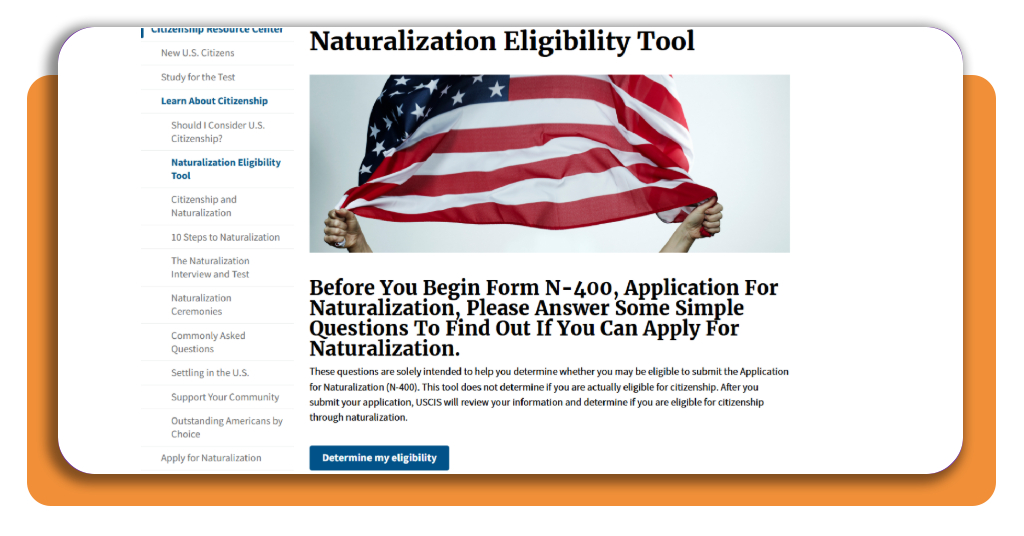
Step 1: open the USCIS eligibility tool
First of all, go to the USCIS Naturalization Eligibility Tool and click on ‘Determine my eligibility’.
Step 2: answer the questions about your status
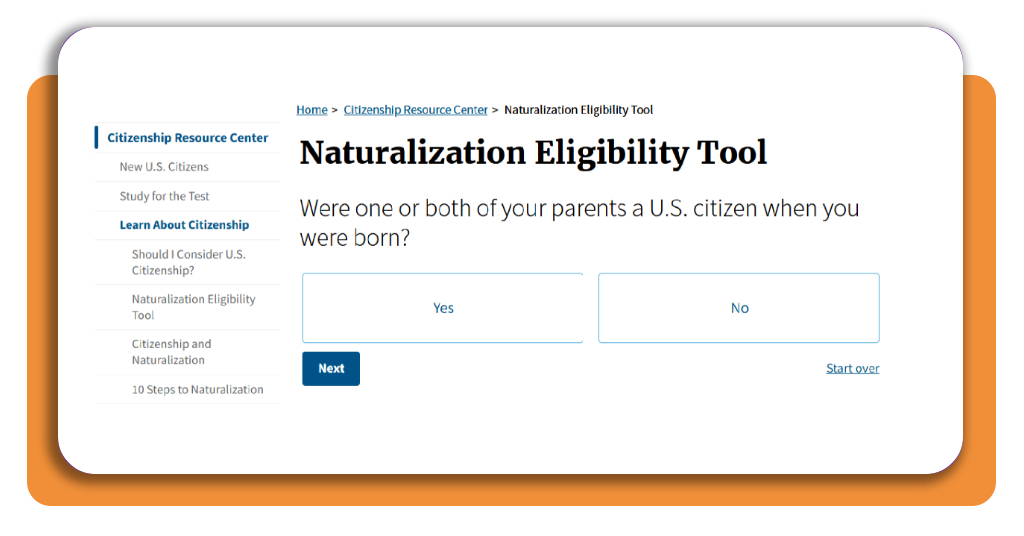
Work through the questions about your age, lawful permanent resident status, the naturalization path that applies to you, and more.
Your answers determine which requirements the tool presents next, so respond based on your actual immigration history.
Step 3: review residence and presence requirements
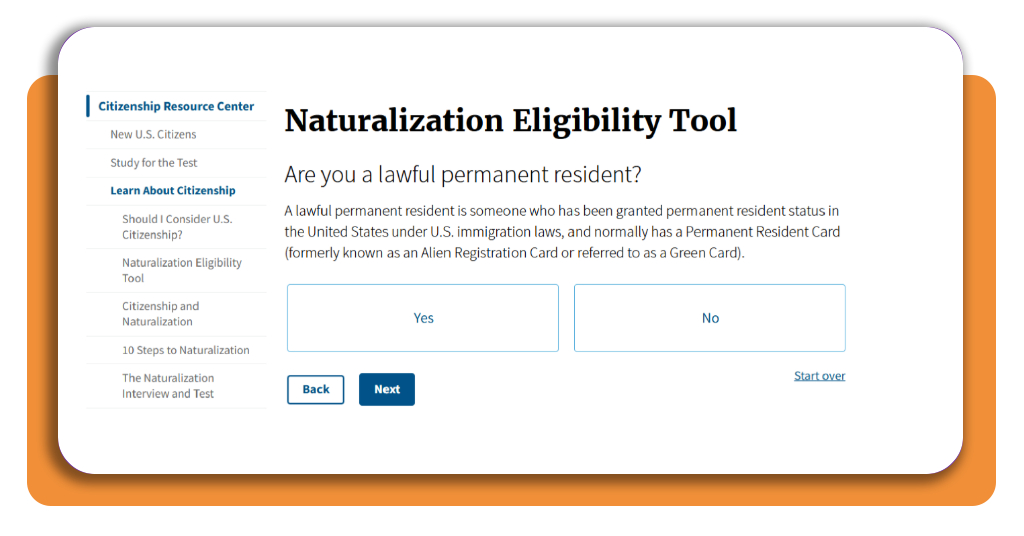
Continue through the questions related to how long you have held permanent resident status and how much time you have spent in the United States.
Step 4: read the result and follow the USCIS guidance
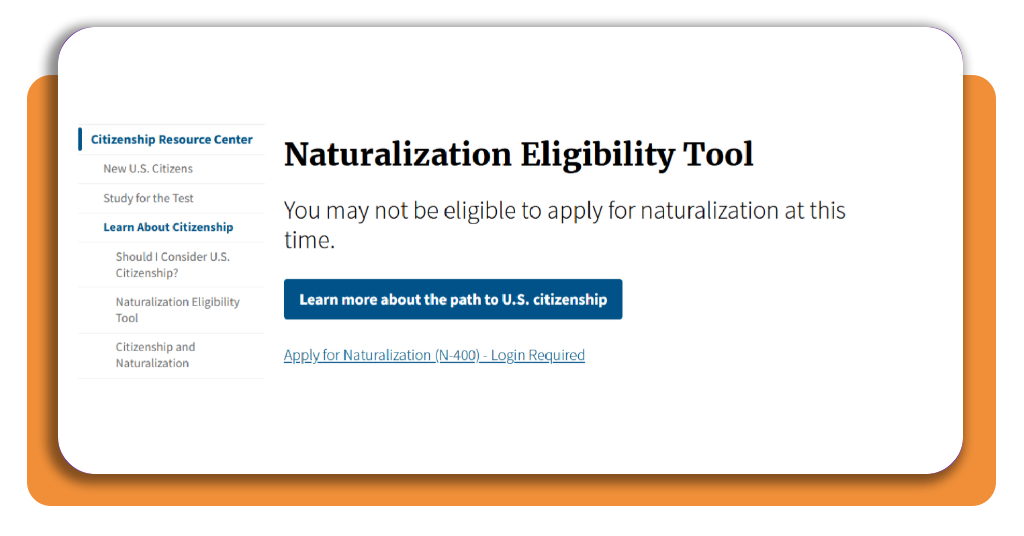
At the end, review the eligibility guidance generated from your answers. The result is an initial assessment, not an approval of citizenship or Form N-400.
If it indicates that you are eligible, use the USCIS instructions provided to review the filing requirements and determine the appropriate next step.
Top national immigration law firms
Legal help is more relevant when a naturalization case involves complications that an eligibility tool cannot resolve.
This may be the case when an applicant has long absences from the United States, prior immigration issues, criminal history, or uncertainty about how a specific rule applies.
For those situations, national immigration firms provide an individualized review.
Greenberg Traurig
Greenberg Traurig is ranked National Tier 1 in Immigration Law in the 2026 Best Law Firms listings.
Its immigration practice sits within a much larger national firm, which can matter for clients whose cases overlap with employment, business, tax, or other legal matters.
For an individual considering naturalization, the more important question is whether the specific attorney handling the case has experience with citizenship eligibility and nationality matters.
Jackson Lewis
Jackson Lewis also appears as National Tier 1 in Immigration Law for 2026.
The firm is widely structured around labor and employment matters, with immigration forming part of that broader practice.
That background may be important when immigration status and employment issues overlap.
Prospective clients should still confirm that the particular office and attorney handle naturalization cases for individuals.
How to submit citizenship petitions
For U.S. naturalization, the main filing is not technically a ‘citizenship petition.’
Most applicants submit Form N-400, Application for Naturalization, after confirming that they appear to meet the eligibility requirements.
The application can be prepared through USCIS, along with the supporting evidence required for your situation.
After USCIS accepts the filing, the next stages include a biometrics appointment, background checks, and a naturalization interview.
After that, during the interview, an officer reviews the N-400 and the applicant’s background, and most applicants also complete English and civics testing unless an exemption applies.
Preparing for that testing is separate from filing the application itself.
For that, Insiderbits has a U.S. citizenship test study guide that covers another part of the process for applicants who want to prepare for the English and civics requirements.
Then, if USCIS approves the case, the final step is the naturalization ceremony, where the applicant takes the Oath of Allegiance and then receives the Certificate of Naturalization.
Turn eligibility into a clear next step
Citizenship eligibility is easier to assess when the process can be broken into concrete requirements.
The USCIS tool helps anyone to see if your residence history, permanent resident status, and other circumstances appear to fit the basic naturalization rules.
From there, the important part is knowing what the platform doesn’t decide and it doesn’t replace USCIS review of Form N-400 and the supporting evidence.
If the initial assessment points in the right direction, the next steps are: confirm the filing requirements, prepare the application, and get ready for the interview, English, and civics stages that follow.
Enjoyed this article? Save Insiderbits to your favorites and discover the most useful tech tips.