

Medicare open enrollment runs from October 15 through December 7, giving beneficiaries an opportunity to review and change health or prescription drug coverage for next year.
Plans, premiums, drug coverage, and provider networks can change from year to year, so comparing your coverage with 2027 options prevents coverage changes in January.
What this yearly window is and who it is for?
Medicare open enrollment is the yearly period when people already enrolled in Medicare can review their coverage and make changes for the following year.
It is mainly for beneficiaries who want to switch between Original Medicare and Medicare Advantage.
Also, it is focused for people moving from one Medicare Advantage plan to another, or changing Part D prescription drug coverage.
However, this window is different from your Initial Enrollment Period, which is tied to when you first become eligible for Medicare.
And it is separate from Special Enrollment Periods that may apply after certain life events or coverage changes.
For current beneficiaries, the main reason to review coverage each year is that premiums, drug formularies, provider networks, deductibles, and other plan details can change.
That makes Medicare open enrollment relevant if your prescriptions, doctors, expected medical needs, or budget have changed since you last selected coverage.
Medicare open enrollment: dates and what you can change
If you don’t know yet, Medicare open enrollment runs from October 15 through December 7 each year.
And usually, changes made during this window take effect on January 1 of the following year.
As we mentioned during this period, you can switch from Original Medicare to a Medicare Advantage plan, move from Medicare Advantage back to Original Medicare, or change from one Medicare Advantage plan to another.
You can join, switch, or drop a Medicare Part D prescription drug plan as well if your medications, pharmacy network, premiums, or formulary have changed for the new year.
Still, the window doesn’t replace your first Medicare enrollment period or every Special Enrollment Period. Those follow separate rules and may apply at different times.
If you want more information on Medicare enrollment and eligibility, the Social Security Administration shows how Medicare enrollment works and which parts of the process SSA handles.
Step-by-step: how to compare plans on Medicare.gov
Medicare.gov has an official Plan Compare tool that lets you review Medicare Advantage and Part D options available in your area.
Use this platform to compare costs, drug coverage, providers, pharmacies, and plan ratings before making a change during Medicare open enrollment.
Step 1: open the Plan Compare tool
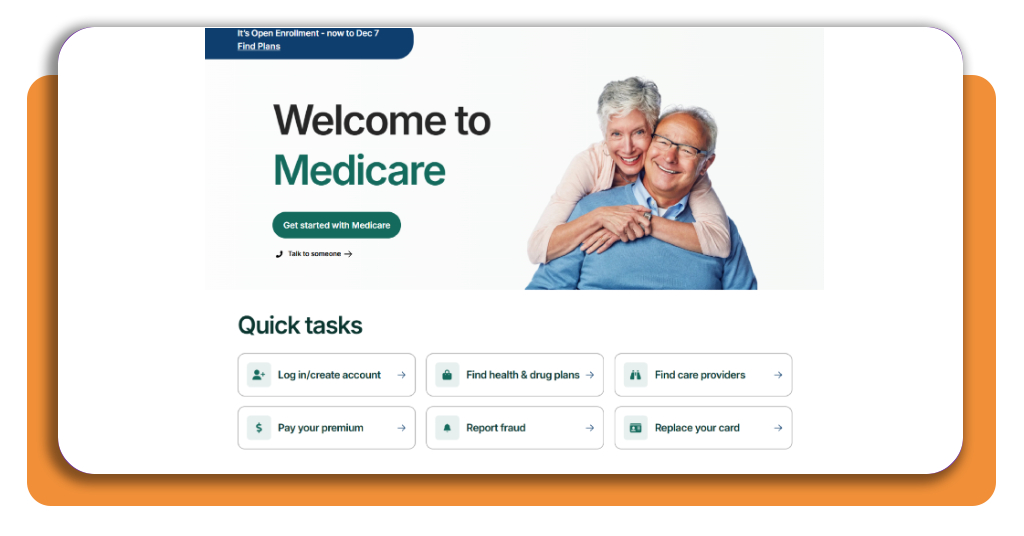
To begin with, go to Medicare.gov and select Find health & drug plans, or open the Plan Compare page directly.
You can search by ZIP Code, and logging into your Medicare account gives you more personalized results.
Step 2: enter your location and coverage details
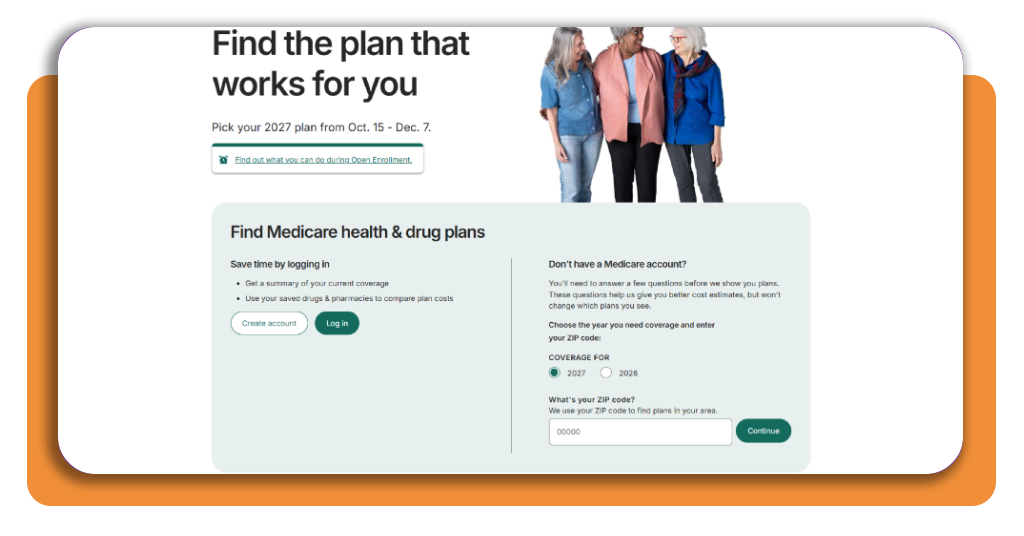
Enter your ZIP Code and answer the questions about the type of Medicare coverage you want to compare.
If you log in, you can also add your prescriptions and preferred pharmacies to improve the cost estimates shown for each plan.
Step 3: review and compare available plans
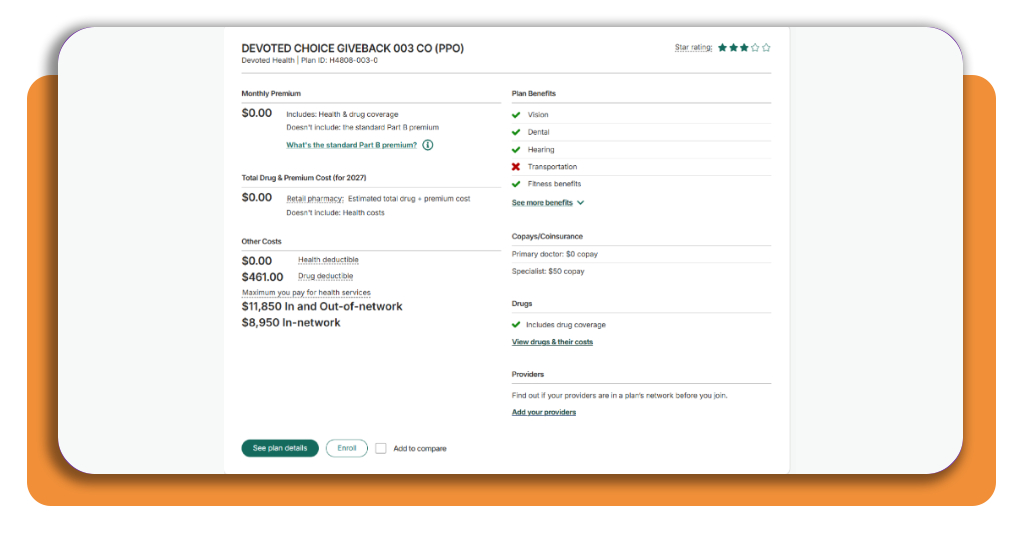
Look at premiums, deductibles, estimated yearly drug costs, provider networks, and plan ratings.
Step 4: check the plan details
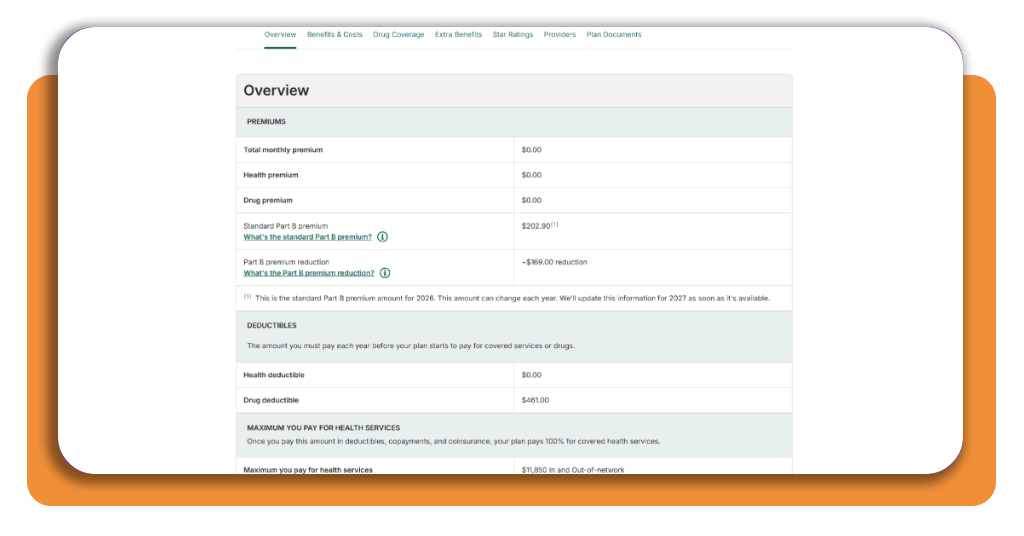
Open Plan Details for any option you are considering and confirm that your prescriptions, doctors, and pharmacies are covered.
If you decide to switch, Medicare.gov allows you to select ‘Enroll’ for eligible plans directly from Plan Compare.
What to check first: your drugs, doctors and costs
Start with your prescriptions. Add every medication you take regularly in Medicare Plan Compare and check if each plan covers it and which pharmacies offer the lowest cost.
That’s because Medicare says this gives a more accurate estimate of your monthly and yearly expenses.
Next, confirm that your doctors, hospitals, and pharmacies are in the plan’s network.
This plays an important role with Medicare Advantage plans, where going out of network may cost more or may not be covered except in limited situations.
Then compare the full cost, not just the monthly premium. Look at deductibles, copayments, coinsurance, and estimated annual out-of-pocket spending.
For 2027, Part D out-of-pocket costs for covered drugs are capped at $2,400, but your actual spending still depends on your prescriptions, pharmacy, plan, and drug tiers.
Finally, review your current plan’s Annual Notice of Change.
It explains what will be different next year, which makes it easier to decide during Medicare open enrollment whether staying put or switching plans better fits your needs.
What happens if you do nothing
If you take no action during Medicare open enrollment, your current coverage will continue into the next year, as long as the plan is still offered and you remain eligible.
That doesn’t mean the plan will stay exactly the same.
Premiums, deductibles, drug formularies, pharmacy networks, provider networks, and copayments can all change from one year to the next.
Your plan should send an Annual Notice of Change explaining what will be different.
Reviewing that notice is important even if you are generally satisfied with your current coverage.
In case your plan no longer covers an important prescription or your doctor leaves the network, doing nothing could result in higher costs or more limited access starting January 1.
So even if you plan to keep the same coverage, it is worth comparing your current plan with the new-year options before the December 7 deadline.
Use the enrollment window to avoid surprises
Medicare open enrollment is your chance to review what will change next year and decide if your current health and drug coverage still fits your needs.
Alongside comparing plans, you can read on this Insiderbits post some tools, like this AI symptom checker that organizes health questions.
Although they should never replace medical advice or determine which Medicare plan you choose.
Ultimately, check your prescriptions, doctors, pharmacies, and total costs before December 7, then make any changes you need so your 2027 coverage starts on January 1.
Enjoyed this article? Save Insiderbits to your favorites and discover the most useful tech tips.