

Somewhere in the country a state office or federal agency could be holding unclaimed money with your name on it, from an old bank account or a pension tied to a job you left behind.
In this guide, Insiderbits takes you through USA.gov and the databases it links to, helping you turn a five-minute online search into extra cash you can put toward a bill or savings goal.
Where to search for unclaimed money in your name
USA.gov, the federal government’s official portal, keeps a page that rounds up the state and federal databases where a company or agency might be holding money that belongs to you.
The page describes unclaimed money as cash a company or government agency owes you that never reached your hands, then points you toward search tools that cost nothing to use.
If you’ve moved around or changed jobs over the years, the website gives you one trusted starting point to work from before you open any individual search database.
State governments hold most of the forgotten money
Most of the forgotten cash in the country ends up with state governments, often coming from dormant bank accounts and insurance policies, plus refunds that state agencies never paid out.
Your state runs its own unclaimed property office, and its database is the best place to begin if you’ve stayed in the same state for most of your adult life.
Expect to check more than one database
No one website pulls together all the sources of forgotten funds, so plan on running several searches across government agencies before you decide there’s nothing waiting for you.
Keeping a running list of the databases you’ve searched, along with the date and any results, saves you from repeating work when you come back for another round.
Federal agencies may be holding your money too
Some unclaimed money stays at the federal level, like life insurance the VA owes to veterans or refunds HUD owes to homeowners who had a mortgage insured by the FHA.
The SEC also returns money to investors tied to its enforcement cases, and the federal courts keep a locator for funds left over after a person or business filed for bankruptcy.
Step-by-step: how to search state records and check possible matches
The search starts on a federal page and moves on to state and agency sites, and you can finish it from your phone or laptop without creating an account.
Keep your former addresses and any past last names handy, as state forms search by name and a city or ZIP code helps you spot listings tied to your history.
Try your name with and without a middle initial, plus common misspellings, and you’ll catch unclaimed money that a typo on an old account kept out of a basic name search.
Step 1: open the official unclaimed money page
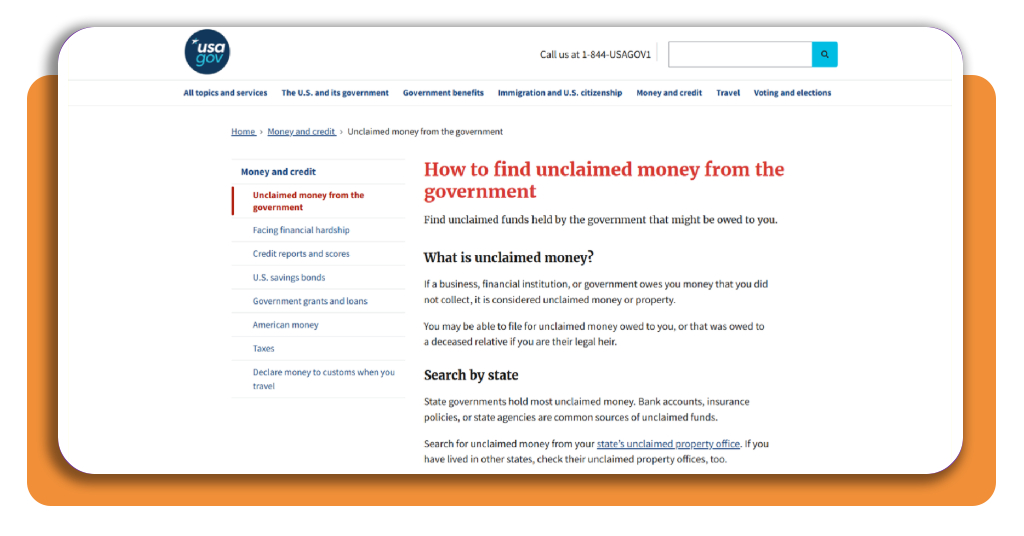
Go to USA.gov on your phone or laptop, type ‘unclaimed funds’ into the search box at the top, and open the result about finding money the government holds for you.
Skip past the short definition at the top until you reach the ‘Search by state’ section, where a link to your state’s unclaimed property office appears in the text.
Step 2: follow the link to your state’s office
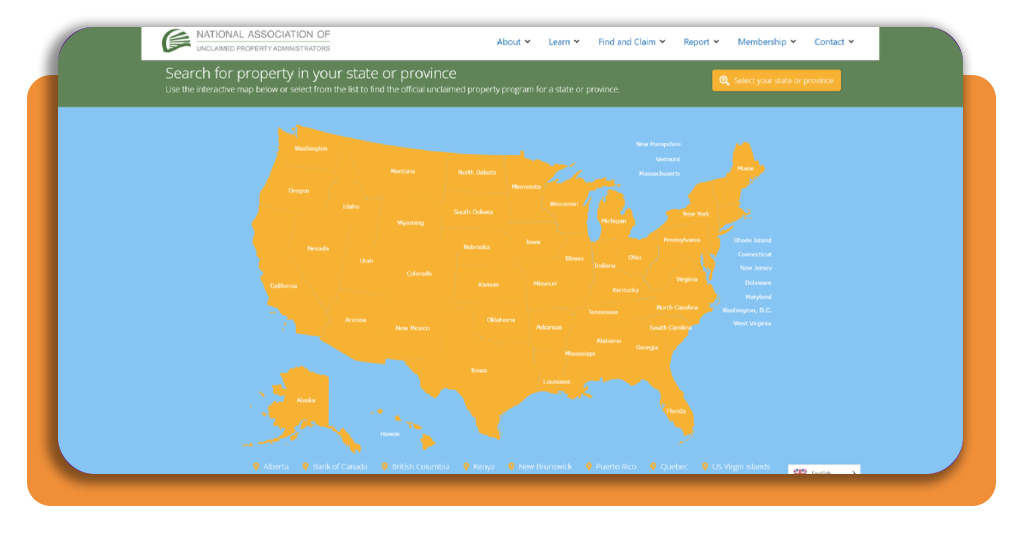
Clicking the link leads you to the website of the National Association of Unclaimed Property Administrators, giving you access to the official search program for any state.
Scroll down to the section for finding property in your state, pick your current state from the map or list, and type your name on the search page that opens.
Step 3: repeat the search for past states
Return to the state list and choose a place where you used to live or work, because a company reports unclaimed money to the state tied to your last known address.
Run the same name variations you tried at home, and note which states turn up results so you know which offices to contact when you’re ready to file a claim.
Step 4: scan the federal databases that fit you
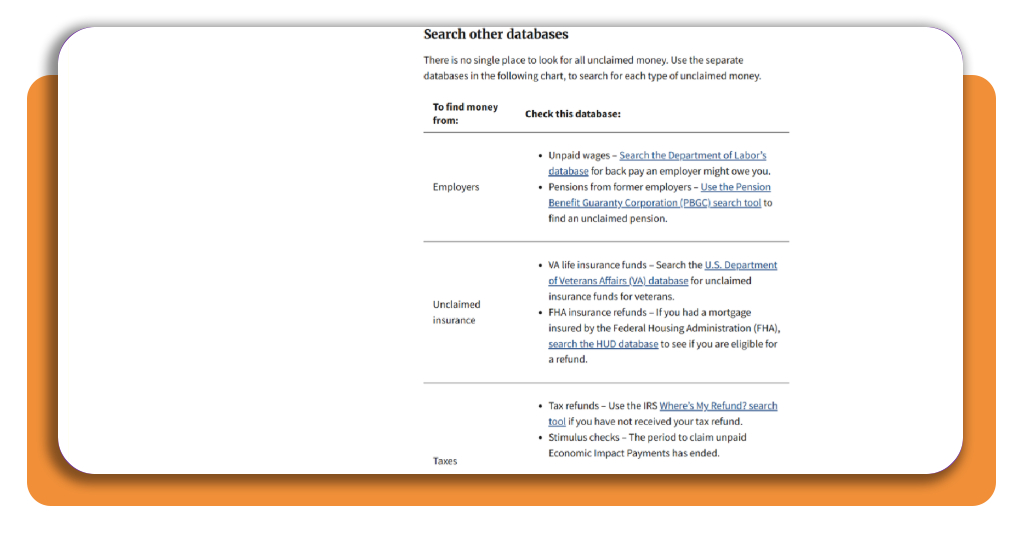
Head back to USA.gov and scroll to the ‘Search other databases’ section, where a chart sorts federal tools by the source of the money, from past employers to investments.
Open the links in the rows that match your work and financial history, and take a screenshot of any result along with its reference number before you close the agency’s site.
What types of forgotten money can appear, and how do claims work?
Most matches trace back to a former employer or a bank, and if the IRS still owes you a refund, its ‘Where’s My Refund‘ tool shows you where that payment stands.
Missed stimulus checks are no longer claimable, as the claim period has ended, and in December 2024 the IRS sent a last round to taxpayers who never received theirs.
Filing happens on the same state or agency site that showed you the match, and an office reviewing your unclaimed money claim asks for proof of identity before it pays out.
Forgotten wages and pensions from past jobs
If an employer shorted your overtime or kept your final paycheck, the Department of Labor runs a database where you can see whether a company owes you back pay.
A pension from a job you left years ago could also be waiting, and the PBGC search tool helps you track down benefits from retirement plans that ended or changed hands.
Matured savings bonds and failed bank deposits
Paper savings bonds stop earning interest once they mature, and TreasuryHunt lets you check whether a bond bought in your name is ready to cash or needs a replacement.
When a bank or credit union closes, the FDIC and NCUA take over the deposits you never moved, and both let you search by name for money left in those accounts.
Claiming money left by a deceased relative
As a legal heir, you can file for unclaimed money that belonged to a parent or grandparent, running the same state and federal searches with their name in place of yours.
Have a copy of the death certificate ready along with proof of your relationship, such as a birth certificate, and expect the office to request both before it releases the funds.
Where to access official search tools and mobile alternatives
The official search tools belong to government offices, mostly state treasurers and controllers, and their websites load in a phone browser with the same features you’d find on a laptop.
If screens aren’t your thing, California’s State Controller lets you start a claim over the phone or by mail, and other state offices list toll-free numbers on their search pages.
Utah goes further with a program that mails you a check without a claim form, as long as the state can match you to unclaimed money worth $2,000 or less.
Get free guidance from USAGov by phone or chat
If a search result leaves you unsure about where to file, call 1-844-USAGOV1, and a USAGov representative can point you to the right state office or federal agency.
If you’d rather type than talk, open the chat option on the USA.gov website and ask your question there, and you won’t pay a cent for help on either channel.
Bookmark the official links before scammers find you
Save the USA.gov page and your state’s search site in your browser, because the FTC warned in March 2026 about texts promising unclaimed money that push you to act fast.
Official programs never charge a processing fee or ask for your personal details in a text message, so treat any request like that as fake and report it to the FTC.
Snap and upload claim documents on the go
Many state claim portals let you upload documents from your phone, so snap a photo of your ID and a bill that shows the old address tied to the property.
After you submit, the portal gives you a claim number to enter on its status page, where you can see your progress and whether the office needs anything else.
Check your results and explore more ways to manage your finances
When the payment arrives, compare the amount with what the listing showed, and call the office if the figure looks off or the check carries a misspelled name.
A windfall from unclaimed money also makes a good reason to update the address on your bank and retirement accounts, and that update keeps your next payment from going astray.
Turn on electronic statements and direct deposit wherever your providers offer them, as a payment that lands in your account can’t vanish in the mail after a move.
Some recovered money may count as taxable income
An old bank balance you already paid taxes on won’t count as income, but the interest it earned can, and the same goes for back wages and pension payouts.
Ask the paying office whether it plans to send you a 1099 form or a W-2, and file the claim records with your tax documents for the year the money arrived.
Give your found cash a specific job
Park the money in a high-yield savings account while you decide, so a check for unclaimed money doesn’t disappear into groceries and takeout before you pick its purpose.
If you lack a cushion for car repairs or a surprise medical bill, build that fund first and send what’s left toward a credit card that charges you high interest.
Make a yearly search part of your routine
Companies keep reporting dormant accounts to the states throughout the year, so an empty search result today doesn’t rule out a match showing up on your next attempt.
Set a calendar reminder for a date you’ll remember, like your birthday or tax day, and use it to search your name and your relatives’ names on the official sites.
Your name might already be on a check
A forgotten deposit or an old paycheck could cover a bill or pad your savings, and searching for it costs you nothing more than a coffee break and some curiosity.
With this guide, we showed you where to look for unclaimed money and how to turn a match on a government database into cash you can put toward your goals.
Stop leaving money on the table! Keep reading Insiderbits for articles that point you to benefits and government refunds you qualify for, helping you keep more of what you earn.