

A break-in down the street, a police chase racing through your neighborhood, or a fire quickly spreading two blocks away from your home can put your family’s safety at serious risk.
The Citizen app puts every nearby threat on a live map before it reaches your door, and this Insiderbits guide details every tool available to keep your loved ones protected. Keep reading!
Related: Hear breaking news first with this live police scanner app

4.7/5
Citizen: best free app for live police chase alerts
With Citizen (Android | iOS), your phone becomes a window to everything happening around your neighborhood, pulling in crime reports, fires, and emergencies as they unfold close by.
Every single pin dropped on the map tells a story. Maybe a police chase weaving through side streets or a robbery reported two blocks down from where you live.
You get context far beyond a simple notification, and the app layers in live video, community comments, and official updates so you understand exactly what’s going on.
Types of alerts, incidents, and pursuits available
- Vehicle pursuits and chases: watch active police pursuits unfold in real time, with location pins tracking suspect vehicles racing through nearby streets and highways;
- Violent and property crime: get notified about robberies, assaults, break-ins, and thefts reported near your home, complete with responder updates as officers arrive;
- Fires and hazard emergencies: track building fires, gas leaks, and chemical spills through live footage and radio traffic streaming from crews working the scene;
- Natural disasters and severe weather: follow hurricanes, wildfires, floods, and storm damage across your region, with alerts that update the moment conditions change.
Free features versus premium upgrades
Citizen’s free version gives you full access to the live map, real-time push alerts, and video streams from other people capturing incidents as they happen.
Upgrading unlocks live police scanner audio, detailed incident archives, and custom alert zones, so tracking a police chase or unusual activity in your surroundings becomes easier.
Cities with the strongest coverage
Coverage runs deepest in major metro areas like New York City, Los Angeles, Chicago, Houston, and the Bay Area, where dense reporting networks catch nearly every local incident.
Smaller towns and rural areas still get access to every feature, though incident reports may arrive a bit slower because fewer local neighbors post and confirm details there.
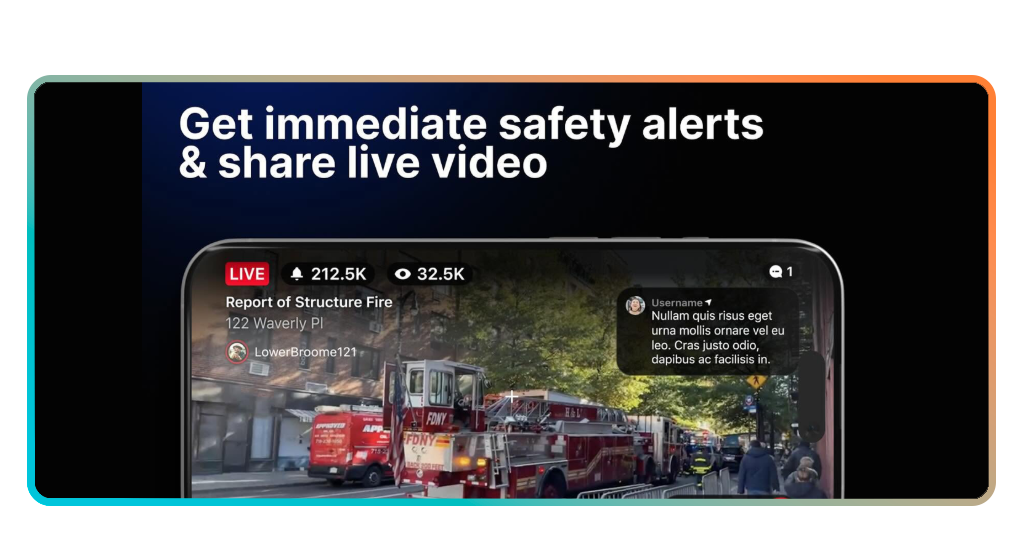
Step-by-step: how to see local safety alerts on your phone
Getting Citizen (Android | iOS) running on your phone barely takes longer than scrolling through one social media post, and the payoff sticks with you long after setup ends.
Every notification pulls straight from people posting nearby, so a robbery two streets over or a police chase racing through your area reaches your phone within seconds.
Three quick moves stand between you and full coverage of your neighborhood, and once your phone connects, your surroundings turn into a map loaded with useful context.
Step 1: download Citizen on your phone
Head to the App Store or Google Play and search for ‘Citizen’, then tap ‘Get’ or ‘Install’ and let it settle onto your home screen alongside your other everyday apps.
Once it opens, Citizen asks for permission to use your precise location data, and granting that access lets every alert match the streets surrounding your address.
Step 2: set alert zones for home
Open the map screen and tap the location pin icon to build a custom zone around your house, your parents’ place, or any other spot you care about.
Alerts inside that zone hit your phone the moment something happens, whether a fire breaks out down the road or a police chase cuts through your street.
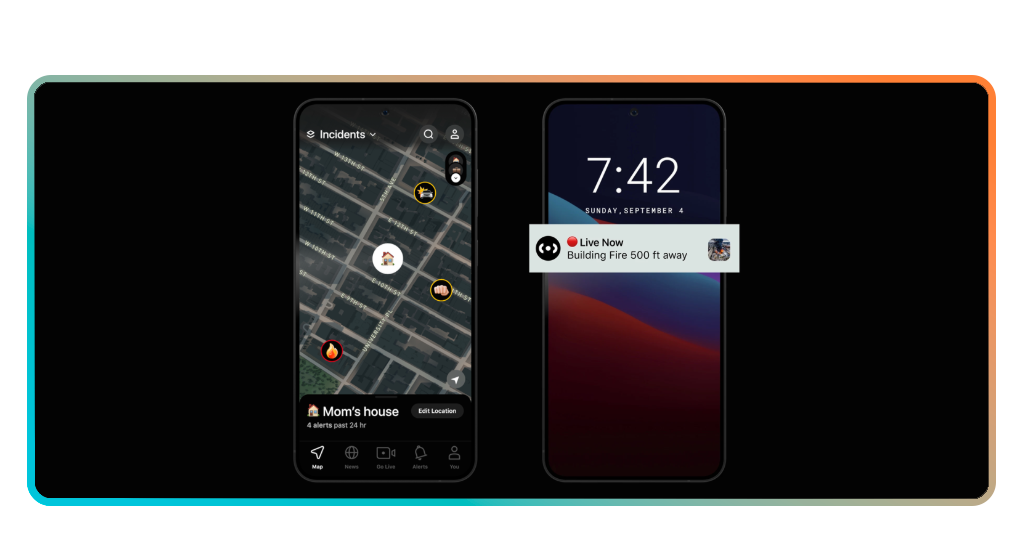
Step 3: tap incidents for live updates
Tap any pin on the map, and a full incident card pops up, showing live video, witness comments, and details straight from people standing right at the scene.
Updates keep rolling in as a scanner call is confirmed or new footage lands, so checking back later shows a fuller picture without you leaving the map view.
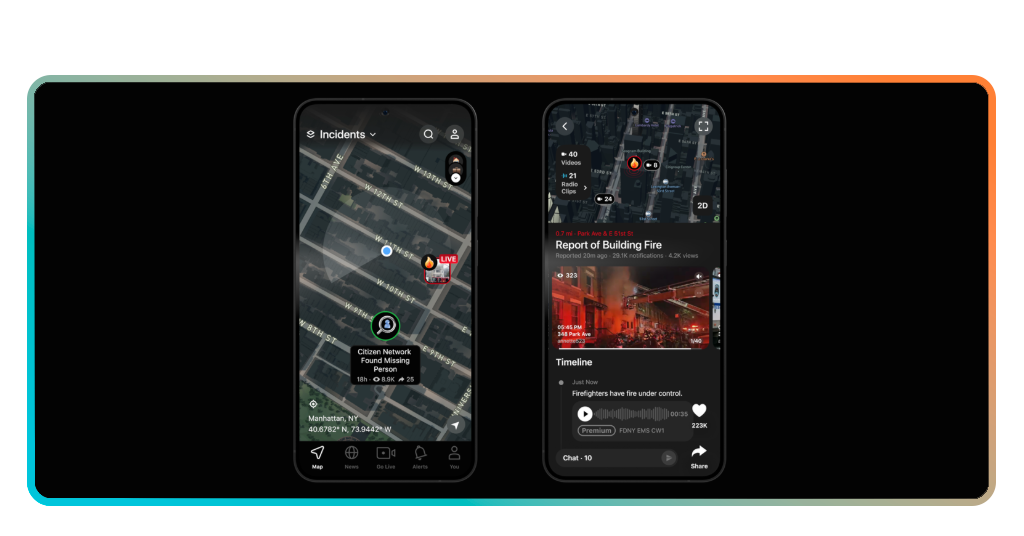
Related: Emergency alarm app: keep your elders safe with this app
How to call emergency services during neighborhood incidents
Watching a live alert pop up on your screen only helps if you know what to do the moment something happens right outside your front door.
Dialing 911 works for any situation where someone’s safety hangs in the balance, whether that means a fire spreading through a building or a violent crime taking place.
Not every incident calls for that level of urgency, and knowing the difference keeps emergency lines open for the moments that genuinely require a fast response, like a police chase.
Information dispatchers need from you
Dispatchers work faster when you lead with your exact location, including cross streets or a landmark, because that detail shapes everything else they do next.
Stay on the line and answer every question calmly, describing what you see, who’s involved, and whether anyone appears hurt so responders arrive already prepared for the scene.
Non-emergency numbers for minor incidents
Most cities run a 311 line for issues that don’t threaten anyone’s safety, covering things like noise complaints, parking disputes, and reports of minor property damage.
Where 311 isn’t active, your local police department keeps a ten-digit non-emergency number on file, and a quick search online pulls it up in moments.
Texting 911 during silent emergencies
Nearly every state now supports texting 911 directly, giving you a silent way to reach dispatchers when speaking out loud could put you or someone else in danger.
Keep your message short and specific, stating your location and the nature of the threat first, because texts often take longer to process than a spoken call.
Essential smart home security systems to protect your family
A live alert on your phone might show a gas leak two streets over or a police chase tearing past your neighborhood, but your house still needs its own line of defense.
Cameras, sensors, and monitoring services fill in the gaps that an app on your phone can’t cover, watching your doors and windows while you sleep or run errands.
The right setup catches a window forced open at 3 am or a stranger lingering on your porch, turning a silent threat into something you actually see and stop.
SimpliSafe
SimpliSafe builds its system around outdoor cameras paired with live agents who can speak through the camera and scare off someone lurking near your porch or driveway.
Monitoring plans run without long contracts, and if an agent spots a real threat, they can request police dispatch backed by video proof of what happened.
Vivint HomeProtect
Vivint HomeProtect starts you off with a security hub, motion sensor, and door sensors that cover the entry points burglars target most often around a typical house.
Professional monitoring watches over your home around the clock, and the team reaches out fast whenever a sensor trips, confirming with you before contacting emergency responders.
Ring
Ring built its name on doorbell cameras, letting you see who walks up your steps and talk to them directly through your phone from anywhere you happen to be.
Add the ‘Protect Plan’, and your cameras start saving footage for months, useful if a stranger keeps circling your block on repeated nights or an incident unfolds close to your camera.
Related: Safety risk? Run a free criminal background check in 60 seconds
Best self-defense tools and personal safety gear for home
Cameras and alerts catch what’s happening outside your walls, but a handful of physical tools stop someone from getting past your front door in the first place.
A jimmied lock or a busted window frame gives an intruder access in seconds, and most standard doors buckle under a swift kick without added reinforcement behind them.
None of this gear replaces calling for help, so pair it with Citizen (Android | iOS), and always be alert for fires spreading nearby or a police chase that ends closer to home than you’d like.
Door reinforcement kits block forced entry
Standard door frames split apart under a hard kick because the strike plate holds on with screws barely longer than an inch, offering almost nothing to grip.
A reinforcement kit swaps those short screws for three-inch versions and adds a metal jamb guard, turning your doorway into something that resists a shoulder or boot.
Glass break sensors detect shattered windows
Motion sensors miss an intruder who smashes a window and climbs through without setting foot on the floor first, leaving a dangerous blind spot in your coverage.
Glass break sensors listen for the specific frequency a shattering pane produces, triggering an alarm the instant glass cracks even if nobody walks anywhere near the sensor.
Tactical flashlights double as protection tools
A tactical flashlight throws enough lumens to disorient someone at close range, buying you seconds to retreat, call out, or reach a phone during a dark encounter.
Look for a model built from aluminum with a strike bezel on the front, since that ridge adds a sharp edge if you ever need to defend yourself.
Affordable home insurance plans with rapid emergency coverage
Reinforced doors and glass sensors handle plenty, but a police chase ending in a crash through your fence or broken windows in a break-in can still leave damage no gadget can fix.
Insurance picks up where physical security stops, covering the cost of repairs, replacements, and temporary housing after an event turns your house upside down overnight.
Rates and coverage speeds vary a good deal between providers, so comparing a few options helps you land on a policy that fits your budget and your neighborhood’s risks.
Amica Homeowners Insurance
Amica pays back a chunk of your premium through dividend policies, giving you money in hand while still covering fire, theft, and storm damage on your home.
Claims move through their website any hour of the day, and having a monitored security system on file often shaves a few dollars off your rate.
Progressive Homeowners Insurance
Progressive leans into bundling, dropping your rate when you combine home and auto coverage, which helps if a stray vehicle from a police chase ever clips your property.
Their ‘HomeQuote Explorer’ tool pulls quotes from multiple insurers into one screen, letting you compare pricing and coverage limits without filling out five separate forms.
Allstate Homeowners Insurance
Allstate pairs every policy with a dedicated agent who walks you through coverage options and flags discounts you might otherwise miss during setup.
Standard plans cover fire, theft, windstorms, and water damage from burst pipes, giving your household a wide safety net against the disasters that hit hardest.
Related: Home fire threat? Download this free safety app now
4.7/5
Always stay one step ahead of danger
Citizen puts real-time alerts on your phone, showing you exactly what’s happening on your streets before trouble ever reaches your front door or catches you off guard.
This guide by Insiderbits explained how to catch a police chase or local emergency early, plus the security gear and insurance that back up your family when alerts aren’t enough.
Stay with Insiderbits and learn more ways to protect your home, your family, and your peace of mind through smart apps and everyday safety resources worth having on hand.