

Dealing with unfiled back taxes is more expensive the longer overdue returns remain unresolved because penalties and interest can continue to accumulate.
Do you know where IRS2Go (iOS/Android) fits into the process? Read below and learn how to check tax account information and payment options through official IRS services.

2.9/5
Which is the app to check unfiled back taxes and IRS resolution options?
The official IRS2Go app (iOS/Android) is a starting point for taxpayers dealing with unfiled back taxes.
This app is helpful when users want direct access to IRS payment services and account resources from a phone.
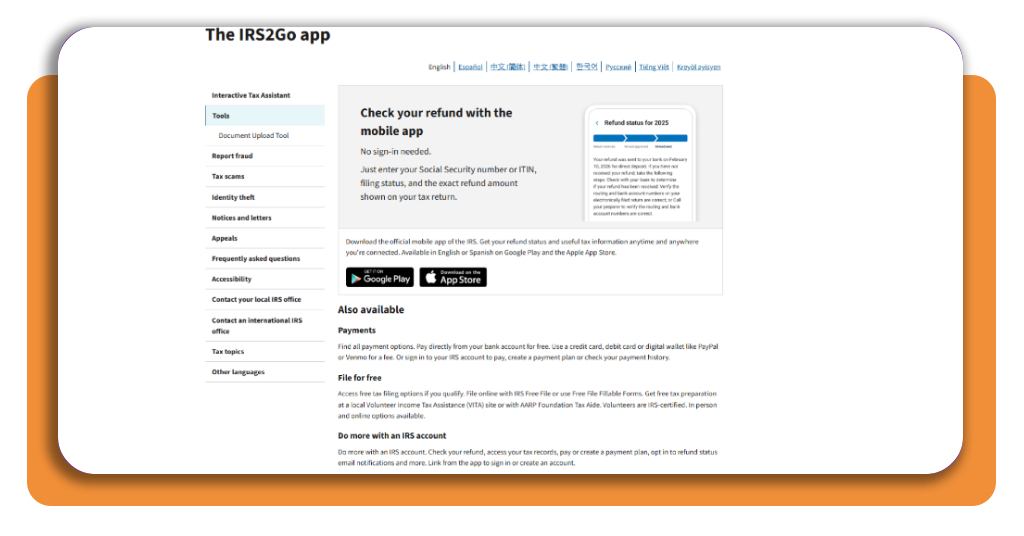
IRS2Go (iOS/Android) is responsible for connecting users with official IRS tools for making payments, reviewing payment options, accessing tax records, and signing in to an IRS Online Account.
However, the platform doesn’t calculate tax owed for returns that have never been filed.
The IRS states that the first step toward resolving tax debt is to file any missing returns, since more payment and resolution options become available once filing obligations are current.
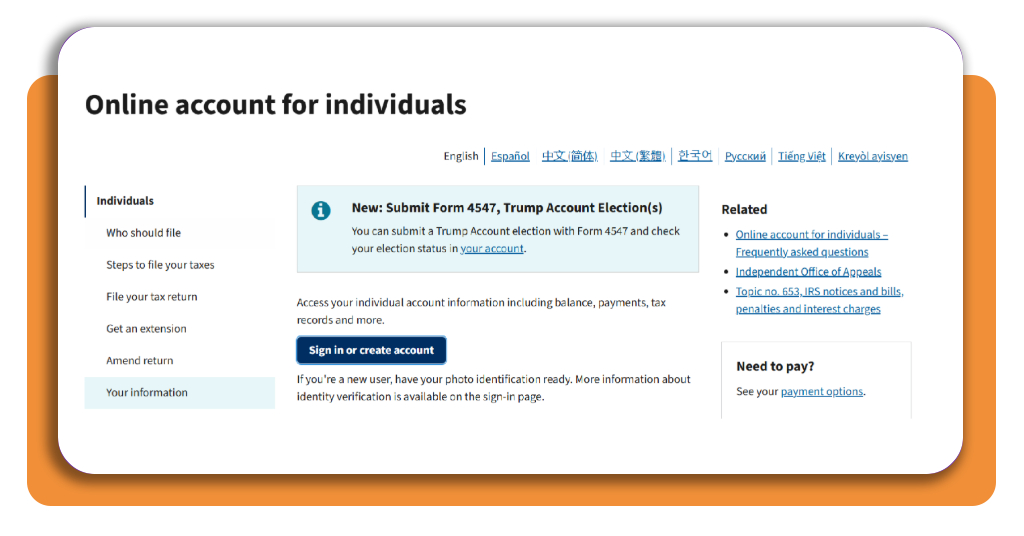
For taxpayers who already have an assessed balance, the IRS Online Account provides more detailed information than the mobile app itself.
It can show balances, payment history, tax records, and existing payment plan details, while also providing access to options such as installment agreements and Offer in Compromise eligibility.
Moreover, the IRS also introduced a Tax Debt Help tool in 2026.
With that, after answering questions about the debt and financial situation, taxpayers review potential payment plans or an Offer in Compromise when eligibility requirements are met.
Key features within the official IRS2Go platform
IRS2Go (iOS/Android) provides direct access to several core IRS services and can be useful for taxpayers dealing with unfiled back taxes.
With this app, users can make federal tax payments from a bank account at no charge or choose card and digital-wallet payment methods that involve processing fees.
The app also links to the IRS Online Account, where taxpayers can create or manage a payment plan and review payment history.
In addition, it also provides access to IRS Free File resources, tax forms, publications, tax records, and contact information.
Its refund-status feature works without signing in and requires the taxpayer’s Social Security number or ITIN, filing status, and exact expected refund amount.
For more complicated tax debt, IRS2Go works best as a gateway to the broader IRS system rather than as a complete resolution tool.
Offers in Compromise are handled through IRS account services and dedicated eligibility tools, and taxpayers generally need to have filed all required returns.
Step-by-step: how to check what you owe and explore IRS payment plans
IRS2Go (iOS/Android) connects directly to the IRS Online Account, where you can review assessed balances and see payment options available for your account.
Keep in mind that a return you have not filed yet will not appear as an assessed tax balance, so missing returns still need to be completed separately.
Step 1: open your IRS Online Account
To use IRS2Go, you can access the official website or download the app on the App Store or Google Play Store.
Firstly, you open Payments and choose the option to sign in to your IRS account. This takes you to the IRS Online Account, where balances and payment plans are managed.
Step 2: sign in through ID.me
On the Online Account page, select ‘Sign in’ and continue through ID.me. Enter your existing credentials or complete the identity-verification process if this is your first time accessing the account.
Step 3: check the balance shown on your account
On ‘Account Home’, find the ‘Account Status’ section. It shows the amount currently owed to the IRS, and your account can display balances by tax year.
If a missing return has never been filed or processed, that amount will not yet be reflected here.
Step 4: open your payment options
From the account balance area, select View Payment Options.
The IRS will show the payment choices available for your situation, including paying the balance directly or applying for a payment plan when eligible.
Step 5: review the available payment plan
Compare the options shown before submitting an application.
Do you still need some help? Check this article from the official IRS that provides instructions for filing past-due tax returns.
Top tax relief attorneys for back tax resolution
Some cases involving unfiled back taxes are handled directly through IRS tools, but in some situations, legal representation can be important if it involves other complexities.
For example, situations with large balances, tax liens, levies, audits, business tax problems, or disputes could need negotiation with the IRS.
Victory Tax Lawyers
To begin with, Victory Tax Lawyers is Money’s current pick for taxpayers dealing with large tax debts.
This is a law firm rather than a general tax-relief company, and consultations are conducted with licensed attorneys.
Their services include resolving tax liens and levies, audit representation, tax preparation, and negotiations involving outstanding federal or state tax liabilities.
Currently, the firm requires at least $25,000 in tax debt, and fees start around $5,500.
This makes it better suited to more serious or complicated cases than to relatively small balances.
J. David Tax Law
Secondly, we have J. David Tax Law as Money’s choice for complex legal tax issues.
This firm is staffed by tax attorneys and handles matters such as IRS tax debt, liens and levies, wage garnishment, audits, and other disputes where direct legal representation can be helpful.
Unlike some tax-relief providers, Money reports no stated minimum debt requirement. However, pricing is less transparent.
Money notes that the firm does not publish a clear fee schedule and a list of money-back guarantees.
Therefore, prospective clients should request a detailed estimate and understand exactly which services are included before signing an agreement.
Best debt consolidation options
Debt consolidation is important when several high-interest balances are difficult to manage, but it is different from IRS tax relief.
A personal loan replaces existing balances with a new loan, so anyone considering this route for tax debt should compare the new APR and fees with an IRS payment plan first.
Upstart
Upstart is Experian’s current pick for borrowers across a wide range of credit profiles.
Loan amounts range from $1,000 to $50,000, with estimated APRs from 6.70% to 35.99% and repayment terms of three or five years.
Checking potential offers does not affect your credit score, although a full application can involve a credit check.
Because rates can become expensive at the upper end, consolidation only makes sense when the new loan improves on the cost of the debts being replaced.
SoFi
Then, SoFi is Experian’s current choice for borrowers with strong credit.
Personal loans range from $5,000 to $100,000, with estimated APRs from 6.49% to 35.49% and terms from two to seven years.
SoFi also offers fixed-rate loans and does not require a prepayment penalty.
The lowest advertised rates are reserved for the most qualified borrowers, so the actual offer depends on creditworthiness, income, and other underwriting factors.
2.9/5
Take the next step toward resolving your tax debt
The moment to deal with unfiled back taxes starts with getting missing returns filed and understanding what the IRS has already assessed.
From there, an Online Account helps you review balances, payment plans, and other resolution options that fit your situation.
Some taxpayers can manage the process directly with the IRS, while more complex cases may justify help from a tax attorney.
If you still need to catch up on current or past returns, this guide to free tax filing apps can help you review available filing tools when moving on to payment or resolution decisions.
Enjoyed this article? Save Insiderbits to your favorites and discover the most useful tech tips.