

WWII military records can reveal fascinating details about your family’s past, from a relative’s rank and assignments to their awards and deployed units.
The National Archives and Records Administration (NARA) preserves millions of Official Military Personnel Files (OMPF), making it a valuable resource for genealogical research. Read on Insiderbits.
What is inside a WWII service file?
Think of a WWII Official Military Personnel File (OMPF) as a paper trail of a service member’s time in uniform.
It may include records of enlistment, training, assignments, promotions, awards, and discharge, offering a glimpse into the many chapters of their military career.
The exact paperwork depends partly on the branch, since the Army, Navy, Marine Corps, Army Air Forces, and Coast Guard each had their own recordkeeping practices.
It also depends on which documents survived over the decades. For family historians, these WWII military records can turn a name on an old photograph into a much fuller story.
WWII military records from the National Archives
The National Personnel Records Center (NPRC), part of the National Archives and Records Administration (NARA) in St. Louis, Missouri, preserves millions of military personnel files from the 20th century.
An Official Military Personnel File (OMPF) is primarily an administrative record, so it can offer a useful snapshot of a relative’s military career. Depending on the documents available, it may include:
- Enlistment and service information: enlistment dates, service branch, duty stations, assignments, training, qualifications, and promotions;
- Awards and personnel history: medals, decorations, performance evaluations, emergency contact information, and other administrative details;
- Medical and separation records: some files include health records, casualty information, and documents related to discharge or retirement;
One important detail: an OMPF usually does not provide a detailed account of a service member’s participation in specific battles.
For that kind of information, researchers may need to explore separate unit histories, operational records, or other NARA collections.
Step-by-step: how to order a file online or by mail
Getting WWII military records from the National Archives doesn’t have to involve a mountain of paperwork or a trip to Washington.
You can request an eligible service file online or by mail, depending on the type of record and the information available.
Step 1: gather your ancestor’s information
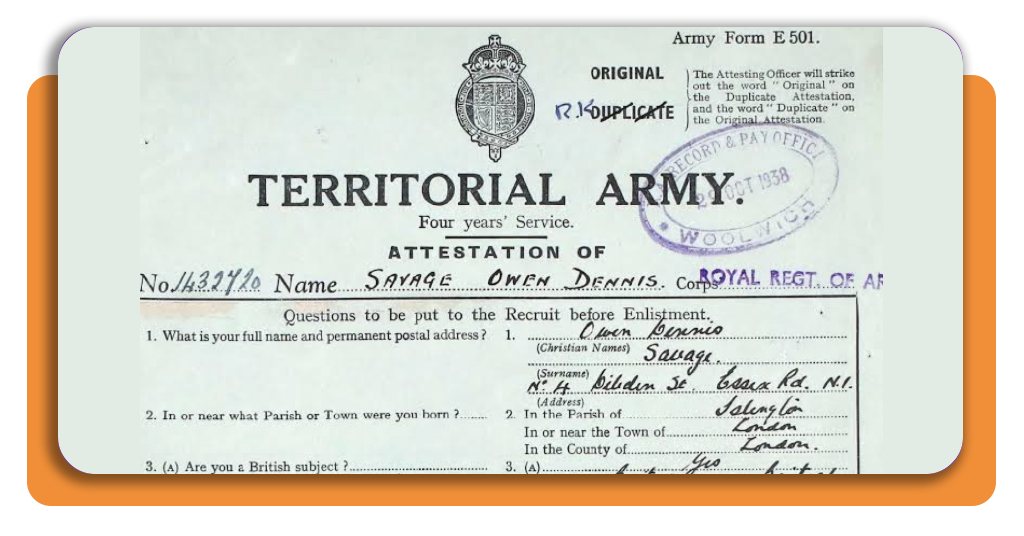
Before requesting WWII military records, collect your ancestor’s full name, date and place of birth, branch of service, service dates, and military service or Social Security number, if available.
These details help the National Personnel Records Center (NPRC) locate the correct file.
Step 2: submit your request
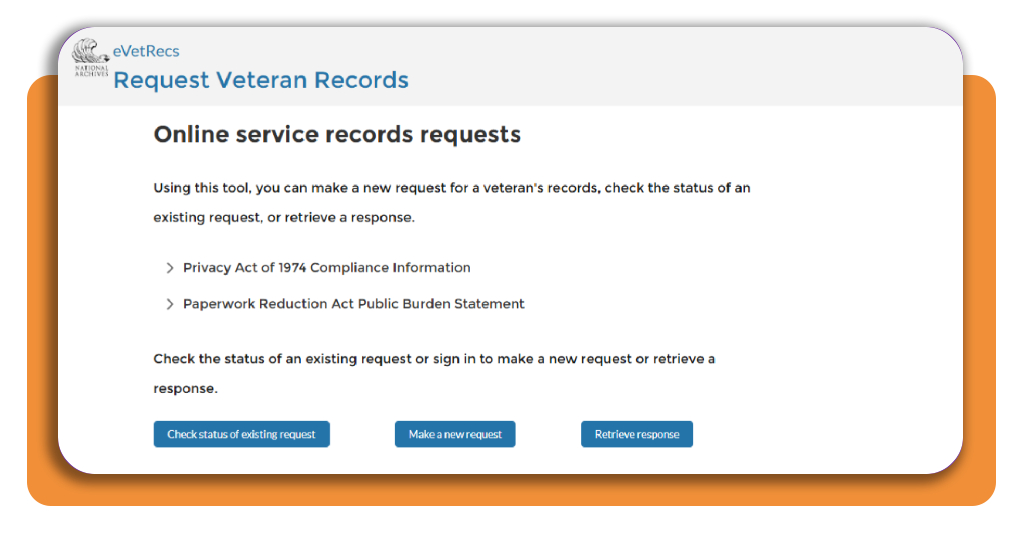
Veterans and eligible next of kin can start an online request through the eVetRecs portal.
Review the National Archives’ military records instructions first. Researchers requesting older archival files must follow the public access procedures.
Step 3: track and receive your records
Save your confirmation number to track the request. Once processed, the NPRC will provide the available documents using the delivery method offered.
Keep in mind that most military personnel files are paper-based, so instant digital access isn’t guaranteed.

How much a WWII service file costs
Requesting WWII military records from the National Archives may come with a reproduction fee, since files from this period are considered archival.
According to NARA’s current fee schedule, the cost for a routine Official Military Personnel File (OMPF) depends on its length:
- OMPFs with 5 pages or fewer: $25 flat fee;
- OMPFs with 6 pages or more: $70 flat fee. Most routine files fall into this category;
- Persons of Exceptional Prominence (PEP) files: $0.80 per page, with a $20 minimum;
These fees cover a complete copy of the file, not selected pages. If a fee applies, NARA will notify you after locating the record.
Wait for that notice before sending payment, and follow the payment instructions provided.
If you’re also exploring family trees, specialized databases, or other research resources, check out our guide to the military ancestor finder tool.
You can also visit the National Archives website for official research guides and record collections.
What to do if the 1973 fire affected the record
On July 12, 1973, a catastrophic fire at the Military Personnel Records Center in St. Louis destroyed millions of military personnel files.
The fire destroyed approximately 80% of U.S. Army records for personnel discharged between November 1, 1912, and January 1, 1960.
It also destroyed 75% of U.S. Air Force records for personnel discharged between September 25, 1947, and January 1, 1963.
If your ancestor’s primary OMPF was lost in the fire, specialists at the National Archives reconstruct service histories using auxiliary records:
- Alternate archives sources: researchers cross-reference state National Guard records, morning reports, unit muster rolls, payroll records, and Department of Veterans Affairs (VA) claim files;
- State adjutant general records: many state archives maintain copies of military discharge papers filed by returning veterans at local county courthouses upon returning home;
- Reconstruction submissions: submit an official request through eVetRecs even if you suspect the record was burned. Archives staff will attempt to rebuild the file using secondary historical databases. Learn more on the official 1973 National Archives Fire Overview.
Preserve your family’s military legacy
Exploring your relative’s WWII military records is a chance to put names, dates, and family memories into historical context.
With the National Archives‘ request services and research resources, you can uncover documented details about their service and preserve those stories for future generations.
Your family history deserves more than a dusty photo album.