

Radiology job openings near you: register now to work
Looking for a radiology job can be easier when you know where to search. Indeed (Android | iOS) lets job seekers browse openings by location, job title, and experience.
In this Insiderbits guide, we’ll show you how to search for radiology positions, review job requirements, and apply through Indeed from your phone.

4.7/5
Where do I find radiology job openings?
Indeed (Android | iOS) is one of the platforms you can use to search for healthcare positions across the United States. You can search by job title, location, salary, experience level, and other criteria.
A radiology job can refer to different positions within medical imaging.
Radiologic technologists, radiology technicians, MRI technologists, CT technologists, and other imaging professionals can have different education and certification requirements.
When searching, be specific about the position you want. For example, searches for ‘radiologic technologist,’ ‘radiology technician,’ ‘MRI technologist,’ or ‘CT technologist’ can produce different results.
Location is also important. Healthcare employers may have different requirements depending on the state, and some positions require professional certification or a state license.
You can also use Indeed to filter results by factors such as full-time or part-time employment, estimated salary, distance, and date posted.
For people preparing for a career in medical imaging, studying anatomy can also be useful. Check out our free online anatomy courses to explore additional learning resources.
Step-by-step: how to apply for radiology jobs using the Indeed app
Indeed (Android | iOS) is available through its website and mobile applications. The following steps use the Indeed app, but you can also complete the search and application process through the Indeed website.
Step 1: download and open Indeed
Download the Indeed Job Search app from Google Play or the App Store.
Open the app and sign in to your Indeed account. If you don’t have an account yet, tap the option to create one and complete the registration before continuing.
Once you’re logged in, you can personalize your job search and start looking for available positions.
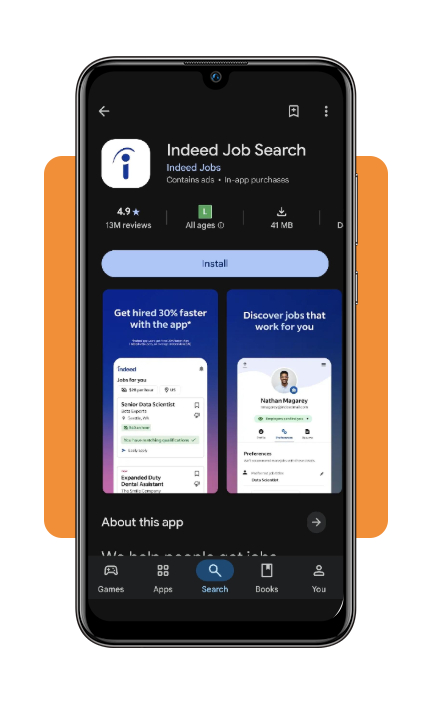
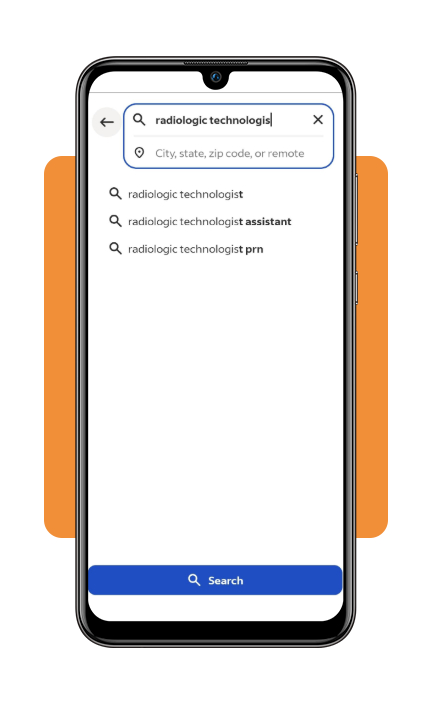
Step 2: search for a radiology position
Enter a position such as ‘radiologic technologist,’ ‘radiology technician,’ or ‘MRI technologist’ in the job search field.
You can also search for a specific radiology job title based on your training and certification.
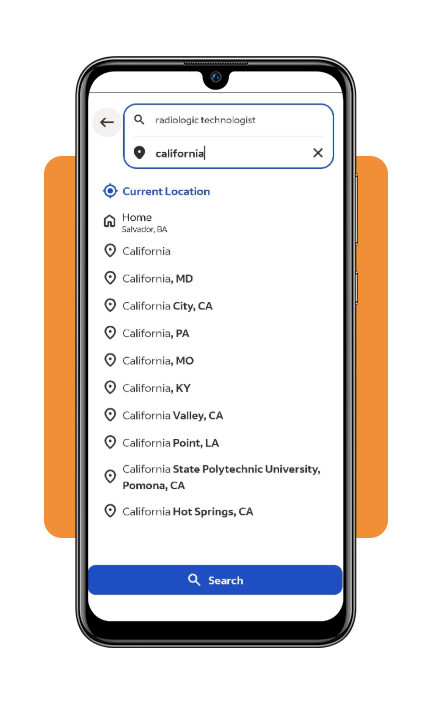
Step 3: enter your location
Enter your city, state, or ZIP code in the location field.
If you’re willing to commute, expand the search radius to see additional openings in nearby areas.
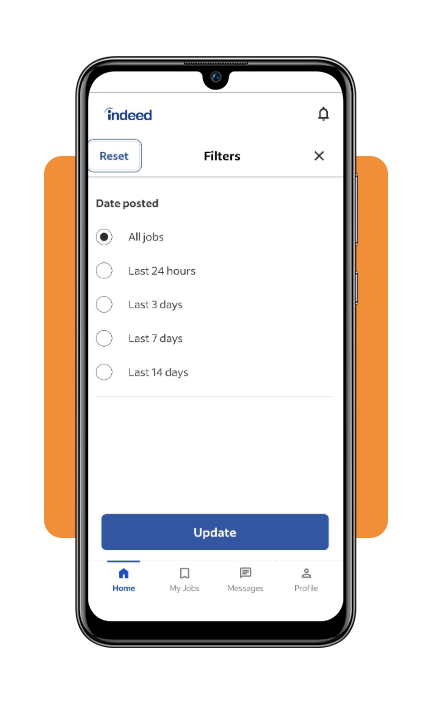
Step 4: apply filters
Use Indeed’s filters to narrow the results.
Depending on what’s available, you can filter by salary, job type, date posted, experience level, and other criteria. This can make it easier to find positions that match your qualifications.
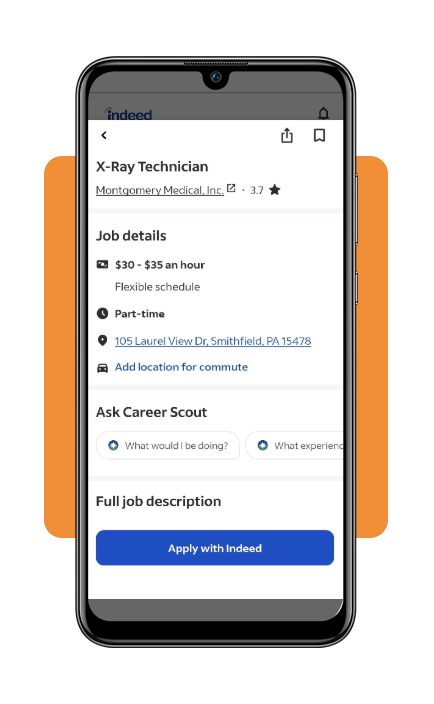
Step 5: review the job description
Open a position that interests you and read the complete listing before applying.
Pay attention to required education, certifications, experience, work schedule, salary information, and any state-specific requirements.
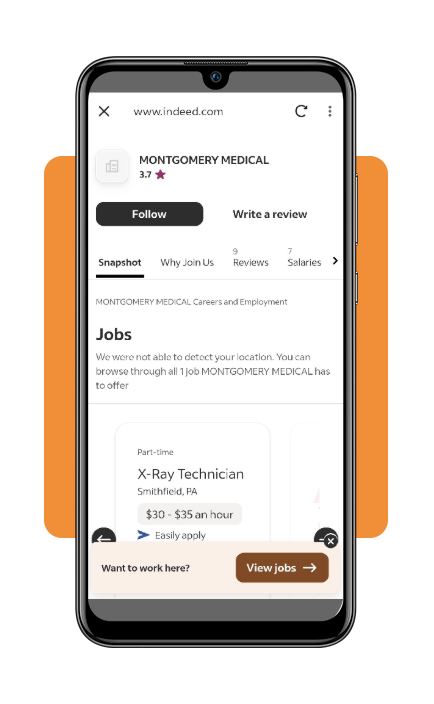
Step 6: check the employer information
Review the employer’s information and other available details before submitting your application.
Look for information about the workplace, department, schedule, benefits, and application requirements.
Step 7: submit your application
Follow the instructions provided in the listing to apply.
Some employers allow you to apply directly through Indeed, while others may redirect you to the employer’s careers website.
Step 8: track your applications
Keep a record of the positions you’ve applied for and their application dates.
If Indeed provides application tracking or status information for a particular listing, use it to follow up on your applications.
Clinical duties, equipment, and specialty areas
Radiology professionals can work with different types of medical imaging equipment and may specialize in specific areas.
Radiologic technologists commonly perform diagnostic imaging procedures using X-ray equipment.
Depending on their training and workplace, professionals may also work with computed tomography (CT), magnetic resonance imaging (MRI), mammography, or other imaging technologies.
A radiology position can involve preparing patients, explaining procedures, positioning patients correctly, operating imaging equipment, and following safety protocols.
Some professionals work in hospitals, while others work in outpatient imaging centers, physician offices, diagnostic facilities, or specialized healthcare settings.
The exact responsibilities depend on the position, employer, credentials, and specialty. Always read the individual job description to understand what an employer expects.
Average salary, sign-on bonuses, and shift options
Compensation can vary significantly depending on the position, location, experience, credentials, employer, and specialty.
Some healthcare employers may offer sign-on bonuses, particularly for positions that are difficult to fill.
However, these offers can have conditions such as minimum employment periods or repayment requirements if an employee leaves early.
Shift options can also vary. Hospitals and other facilities operating around the clock may offer day, evening, night, weekend, or rotating shifts.
Before accepting a radiology job, compare the advertised salary with the schedule, benefits, overtime policy, commute, and other compensation details.
Radiologist professional salary in the USA
It’s important to distinguish between radiologists and radiologic technologists.
A radiologist is a physician who specializes in interpreting medical images and diagnosing conditions.
Radiologic technologists, meanwhile, operate imaging equipment and perform imaging procedures under established clinical protocols.
Indeed’s salary information provides a useful starting point for understanding compensation for radiologists. You can check its current radiologist salary data for updated figures.
The salary figures for radiologists should not be used to estimate what a radiologic technologist or radiology technician will earn.
These are different professions with different education and licensing pathways.
Required ARRT certifications and state licenses
Many radiologic technologists in the United States pursue certification through the American Registry of Radiologic Technologists (ARRT).
Requirements can vary depending on the credential and the profession. Candidates may need to complete an approved educational program, meet ethics requirements, and pass the relevant examination.
State licensing is another important consideration. Some states require radiologic technologists to hold a state license or certification before practicing.
If you’re applying for a radiology job, check both the employer’s requirements and the rules of the state where you plan to work.
Don’t assume that holding a certification automatically satisfies every state’s licensing requirements. Review the applicable state regulations before applying.
Can radiology professionals apply for loans and credit cards?
Working in radiology does not automatically guarantee approval for a loan or credit card.
Lenders and card issuers generally consider factors such as income, credit history, existing debt, and other information when evaluating an application.
Employment and income can be relevant, but each lender uses its own approval criteria.
A healthcare professional with stable income may still want to compare annual percentage rates, fees, credit limits, and repayment terms before applying for financial products.
If you’re starting a new position, remember that a higher salary doesn’t necessarily mean a lower borrowing cost.
Your credit profile and the specific lender’s requirements can also affect the terms you’re offered.
4.7/5
Start your radiology career search
Finding a radiology job starts with identifying positions that match your training, credentials, and preferred location.
Indeed (Android | iOS) can help you search openings, compare requirements, and submit applications through your phone or computer.
Before applying, carefully review the certification, licensing, schedule, salary, and experience requirements listed by each employer.