

Earning a CompTIA Security+ certification is the single most recognized starting point to land a high-paying SOC analyst role and secure an entry-level salary averaging over $70,000 per year.
Taking a dedicated CompTIA Security+ practice test is not merely a method for measuring what you know—it is an essential cognitive training mechanism. Read on Insiderbits.

4.7/5
Deconstructing the SY0-701 blueprint: what the exam tests
The CompTIA Security+ exam (code SY0-701) reflects the evolving cyber threat landscape, emphasizing cloud environments, zero-trust architecture, automated threat detection, and continuous security monitoring.
The exam blueprint consists of up to 90 questions administered over a 90-minute period, with a passing score threshold of 750 on a scale of 100 to 900 divided into the following:
- Domain 1.0: General Security Concepts (12%): baseline security controls (preventive, detective, corrective, compensating), fundamental CIA triad principles (Confidentiality, Integrity, Availability), AAA frameworks, zero trust architecture, and cryptographic primitives;
- Domain 2.0: Threats, Vulnerabilities, and Mitigations (22%): identifying threat actors (nation-states, hacktivists, insider threats), recognizing social engineering tactics (spear phishing, vishing, watering hole attacks), analyzing malware variants (ransomware, fileless malware, rootkits), and deploying defensive mitigations;
- Domain 3.0: Security Architecture (18%): secure infrastructure design, enterprise network segmentation, cloud service models (IaaS, PaaS, SaaS), shared responsibility matrixes, containerization, and Identity and Access Management (IAM) strategies;
- Domain 4.0: Security Operations (28%): the largest portion of the exam. It tests hands-on tasks including SIEM log ingestion and analysis, vulnerability management cycles, digital forensics fundamentals, incident response protocols, and continuous monitoring;
- Domain 5.0: Security Program Management and Oversight (20%): risk management frameworks, compliance regulations (GDPR, HIPAA, PCI-DSS), third-party vendor risk, business continuity planning, and organizational security policies.
Which is the best CompTIA Security+ practice test app?
Practicing questions on your phone reinforces knowledge retention through spaced repetition, so you get to absorb technical terminology and acronyms while taking breaks.
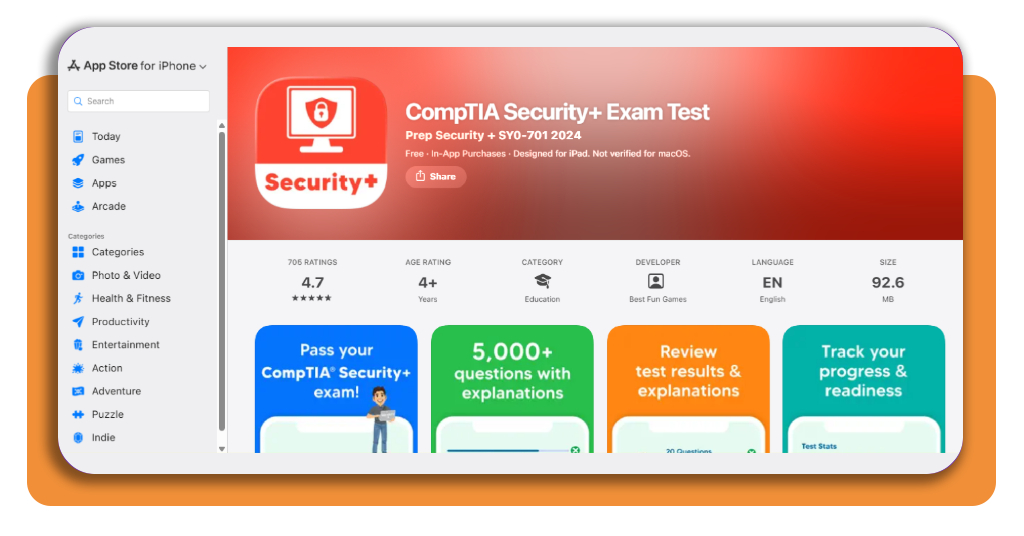
And while you go through the platform CompTIA, we recommend the apps CompTIA Security+ Exam Test for iOS and CompTIA Security+ Exam Prep for Android.
Features available in the Pocket Prep IT & Cybersecurity training platform
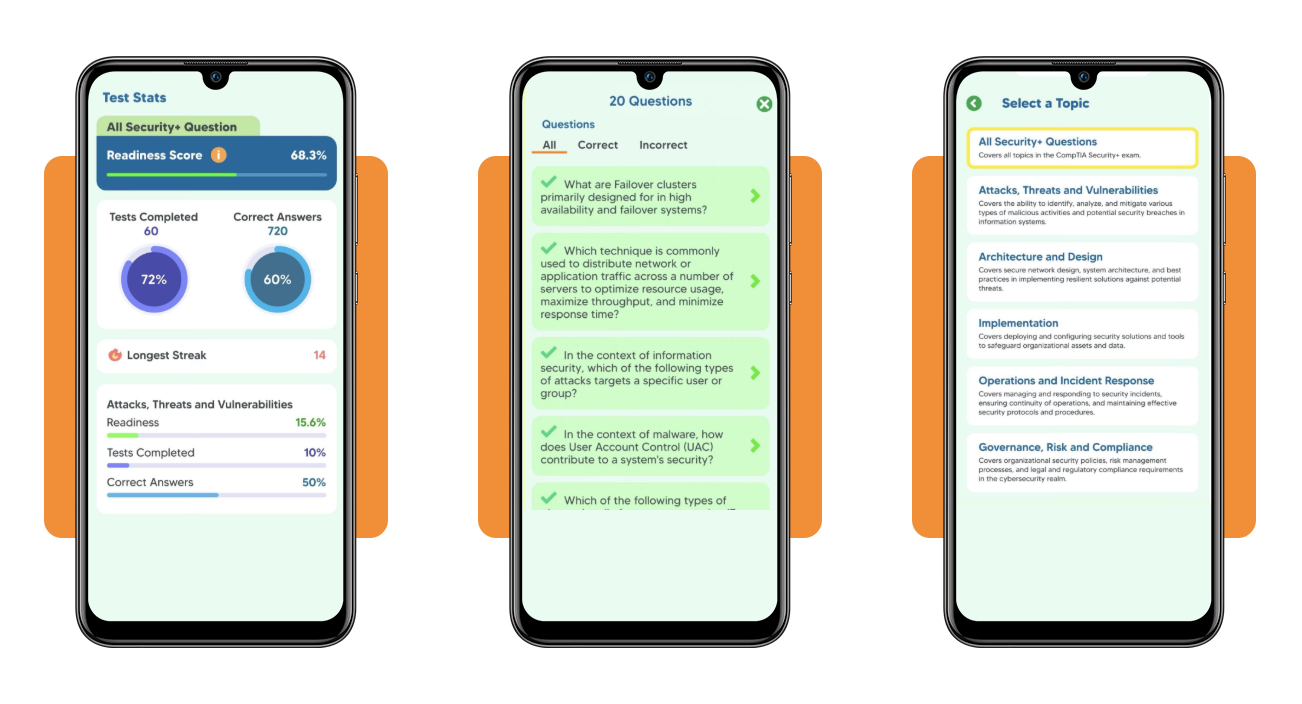
- Domain-targeted practice modules: isolate individual exam domains to focus your study time on specific weak areas, such as Security Operations or Cryptographic Implementation;
- Comprehensive in-depth explanations: access detailed answer breakdowns for every question. Reviewing why incorrect options are wrong is just as valuable as confirming why the correct choice is right;
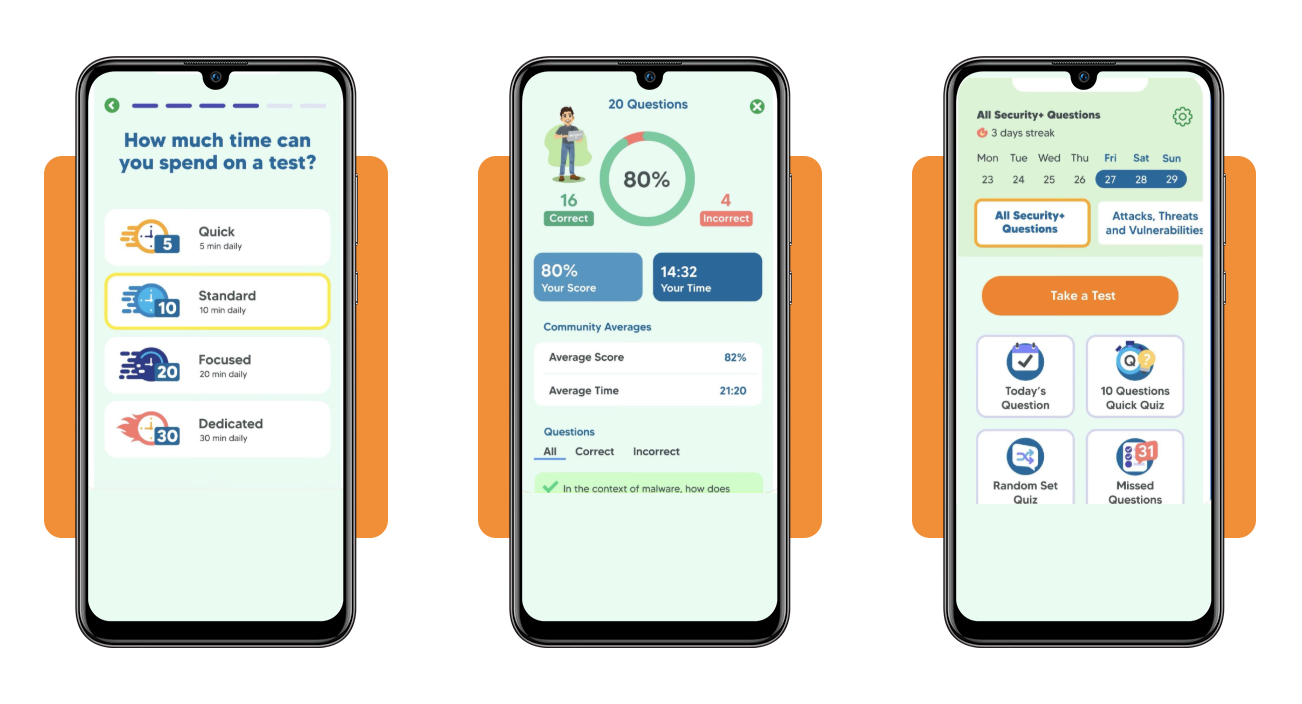
- Realistic timed mock simulators: replicate real test conditions by completing a full 90-question test within the strict 90-minute time constraint;
- Performance analytics and diagnostic scores: track your passing probability over time with automated domain-by-domain proficiency tracking.
Step-by-step: how to master the test
Passing your exam on the first attempt requires preparation—check the following steps:
Step 1: deconstruct official exam objectives
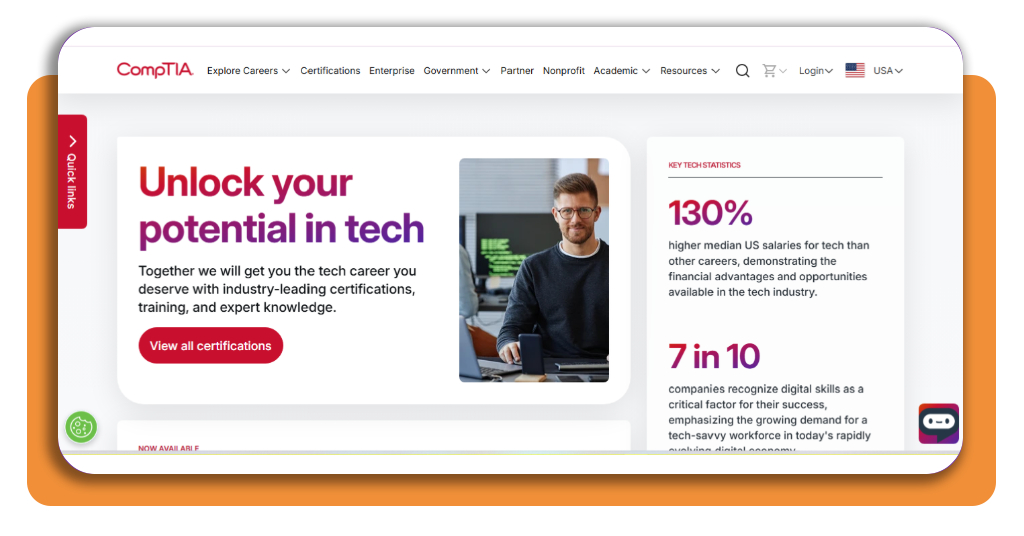
Obtain the official PDF objective list directly from CompTIA. Read through every objective line by line, highlighting terms or protocols you do not instantly recognize.
Use this document as your primary master checklist throughout your study process.
Step 2: build core domain knowledge and flashcards
Work systematically through high-yield study materials, such as official CompTIA guides or mobile apps (iOS | Android).
Create flashcards for essential acronyms (e.g., SIEM, SOAR, HMAC, EDR, MTTR) and well-known network port numbers (e.g., SSH 22, HTTPS 443, LDAPS 636).
Step 3: drill scenario-based practice questions daily
Complete 30 to 50 practice questions daily using mobile apps and question banks. Focus on identifying key qualifiers in scenario prompts.
When two options appear technically correct, choose the answer that aligns with organizational policy or fundamental administrative logic.
Step 4: simulate final exam conditions and schedule
Take at least three full-length, timed mock exams under strict test-taking conditions.
Once you consistently score 85% or higher on unfamiliar practice sets, purchase your exam voucher and register for an online proctored or in-person test session through Pearson VUE.
Top cybersecurity bootcamps and degree programs
These three programs represent the top tier of cybersecurity bootcamps, each serving a distinct learning style, budget, and career objective.
| Bootcamp | Primary Strength | Format & Duration | Est. Tuition | Key Certifications / Features |
| Evolve Security Academy | Hands-on SOC & SIEM lab training | 20 weeks (Live Online / Chicago) | ~$14,000–$14,950 | CompTIA Security+ voucher included |
| Springboard Cybersecurity | Self-paced flexibility with job guarantee | 6 months (Online, flexible) | ~$9,900–$10,900 | CompTIA Security+ prep + 1-on-1 mentor |
| SANS Technology Institute | Gold-standard industry reputation & GIAC certs | 6–18 months (Online / In-person) | ~$18,600+ (program-dependent) | GIAC (GSEC, GCIH, GCIA) & NetWars ranges |
How to decide which is right for you
- Choose Evolve Security Academy if you learn best in structured live cohorts with interactive evening classes and want direct exposure to SOC tools like Splunk and QRadar.
- Choose Springboard if you are transitioning careers while working full-time, require self-paced scheduling, and want a financial safety net through their tuition refund guarantee.
- Choose SANS Technology Institute if you have employer tuition assistance or budget for a premium credential, as GIAC certifications carry maximum weight with military, government, and Fortune 500 security teams
Essential study resources and hands-on tools for security analysts
To excel on scenario questions and perform well during technical job interviews, you must connect theoretical security principles with real-world security tools.
SIEM and log aggregation
Security Information and Event Management (SIEM) platforms such as Splunk, Elastic Stack, and Microsoft Sentinel are widely used to collect and analyze security data from multiple sources.
In certification exams and real-world environments, professionals use these tools to review event logs, correlate alerts, and identify Indicators of Compromise (IoCs) that may signal malicious activity.
Network protocol analysis
Tools like Wireshark and tcpdump help security analysts inspect network traffic in detail.
They are commonly used to capture packets, analyze TCP three-way handshakes, troubleshoot connectivity issues, and identify sensitive data being transmitted without proper encryption.
Vulnerability scanning
Vulnerability assessment tools such as Tenable Nessus, Nmap, and OpenVAS play a key role in identifying security weaknesses.
Security professionals use them to scan ports, detect outdated or unpatched software, discover misconfigurations, and perform security audits across networks and systems.
Endpoint security (EDR/XDR)
Modern endpoint protection platforms, including CrowdStrike and Microsoft Defender for Endpoint, provide visibility into device activity and potential threats.
These tools help analysts monitor process execution, investigate suspicious behavior, isolate compromised devices, and examine memory artifacts during incident response investigations.
Interactive practical labs
Hands-on learning platforms such as TryHackMe, Hack The Box, and CyberQ allow students and professionals to practice cybersecurity skills in realistic environments.
These labs often include exercises focused on Linux command-line usage, log analysis, network defense, vulnerability management, and secure system configuration.
4.7/5
How cybersecurity certifications can accelerate your career
The global cybersecurity industry currently faces a critical talent deficit of over 4 million unfilled positions.
Research confirms that integrating practice exams into your study routine can increase your likelihood of passing on your first attempt by up to 40%.
The official exam evaluates your ability to make rapid, context-aware decisions under time pressure.
Whether you are expanding your technical skill set through a coding interview practice guide or transitioning directly from helpdesk support, mastering the concepts equips you with real-world problem-solving abilities.