

Scalding summers and freezing winters keep demand high for tradespeople who understand comfort systems, and HVAC Technician Training turns curiosity into your paying career.
In this Insiderbits guide, you’ll learn the hands-on coursework, essential tools, and top trade schools that transform daily practice into a stable paycheck built around your lasting future.

4.8/5
Which is the best app to prepare for HVAC technician training?
Pocket Prep (Android | iOS) turns uneven study habits into structured, exam-ready practice for people chasing hands-on careers across dozens of licensed professions across the country.
Nurses, paramedics, and firefighters use the same organized approach that guides your HVAC Technician Training, giving every study session real structure instead of disconnected effort.
Every question inside the app mirrors the exam language, helping you build familiarity with tricky terminology long before test day forces you to recall it under genuine pressure.
Key features within the Pocket Prep platform
- Detailed answer explanations: each question comes with a full explanation showing why the correct answer works and why every other option falls short;
- Performance tracking dashboard: the app records every answer you submit, then highlights the topics where your weak spots still need real, focused review sessions;
- Premium access with a pass guarantee: upgrading unlocks the full exam bank plus advanced practice tools, backed by a guarantee built for motivated candidates;
- Free practice questions to start: You can try dozens of real questions before paying anything, giving you a feel for how the platform works.
Skilled trades exams covered by the app
Pocket Prep (Android | iOS) groups its trades content, covering fields like electrical work, plumbing, and other hands-on careers that require passing a licensing or certification exam.
That same trades category includes your HVAC Technician Training path, giving you a question bank built around core heating, cooling, and refrigeration fundamentals you need most.
Study modes built for busy schedules
Work shifts, family responsibilities, and daily errands leave little space for long, uninterrupted study blocks, which makes short, flexible practice windows feel far more realistic for you.
Short daily practice sessions fit into a long commute, a lunch break, or those last few quiet minutes before bed, building steady progress without demanding your entire evening.
Step-by-step: how to master HVAC fundamentals and pass certification exams on your phone
Your break scrolling turns into something useful once Pocket Prep (Android | iOS) replaces whatever app usually eats those minutes between bites of a sandwich and back to work.
Tapping through the setup screens feels closer to signing into a streaming service than filling out paperwork, and nothing about the process demands your full attention for long.
Within minutes, you’re answering questions and watching your HVAC Technician Training turn spare pockets of downtime into progress toward passing your certification exam.
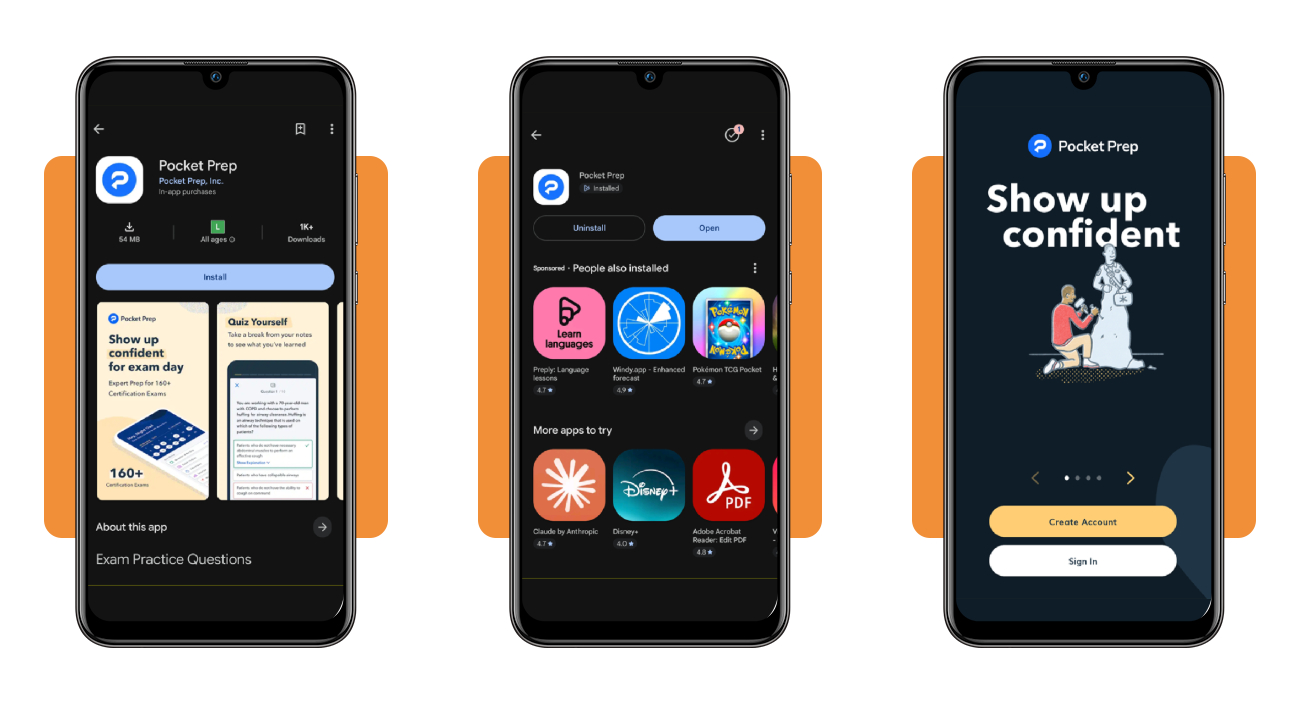
Step 1: download the app and create an account
Unlock your device and access the App Store or Google Play, search for ‘Pocket Prep’, tap ‘Get’ or ‘Install’, and then wait a few seconds while it downloads onto your phone.
Open the app, tap ‘Create account’, and type in your email address so the app remembers your progress every single time you come back to study.
Step 2: pick your HVAC certification exam
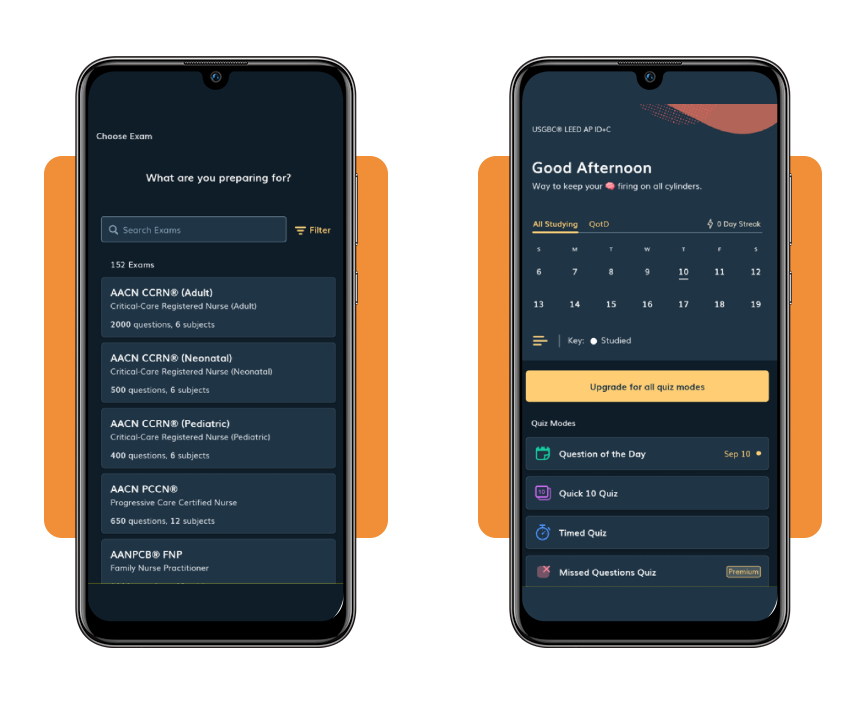
Tap the search bar and type ‘HVAC’, then scroll through the trade listings until you spot the specific certification exam matching your current career goals and upcoming test.
Select that listing to see the full question count and subject breakdown, giving you an idea of the available material before committing real hours to your study plan.
Step 3: build a daily practice routine
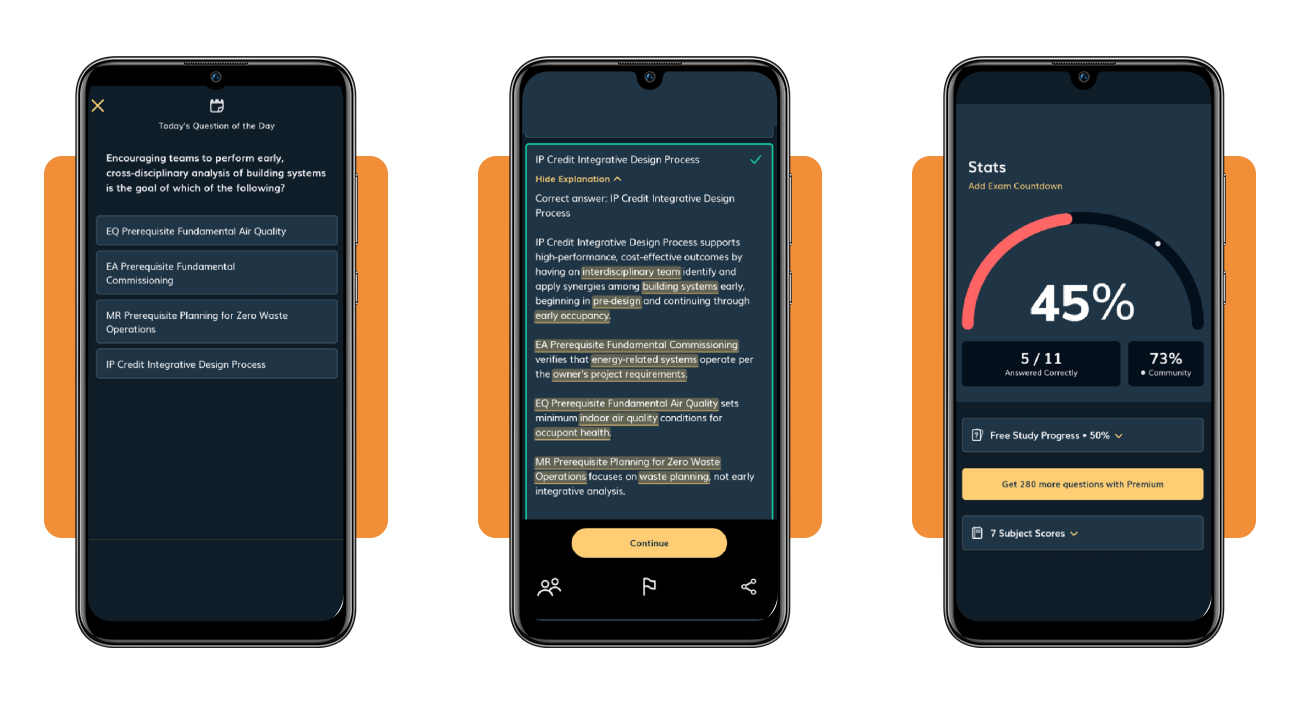
Tie your practice to something you already do, like your morning coffee or the minutes before bed, and answer ten quiz questions during that same window daily.
Turn on the ‘Question of the Day’ reminder and let it nudge you at a set time; that single habit keeps your HVAC Technician Training moving forward steadily.
Top trade schools and courses
Picking a recognized institution is just as important as picking the exam itself, since your training path determines how prepared you feel walking into a real job site.
Some programs hand you tools and equipment right away, while others run entirely through a screen, letting you study without ever stepping onto a physical campus.
That range of options means your HVAC Technician Training doesn’t have to fit one mold, and the right fit depends entirely on your schedule and budget.
Lincoln Tech for hands-on HVAC training
Lincoln Tech puts you inside a real workshop early, working with actual compressors and wiring instead of reading through diagrams on a screen for months on end.
Their program runs around 1200 hours, and some campuses hold HVAC Excellence cred, giving your resume a credential employers recognize the moment they see your application.
Penn Foster for flexible online study
Penn Foster lets you study entirely online, fitting coursework around whatever job or family schedule already fills your week without forcing you onto a campus.
Self-paced lessons mean you move through material as fast or slow as your life allows, and nobody rushes you toward a deadline that doesn’t fit your reality.
Ashworth College for affordable HVAC certification
Ashworth College keeps tuition low compared to campus-based programs, making it a realistic choice if money feels tight and traditional schools sit outside your budget.
Every lesson happens on your own schedule, and this HVAC Technician Training path works well if you’re balancing coursework with a full-time job already.
Best HVAC diagnostic tools for trade students
Passing your certification exam opens the door, but the tools you carry into a job site determine how confidently you diagnose problems across residential and commercial systems.
Building a solid HVAC Technician Training foundation means learning early to read a multimeter, a set of manifold gauges, and a dedicated leak detector with genuine, lasting confidence.
Every technician builds a toolkit slowly, and knowing which instruments matter most keeps you from wasting hard-earned money on gear that stays boxed in your work truck.
Multimeters for accurate electrical diagnostics
A quality True RMS multimeter tells you almost everything happening inside a circuit, from voltage and amperage to capacitor health, long before you replace a single failing part.
Look for a clamp feature that reads amp draw on compressors and blower motors, and inaccurate readings can lead you straight toward a wrong, costly diagnosis on any job.
Digital manifold gauges for refrigerant readings
Digital manifold gauges offer real numbers, calculating superheat and subcooling automatically while pulling pressure readings across multiple refrigerant types.
Bluetooth models send those same readings to your phone, building reports clients can see, and this kind of gear separates guesswork from HVAC Technician Training discipline.
Leak detectors and must-have hand tools
Soap bubbles only work if you already suspect a specific spot, but an electronic leak detector sweeps across coils and line sets, catching micro leaks that bubbles usually miss.
Round out your bag with an eleven-in-one screwdriver, a service wrench for king valves, and wire strippers for repairing damaged thermostat wiring on every single call.
4.8/5
The trade that never goes out of season
Pocket Prep (Android | iOS) turns your phone into a pocket-sized coach, quizzing you on refrigeration cycles, wiring basics, and safety codes until the material actually sticks.
In this Insiderbits guide, you saw how the right app, trade school, and toolkit come together to support real HVAC Technician Training from your first day.
Keep exploring Insiderbits for guides on other trades, smarter study habits, and the gear that helps you turn a new skill into steady, reliable income.