

Missing just a few questions on the OSHA exam could cost your certification and delay your paycheck. An OSHA 10 practice test helps you avoid repeat attempts.
360training offers a free study guide with quizzes and key safety concepts aligned with current standards. It’s designed to help before taking the official test.
Questa guida di Insiderbits walks you through every part of preparation. Keep reading to learn where to train, how to study efficiently, and what to expect once you’re fully ready.
Correlato: Corso di formazione online OSHA 500
Why you should study for your OSHA test
Failing the OSHA test means more than a wrong answer. It could mean missed workdays, extra fees, and extra stress while others move forward.
Time spent preparing is an investment in your future. Studying means fewer surprises during the exam and more peace of mind when it matters most on the job.
If you’re aiming to pass without setbacks, using an OSHA 10 practice test gives you a smarter strategy. It’s better to review now than to retake later.
Failing can cost you your certification
Each exam attempt has a cost. Getting just a few answers wrong might force you to pay again, wait longer, and lose potential work opportunities immediately.
Retaking the test may also delay your safety training completion. That means no certification card, no proof for employers, and no access to jobs requiring OSHA compliance.
With better preparation, you stay one step ahead. Failing doesn’t build your career. Passing with flying colors helps open doors faster than catching up from behind ever will.
Studying protects your time and money
Using an OSHA 10 practice test during review saves hours otherwise lost redoing applications or retaking exams after failure and helps you move forward faster.
The cost of another attempt adds up on your budget. Studying once helps you avoid losing both time and money you planned to use for important personal expenses.
Breaking the retake cycle starts with preparation. Knowing weak areas early keeps you focused, reduces pressure during testing, and lowers chances of paying for another attempt.
Preparation helps you avoid repeat attempts
Taking the test once and passing means moving on to job opportunities sooner. Studying helps you stop second-guessing and start showing up with solid knowledge.
Knowing what to expect reduces hesitation during the test. You’ll move through questions with focus instead of getting stuck and worrying about how much you’ve missed.
Instead of hoping you pass, use an OSHA 10 practice test to see where you stand. The earlier you prepare, the better your outcome during certification.

Why the official OSHA certification is important
Getting certified proves you understand workplace safety and helps you meet job requirements in fields where risk is part of the daily environment you’ll work in.
Employers value certified workers because it reduces their liability and shows you’ve received essential safety instruction before even stepping onto a hazardous site or handling equipment.
Preparing early with an OSHA 10 practice test gives you a practical advantage and helps reduce the risk of last-minute surprises during the certification process.
Required for construction and labor jobs
Construction firms require OSHA certification before hiring. This includes temporary gigs, entry-level jobs, and union roles that won’t consider workers without documented safety training.
Heavy equipment operators, demolition workers, and even flaggers need proof of OSHA 10 or 30 training. Without it, you might miss deadlines or get passed over entirely.
This certification is part of the legal framework. It helps contractors meet safety laws and lets you show up ready, prepared, and eligible for hazardous jobsite access.
Boosts your chances with new employers
Job listings in construction and manufacturing now mention OSHA cards as a baseline requirement. Without one, your resume may not survive the first screening process.
Using an OSHA 10 practice test to prepare shows you’re committed to passing early. That means employers spend less time onboarding and more time putting you to work.
Bringing a completed OSHA card to an interview signals you’re prepared to contribute safely. That puts you ahead of applicants still scrambling to complete their training.
Keeps you safer on the worksite
Certified workers know how to recognize hazards and respond quickly when something’s wrong. That kind of training protects everyone sharing space on a jobsite with you.
From ladder safety to chemical exposure, OSHA training covers more than rules. It helps you make better decisions in moments where safety can’t be left to chance.
Before facing real risks, using an OSHA 10 practice test builds awareness. Knowing the material helps turn training into instincts that protect you and others around you.
Correlato: Sicurezza sul lavoro: la migliore app per liste di controllo e ispezioni gratuite
Where to find the best OSHA 10 practice test
| Prezzi: | There’s a free study guide, and courses start at $59.99. |
| Disponibile per: | Web. |
The OSHA 10-Hour Outreach Construction course from 360training includes quizzes, safety modules, and downloadable resources built to match real jobsite demands and expectations.
This online training is OSHA-authorized and comes with digital content you can complete at your pace. The course covers awareness, protective equipment, and essential protections.
Alongside certification, you’ll receive tools to study better, including built-in checks and a free study guide. It’s a practical way to prepare before taking the real exam.
Study with OSHA-authorized course materials
Many unofficial tests miss key topics or skip required OSHA standards. A reliable OSHA 10 practice test is built directly into OSHA-authorized courses like this one.
360training’s material follows OSHA’s safety expectations. From electrical hazards to fall protection, everything aligns with compliance needs and prepares you to meet requirements.
The course isn’t just informative. It’s recognized. Passing it means you’re studying from content that’s designed to help you meet workplace safety standards from the beginning.
Track progress through built-in quizzes
Every module inside the course includes a knowledge check. These aren’t just review questions, they’re training moments that help reinforce each safety concept you’ve just learned.
Completing a module unlocks instant feedback and reveals how you’d perform on an OSHA 10 practice test. That makes it easier to catch mistakes early.
These checkpoints aren’t optional. They’re part of how 360training helps you absorb critical details while preparing for the final OSHA assessment and the job beyond it.
Get OSHA 10 certified with 360training
After completing the course and final exam, you’ll receive an official certificate. A Department of Labor OSHA card will also be shipped to your home address.
This card proves you completed training and are qualified for work requiring safety awareness. Employers across construction and manufacturing ask for this certification regularly.
While quizzes help you prepare, your OSHA 10 card comes only after finishing the course. It all starts by choosing 360training instead of searching for another OSHA 10 practice test.
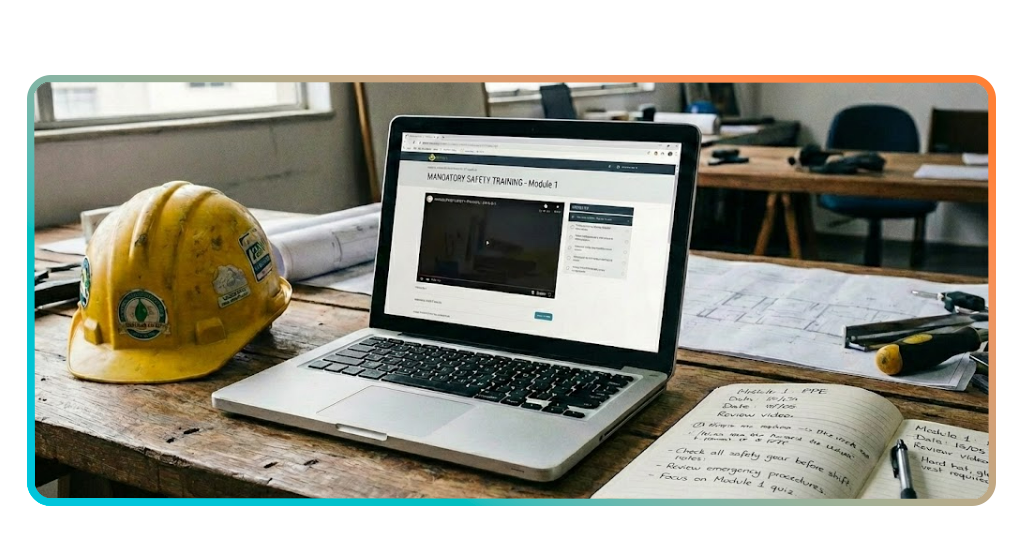
Step-by-step guide to enroll in the test
You don’t need paperwork, phone calls, or confusing forms to get OSHA certified. With the right training site, enrollment and prep fit neatly into your routine.
On 360training, registration takes minutes. After that, you’re inside the course, working through real safety topics at your pace and moving toward your DOL card.
Everything is built to keep you focused. From the downloadable study guide to the final quiz, every tool exists to help you finish what you started without stalling.
Step 1: start with the free study guide
Start by opening the OSHA 10 practice test available through 360training. It includes a free study guide that walks you through every core safety topic covered.
Reviewing the guide first helps you absorb difficult sections without rushing. It also prepares you for the kind of questions that appear later in the official exam.
These materials aren’t filler. They’re designed to help you stay focused, spot weak areas early, and build the kind of understanding employers expect from OSHA-certified workers.
Step 2: how to check your weak points
Interactive quizzes inside the course reveal which topics are clear and which still need work. You’ll notice patterns in how you answer and where you hesitate most.
If one area keeps slowing you down, spend more time reviewing it. Built-in feedback helps you target those gaps before reaching the final certification exam.
Instead of second-guessing, let the OSHA 10 practice test results guide your next move. Knowing where to focus saves time and helps prevent last-minute cramming.
Step 3: what to do after the practice test
Once your quizzes show solid understanding, move on to the final test. Passing that earns your certification and begins the process to receive your OSHA card.
If you passed but still feel unsure, rewatch any training videos available in your dashboard. Reinforcement strengthens your ability to apply what you learned onsite.
Quizzes, review sessions, and your OSHA 10 practice test are complete. Now’s the time to finalize enrollment, get certified, and prepare to show that card at work.
Correlato: Best Woodworking Course for Beginners
Stay ahead with trusted OSHA prep options
Taking the time to study safety topics properly can help you move faster toward certification. Starting with a solid resource makes preparation feel doable, even when things feel unfamiliar.
This was an Insiderbits guide shaped around the OSHA 10 practice test, built to show real steps and tools that matter when your goals connect directly to future opportunities.
If you’re looking into other training paths, Insiderbits covers more options to help you grow. From courses to other skill-building platforms, here you’ll find practical ways to keep moving forward.