

Life in Australia has been on the back of your mind for a while now. Maybe it is the lifestyle, a job opportunity, or someone worth moving continents for. Whatever put it there, the Australian visa process is the wall between where you are and where you want to be. That wall is a lot thinner than it looks, but only if you know which door to knock on.
This is an Idées reçues guide built for those who are serious about making Australia happen. Every major visa type is covered here, along with real costs, processing timelines, and the eligibility rules that send unprepared applicants back to square one. Australia is not as far out of reach as the paperwork makes it seem. Keep reading and find out how close you already are.
En rapport : Travel Anywhere Without the Paperwork Headache
Types of Australian visas
Australia does not have one visa for everyone. The system is built around your reason for going, and that changes everything about the process.
Each visa type comes with its own rules, costs, and timelines. Knowing which category fits your situation saves you from applying for something that will not work.
The good news is that the Australian visa system covers more ground than people expect. From short visits to permanent moves, there is a pathway for almost every situation.
Visits and tourism
Australia gives short-term visitors a few entry options depending on their passport. Americans go through the ETA route, which is quick and mostly painless to complete.
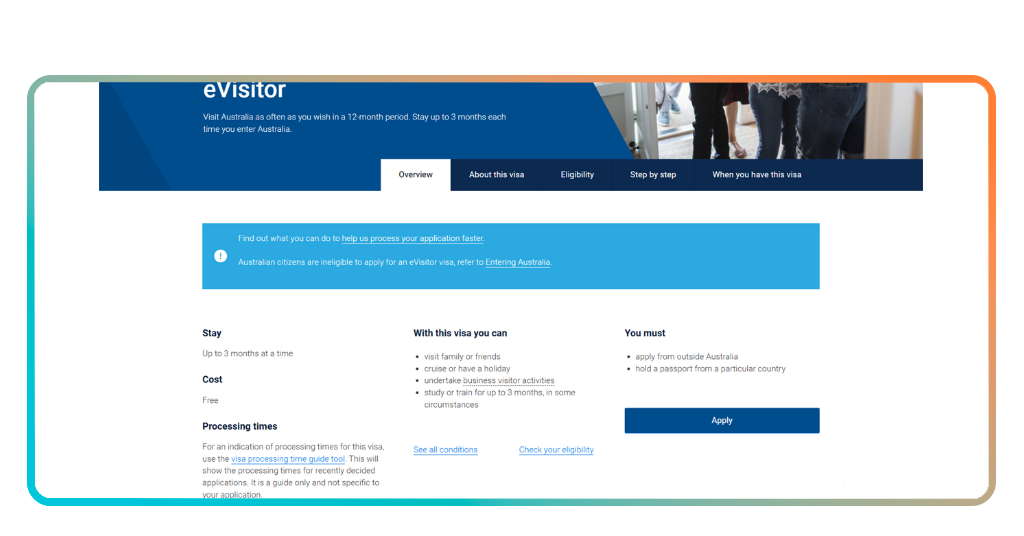
The ETA covers stays of up to three months per visit within a twelve-month window. It does not allow paid work but covers tourism, family visits, and short business activities.
Study visa
Studying in Australia means applying for the Student Visa, subclass 500. It covers full-time enrollment at any registered institution, from English courses to postgraduate degrees.
The visa lasts for your course duration and lets you work up to 48 hours per fortnight. Your spouse and kids can be included in the same application without issue.
Work visa
Landing a job offer in Australia does not automatically mean you can start packing. Work visas tie directly to your occupation, your employer’s approval status, and your salary level.
An Australian visa for skilled workers through employer sponsorship lasts up to four years. After two years with the same employer, permanent residency becomes a real and accessible option.
Permanent residency visa
Permanent residency in Australia is points-based for most skilled applicants. Your age, English level, work experience, and education all feed into a score that determines your eligibility.
Subclass 189 lets you live anywhere in Australia with no employer attached. The 190 requires state nomination but adds five points, which makes a difference in competitive rounds.
Visa to join family members
Moving to Australia to be with someone is one of the most common reasons people go through immigration. Partner visas cover spouses and unmarried partners of Australian residents.
The Australian visa for family reunification runs in two stages. A temporary visa comes first, and the permanent stage follows after the relationship is assessed again, usually two years later.
Visa to extended stay
If your visa is running out and you are not ready to leave, Australia has options worth knowing. A bridging visa kicks in automatically when you lodge a new application before expiry.
Extending a visitor visa from inside Australia is possible but not guaranteed. Officers look at your ties to the US, your finances, and your original reason for visiting before deciding.
Refugee and humanitarian visas
Australia runs two separate humanitarian programs. One covers people already inside the country and the other resettles refugees from abroad through an annual government program.
The onshore protection visa is permanent and open to people who arrived legally and can prove a genuine risk of persecution. Legal support is strongly recommended throughout the process.
Other types of visas
Australia has visa options that fall outside the main categories most people know about. The Working Holiday Visa covers a twelve-month stay with full work rights across the entire country.
The National Innovation Visa targets exceptional talent and grants permanent residency from day one, making it one of the most direct pathways the Australian visa system offers.
Step-by-Step guide to obtaining an Australian visa
The Australian visa process has a reputation for being complicated, but it follows a logical order. Once you understand the sequence, the whole thing gets a lot more manageable.
Most people get stuck because they jump straight to the application without doing the groundwork first. The order in which you do things really affects your outcome and timeline.
Skipping steps is where applications fall apart. Getting your Australian visa approved comes down to preparation, and preparation starts with knowing exactly what the process looks like.
Step 1: find the right visa type
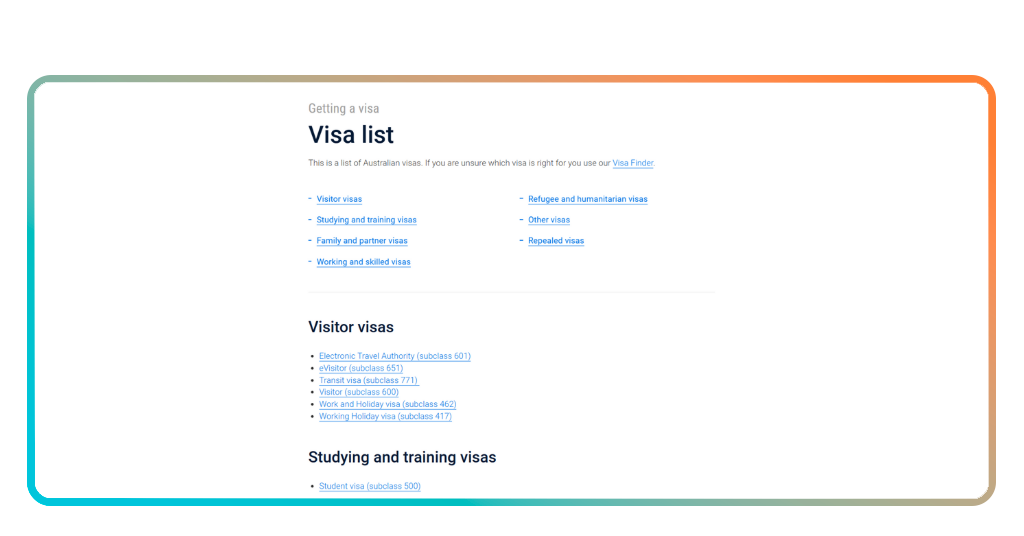
Australia has dozens of visa options, and picking the wrong one is a costly mistake. Your age, occupation, reason for going, and how long you plan to stay all determine which visa fits.
The Department of Home Affairs has a Visa Finder tool on its official website. Answer a few basic questions, and it narrows down the options that apply to your specific situation.
Step 2: gather your required documents
Once you know which visa you need, the document list becomes your roadmap. Every visa has its own checklist, and missing even one item can set your application back significantly.
For most visas, you will need a valid passport, proof of funds, English test results, and health clearance. Some also require a skills assessment or police certificates from countries you have lived in.
Step 3: lodge through ImmiAccount
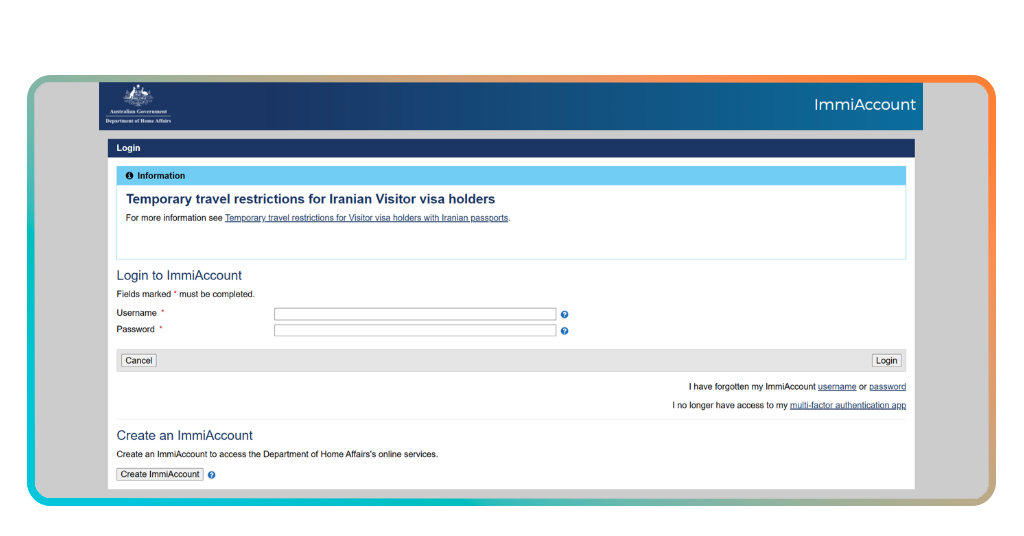
Almost every Australian visa application goes through ImmiAccount. Create an account, complete the application form, upload your documents, and pay the fee all in one place.
Lodging your appeal correctly the first time is worth the extra effort. A well-organized application moves through the queue faster and reduces the chance of a request for more information.
En rapport : Best Moving Checklist App: Organize Your Relocation Stress-Free
Visa fees and processing times for Australia
Visa fees in Australia are not a one-size-fits-all situation. What you pay depends entirely on the visa type, how many people are included, and where you are applying from.
Processing times follow the same logic. A tourist visa and a partner visa live in completely different timelines, and confusing one for the other leads to missed deadlines.
Before committing to any application, knowing the full picture is essential. The Australian visa fee is just the starting point, and the total cost of migrating is always higher than people expect.
What your application fee covers
The application fee pays for the government to assess your case. It covers the administrative work involved in reviewing your documents, running background checks, and making a formal decision.
That fee is non-refundable regardless of the outcome. If your application is refused, you do not get the money back, which is exactly why submitting an accurate application matters so much.
Realistic timelines for each visa type
Processing times shift constantly based on application volumes, staffing, and how complete your file is. Plan around these windows and build in extra time wherever your situation allows.
- ETA (subclass 601): instant to a few hours;
- eVisitor (subclass 651): 1 day to 2 weeks;
- Visitor (subclass 600): 1 day to 2 weeks;
- Student (subclass 500): 33 days to 6 weeks;
- Working Holiday (subclass 417): 2 to 5 days;
- Skills in Demand (subclass 482): 16 days to 6 months;
- Employer Nomination (subclass 186): 6 to 19 months;
- Skilled Independent (subclass 189): 6 to 19 months;
- Skilled Nominated (subclass 190): 6 to 19 months;
- Partner offshore (subclass 309): 9 to 14 months;
- Partner onshore (subclass 820): 12 to 24 months;
- Contributory Parent (subclass 143): 5 to 7+ years;
- Temp Graduate (subclass 485): 4 to 8 weeks;
- Protection (subclass 866): 145 days to 3 years;
Hidden costs most applicants overlook
The government fee is the number people focus on, but it doesn’t tell the full story. An Australian visa application comes with a set of expenses that add up quickly once the process is underway.
- Health examinations: up to AUD $400.00 depending on the tests required;
- Police clearance: AUD $20.00 to $42.00 per country you have lived in;
- Skills assessment: up to $1,000 depending on your occupation and assessing body;
- English language test: around AUD $420.00 for IELTS or PTE;
- Migration agent fees: AUD $2,000 to $5,000 for complex visa types;
- Biometrics collection: varies by location, but typically around AUD $18.00
- Translation of documents: AUD $12.00 to $40.00 per page.
Common mistakes and eligibility tips
Most visa refusals trace back to specific, avoidable mistakes that applicants make when they underestimate how seriously Australia takes its immigration process.
The eligibility rules are not designed to trip you up, but they will if you go in underprepared. Knowing where people commonly go wrong puts you in a much stronger position from the start.
A refused Australian visa is expensive in more ways than one. You lose the application fee, you lose time, and a refusal on your record can complicate every future application you make.
Incomplete applications trigger most refusals
Leaving a field blank or forgetting to attach a document is enough to get your application refused or delayed. Officers do not chase missing information; they just move on to the next file.
Go through the official checklist for your visa type before you submit anything. Every item on that list exists for a reason, and skipping even one can bring the whole application undone.
Your English score can decide everything
English proficiency requirements in Australia are tied directly to the visa type you are applying for. A score that works for one visa will not necessarily meet the threshold for another.
Skilled and student visas require IELTS, PTE, or TOEFL results no older than 3 years. If your score falls short, your application gets knocked back regardless of how strong everything else looks.
When to hire a migration agent
Some Australian visa applications are simple enough to handle on your own. Others involve enough moving parts that getting professional help is the practical call, not a luxury.
For complex types like a partner visa or protection claim, a registered migration agent earns their fee. Look for someone listed on the MARA register before handing over any documents.
En rapport : Free Exchange Program Opportunities for Americans to Study Abroad
You’re one application away from the Land Down Under
Australia keeps showing up on people’s lists for a reason. The lifestyle, the opportunities, and the visa process are all more manageable than most expect.
This Australian visa guide is one of many resources. Idées reçues builds for people ready to act. We’re here to turn complex topics into information you can actually use.
Keep exploring Idées reçues for more on traveling and living abroad. There is always another destination worth knowing about and another move worth making.