

A wrong turn is frustrating in any vehicle, but in a fully loaded semi-truck, it can become an expensive headache. Few situations are more stressful than discovering your navigation app has sent a 40-ton rig toward a low-clearance bridge or a road that wasn’t built for commercial traffic. That’s why many consider a GPS app for truck drivers a must-have on the road.
Unlike standard navigation apps, a GPS app for truck drivers accounts for truck-specific restrictions such as bridge clearances, weight limits, and restricted routes. More than 1 million drivers use these tools to avoid costly detours, violations, and unnecessary risks, making every trip safer and more efficient. Read on Idées reçues.

4.4/5
Which is the best free GPS app for truck drivers?
When you’re hauling cargo across state lines, standard navigation apps can quickly become a liability.
A route that works perfectly for a sedan may lead a truck straight into low-clearance bridges, weight restrictions, or roads that aren’t suitable for large vehicles.
Among the GPS app for truck drivers options available today, Sygic Truck, also available for iOS et Android, calls attention to its truck-specific routing.
Drivers can enter their vehicle’s dimensions, weight, and cargo details, allowing the app to build routes designed around real-world trucking restrictions.
This means fewer surprises, safer trips, and less time spent dealing with avoidable detours.
Limitations of the free version
The free version of this GPS app for truck drivers covers the essentials, including offline maps, route planning, and truck stop searches.
After the 14-day free trial period, however, many of the advanced trucking features move behind a paid subscription or truck license.
Depending on your region and plan, Sygic’s premium options start around $20 per year for navigation features, while dedicated truck-navigation licenses can cost significantly more.
Premium users gain access to features such as:
- Truck-specific routing based on vehicle size, weight, and cargo;
- Voice-guided turn-by-turn navigation;
- Real-time traffic updates and automatic rerouting;
- Lane guidance and junction views;
- Speed limit alerts and speed camera warnings;
- Android Auto and Apple CarPlay support;
- Regular map updates and fuel price information in supported regions.
For professional drivers, these tools can pay for themselves by helping avoid restricted roads, costly detours, and unnecessary delays.
Step-by-step: how to plan safe routes using the Sygic Truck
Before you hit the road, it helps to set up your truck profile properly so the app can actually “think” like a driver, not a passenger car GPS.
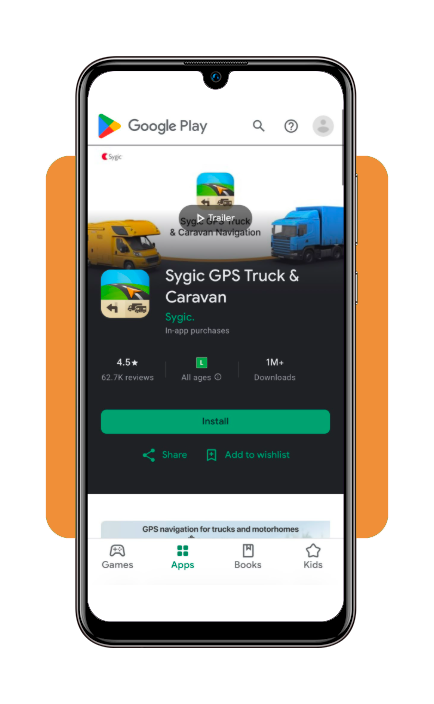
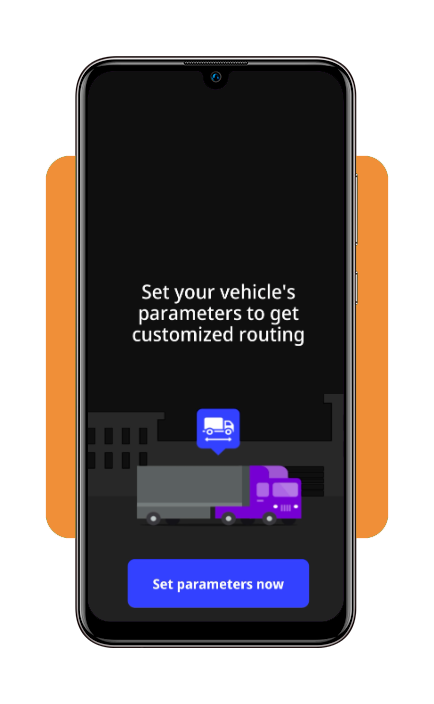
Step 1: set up your vehicle profile
Download the app on your iOS et Android and enter your truck’s dimensions, weight, axle count, and cargo type. This ensures the GPS app for truck drivers avoids roads, bridges, and tunnels that aren’t suitable for your rig.
Step 2: define your destination and route type
Type in your endpoint and choose between fastest, shortest, or most fuel-efficient route depending on your delivery priorities. Check the suggested route for low bridges, weight limits, toll roads, and restricted zones on the map.
Step 3: review truck-specific restrictions
Begin the trip and keep live navigation on. The app updates traffic, reroutes around restrictions, and adjusts guidance if conditions change on the road.

Features available in the Sygic GPS
The app uses detailed offline 3D maps that display highways, exits, and complex interchanges, helping drivers avoid last-second lane confusion.
It also includes truck-specific routing data like weight limits, restricted roads, lane guidance, and speed warnings tailored to your vehicle profile.
These systems process a wide range of routing variables in real time to keep navigation aligned with your truck’s specifications.
For added safety, the Head-Up Display (HUD) feature can project directions onto the windshield, making night driving and long hauls more manageable without constantly checking the screen.
Other interesting apps for truck drivers
A GPS app for truck drivers is just one piece of the puzzle. Running a commercial rig safely (and efficiently) also means having a few extra tools on your phone to handle compliance, emergencies, and long-term career growth.
To keep operations smooth on the road, drivers often rely on a small digital toolkit that covers the essentials:
- Electronic logbook apps: use a reliable logbook app to track driving hours and stay compliant with federal safety regulations, reducing the risk of fines or inspection delays;
- Emergency towing and roadside assistance apps: keep a tow truck help resource handy so you can connect with commercial recovery services when breakdowns happen far from home;
- Professional training platforms: explore truck driving courses to help drivers upgrade certifications, improve skills, or even expand into fleet management roles over time.
Together, these tools complement navigation systems and help turn day-to-day trucking into a more organized workflow.
Best commercial truck insurance options
Because running a tight operation is also about protecting the business behind the wheel, to have a consistent commercial insurance policy is what stands between a bad highway day and a serious financial hit.
When comparing coverage, don’t just look at the price tag.
The best plans balance premiums with real protection like cargo damage coverage and non-trucking liability, especially for long-haul or multi-state operations.
To see how current providers stack up, you can review this breakdown of the best commercial truck insurance companies.
And while you’re optimizing costs, it’s worth thinking beyond insurance too—fuel efficiency plays a huge role in long-term savings.
Practical strategies for saving fuel for diesel vehicles can help reduce operating expenses across thousands of miles on the road.
4.4/5
A smarter way to stay in control
Taking charge of a long-haul route with a GPS app for truck drivers is becoming part of the job for modern logistics teams. Between outdated signs, surprise restrictions, and expensive fines, the highway can still feel like it’s set up to trip drivers up.
The good news is that a little planning goes a long way: enter your truck dimensions correctly, adjust your routing preferences, and keep the app updated so it matches your vehicle and your route in real time.
And instead of worrying about tight tunnels or low-clearance bridges, you can focus on the drive itself, knowing the route was built with your rig in mind from the start.