
Walking home with one earbud out. Waiting for a ride that seems late. Sitting in the back seat of a car driven by someone you met five minutes ago through an app. None of these moments look dramatic. That’s exactly why they can turn dangerous so quickly. Emergency situations rarely arrive with sirens.
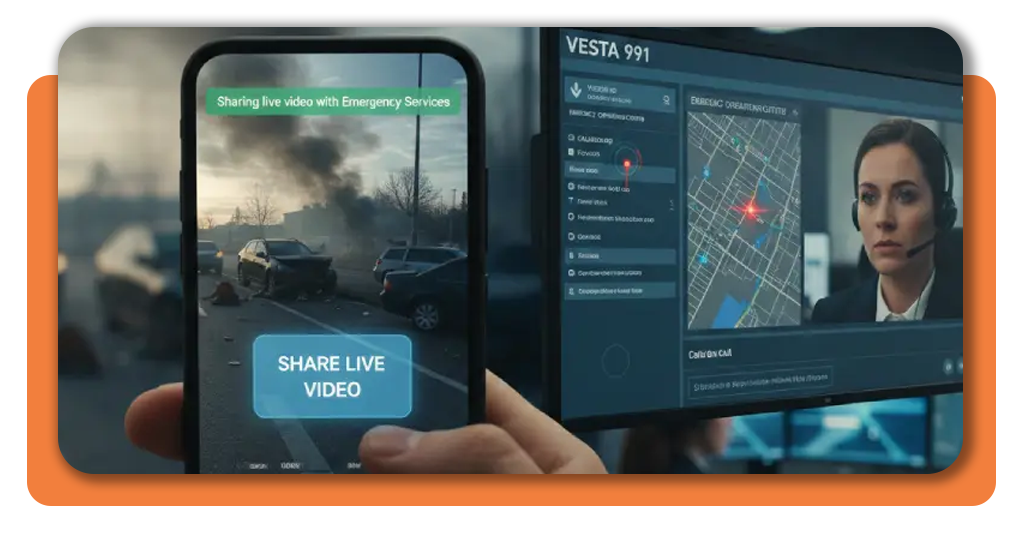
In an instance when people are shaky or have quivering voices, they tend to come in and out without any notice or warning. Many people have attempted to report chaos using words when calling 911; hoping the dispatcher would be able to create an accurate picture in their mind from their call. With emergency live video capability, the dispatcher can “see” what the responding unit will be responding to, in real-time.
- 10 Best Apps For Live Streaming Anything
- Essential iPad Apps for Video Game Streamers
- Get Your Sports Live Streaming Fix with the Dofu App
The gap between audio calls and real-time situational awareness
Audio-only emergency calls leave room for confusion. Dispatchers rely on verbal descriptions that may be rushed, incomplete, or distorted by panic.
This gap frequently causes an inaccurate response, particularly when callers find it difficult to describe their surroundings or potential threats, according to Google’s Android safety team.
Real-time video narrows that distance. Emergency live video gives responders immediate visual context: lighting conditions, nearby people, traffic, entrances, exits.
That situational awareness helps prioritize resources and tailor instructions on the spot.
Early pilots of Android’s emergency live video showed faster decision-making during incidents involving unclear locations or moving environments. Seeing the scene removes guesswork.
Using Android emergency live video to share your reality
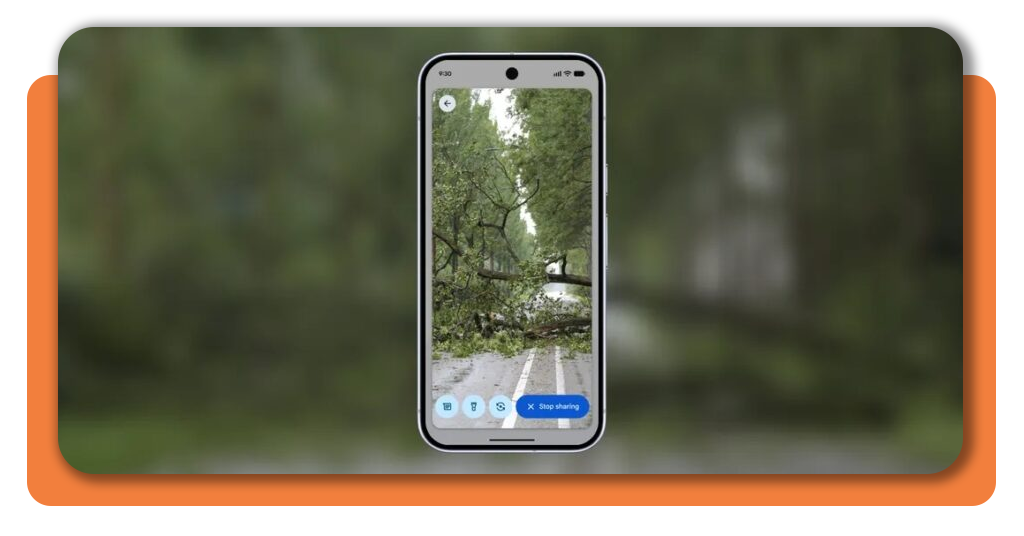
Emergency live video works as an extension of a regular emergency call. When activated, the feature streams footage directly from your phone camera to emergency responders.
No social media. No public sharing. Just a private, secure feed meant for help.
This approach reframes video as a digital witness. The dispatcher will pay attention to not just the way you tell your story, but also how you stand, what is going on in your environment, and what changes occur over time.
Noonlight connects users to emergency services while continuously sharing location data and contextual signals. The experience prioritizes speed and discretion over complexity.
Some common situations where emergency live video adds value:
- Ride-hailing trips that suddenly feel unsafe;
- Dates arranged through online platforms;
- Walking alone at night in unfamiliar areas;
- Medical emergencies where symptoms escalate fast.
The goal stays simple: reduce the time between danger and understanding.
Trigger silent alarms when speaking is too dangerous
Not every emergency allows conversation. Some situations punish noise. Others unfold too fast for explanations. Emergency live video pairs well with silent alert systems that send signals without drawing attention.
Noonlight, available for Android and iOS, offers a discreet activation method. Users press and hold a button inside the app.
Releasing it triggers an alert unless a PIN is entered. That silent countdown allows help to mobilize without a spoken word.
For circumstances relating to stalking, threats, domestic abuse, or public places where requested engagement/assistance may pose an increased level of risk; silent alerting combined with live video feeds allow responders to observe and prepare for the potential intervention.
For readers concerned about digital privacy in safety tools, Insiderbits explores how modern apps balance protection with data control.

4.7/5
Connecting dispatchers with your exact GPS location
Location accuracy often determines response speed. Traditional 911 calls still rely on triangulation methods that struggle indoors or in dense urban areas.
Emergency live video improves this by attaching precise GPS data to the live feed.
Responders receive coordinates updated in real time. Movement shows up instantly. For drivers, pedestrians, or users on public transport, that constant update prevents delays caused by outdated addresses.
Google highlights that combining video, GPS, and sensor data helps dispatchers identify landmarks, building entrances, and nearby hazards faster.
The technology reduces the burden on callers to explain where they are while under pressure.
For people who travel frequently or rely on ride-sharing, this layer of clarity feels reassuring rather than invasive.
Connecting wearables for hands-free protection
Emergency live video is no longer just accessible via mobile devices. Wearable technology is becoming a more important part of keeping safe and secure.
Smartwatches, fitness trackers, and similar devices allow users to activate their emergency contacts without having to pick up their phones.
Noonlight supports wearables by allowing you to activate it hands-free while running, cycling, or exercising, and it will send an alert with your profile and current location with one gesture.
This is important for situations in which picking up a phone would make you feel unsafe or impractical.
Runners, cyclists, and shift workers get the advantage of safety tools that are inconspicuous and travelling with them as they go through their daily routines.
As wearable technology continues to grow, emergency live video will be just one part of a broader ecosystem of safety tools that will become part of everyone’s daily lives rather than interrupting them.
Final thoughts
Emergency live video does not promise safety. It offers clarity when seconds matter and words fail. Android’s approach treats technology as a quiet ally, ready to document reality the moment something feels off.
The value lies in preparedness. Most users hope they never need it. Still, knowing that help can see, locate, and respond faster brings a sense of control back to unpredictable moments.