

Chess training has never been more accessible. A century ago, aspiring players relied on books, local clubs, and the occasional newspaper column.
Today, anyone with a phone can analyze strong engines, watch grandmaster lessons, and solve thousands of puzzles before breakfast. Learn on training apps with Insiderbits.

4.9/5
Which is the best chess training app?
Despite the explosion of technology, many players share the same frustration: they spend hours on chess training and still lose games in ways that feel embarrassingly familiar.
A missed fork here, a blundered queen there, and suddenly all those instructional videos seem less useful than advertised.
Chess.com reports tens of millions of users worldwide and has benefited from the global chess boom that accelerated during the pandemic and continued through online streaming and esports culture.
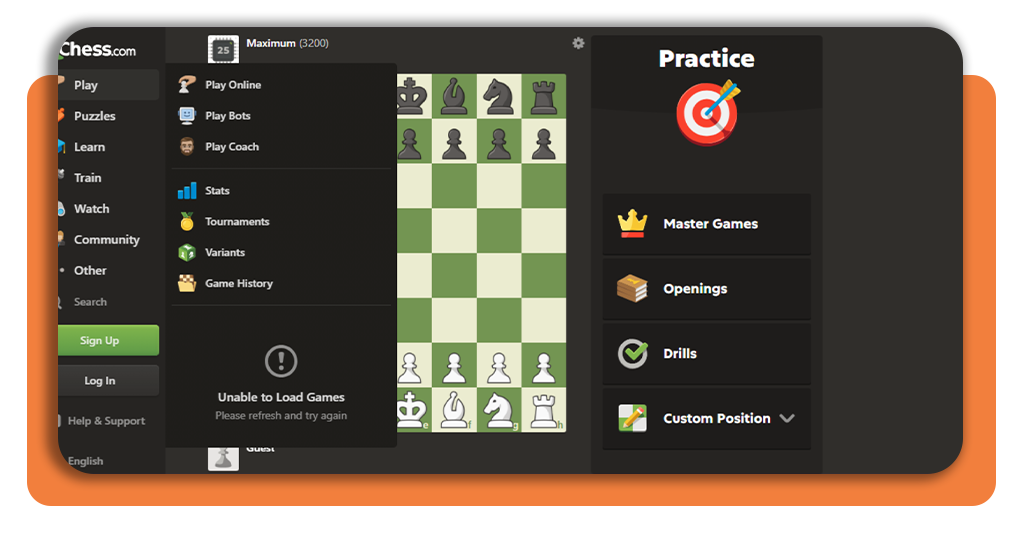
With the platform, also available for iOS e Android , instead of juggling books, databases, engines, and training software, players can find most forms of chess training in one place.
The app combines lessons, puzzles, computer analysis, opening tools, online matches, and performance tracking—good for both beginners and experienced players.
Features available in Chess.com
In the past, players simply knew they were improving.
Today, chess training platforms can generate charts, percentages, accuracy scores, and performance reports that look suspiciously similar to corporate productivity dashboards.
Some of the most commonly used chess training features include:
- Interactive lessons for beginners and advanced players;
- Daily tactical puzzles;
- Game analysis powered by chess engines;
- Opening databases;
- Endgame practice tools;
- AI opponents;
- Video courses from titled players;
- Progress tracking and rating history.
Step-by-step: how to master chess using this app
Mastering chess doesn’t happen in a single opening trap or viral checkmate. It’s built one puzzle, one lesson, and one hard-earned mistake at a time
Step 1: start with the lessons
If you’re new to chess, begin with the app’s guided lessons on your iOS, Android, or even web. They cover everything from piece movement and basic rules to strategy, openings, and endgames.

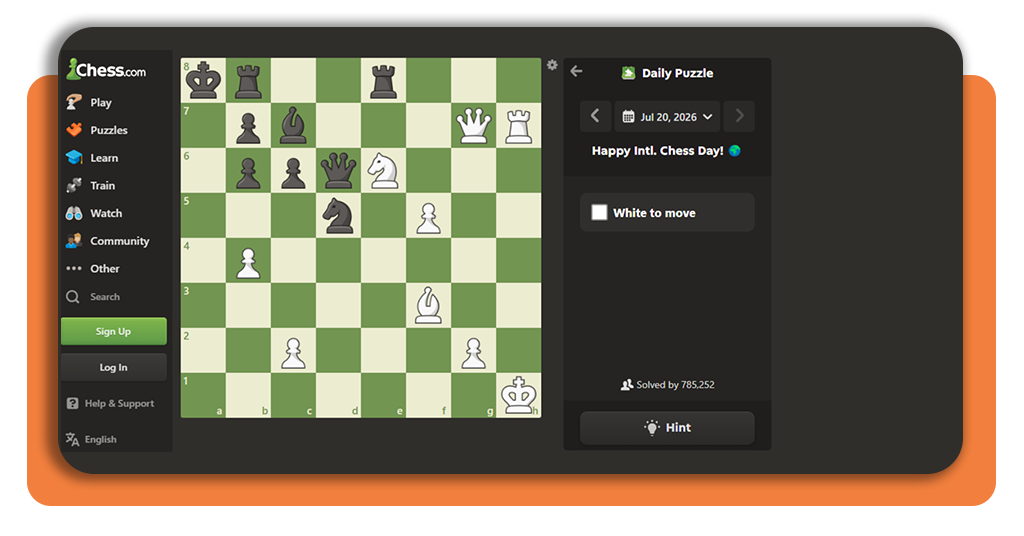
Step 2: solve puzzles every day
Puzzles train your tactical vision, helping you spot forks, pins, checkmates, and winning combinations faster during real games on the ‘Daily’ section.
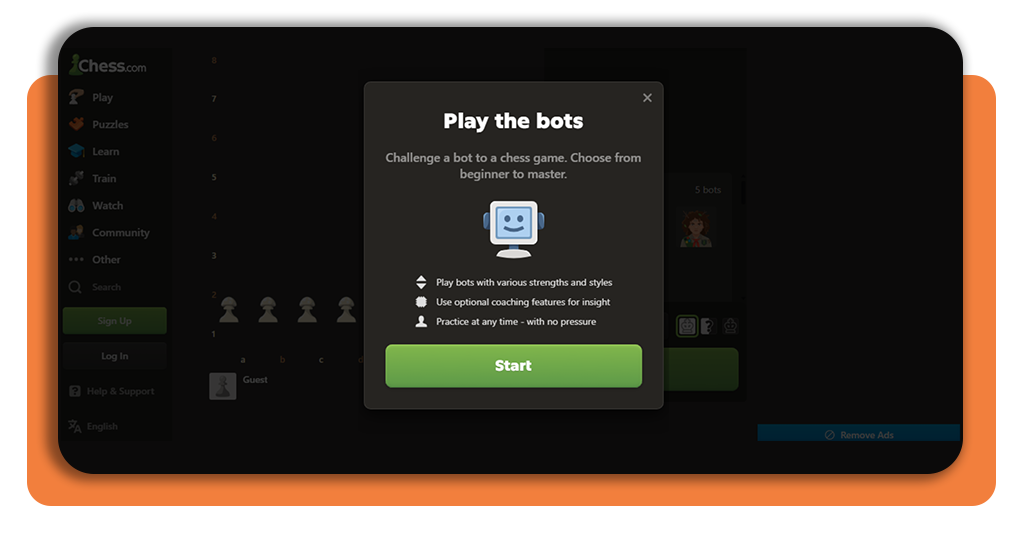
Step 3: play against bots before humans
Bots let you practice without rating pressure. Start with easier opponents and gradually increase the difficulty as your confidence grows, trying the computer mode.
After each match, analyze your mistakes. Understanding why a move failed is often more valuable than memorizing the correct move.
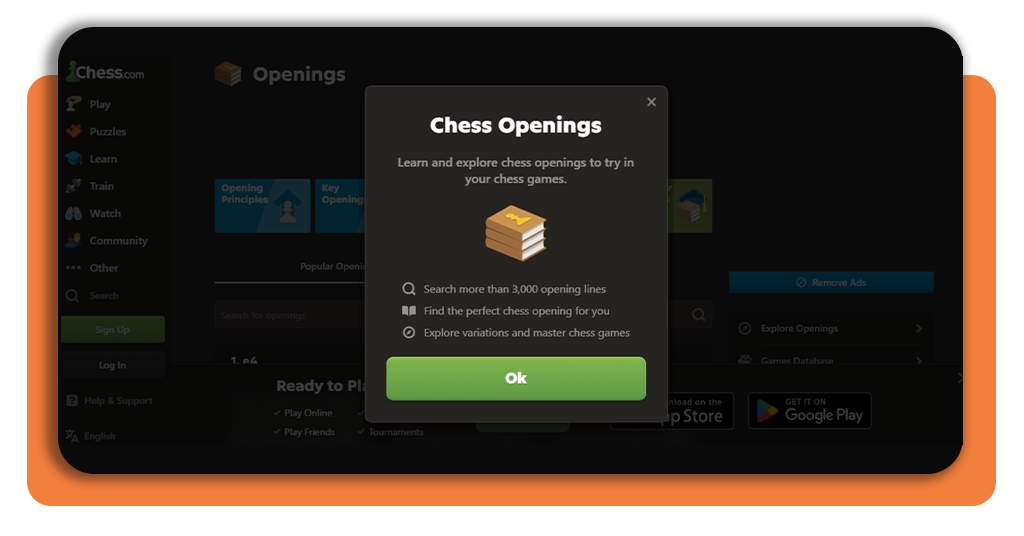
Step 4: learn one opening at a time
Avoid trying to memorize dozens of openings. Focus on a few simple systems and learn the ideas behind them.
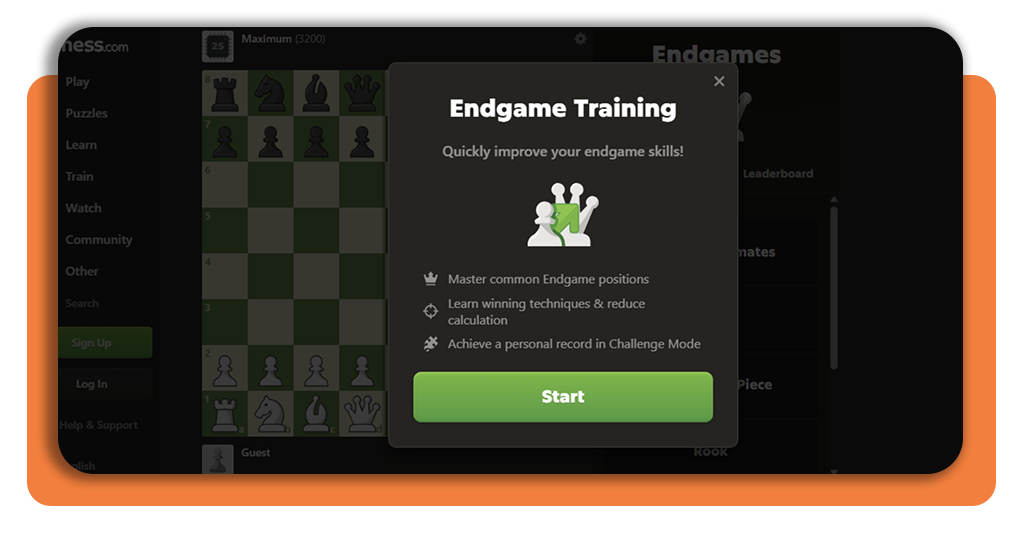
Step 5: study endgames
Many games are decided after most pieces leave the board. Apprendimento basic king-and-pawn and rook endgames can turn draws into wins.
Step 6: build a daily habit
Even 15 to 20 minutes of lessons, puzzles, and games each day can produce steady improvement. Consistency beats marathon study sessions.
Best chess strategies to train with
Not every training method delivers the same results. Some forms of chess training consistently produce stronger improvements than others.
Tactical pattern recognition
Most games below expert level are decided by tactical mistakes. Forks, pins, skewers, discovered attacks, and mating patterns appear repeatedly.
This explains why puzzle-based chess training remains so popular among coaches.
Calculation practice
Strong players don’t simply spot tactics. They calculate variations accurately. Exercises that force players to think several moves ahead often improve decision-making under pressure.
Endgame fundamentals
Knowing how to convert a winning position matters just as much as creating one. Ironically, many players can explain sophisticated opening theory but struggle to win basic king-and-pawn endings.
Time Management
A surprisingly neglected area of chess training involves clock management. Many otherwise strong positions collapse because players spend too much time searching for perfect moves.
What the data says about chess improvement
Online platforms now track billions of games annually, providing researchers and coaches with unprecedented insight into learning patterns. One consistent finding is that improvement tends to be gradual rather than dramatic.
The internet loves stories about players gaining hundreds of rating points in a few weeks. Reality is usually less exciting.
Most successful chess training programs rely on steady practice over months or years rather than sudden breakthroughs. This can be disappointing for players searching for shortcuts.
Unfortunately, chess appears remarkably resistant to shortcuts. The game has spent more than 500 years humbling people who thought they had found one.
Why many players plateau
One reason chess training feels difficult is that improvement often happens in stages. A player may spend weeks learning new concepts without seeing immediate rating gains. Then, seemingly out of nowhere, results improve.
Coaches often compare this process to language learning or physical fitness. Progress accumulates quietly before becoming visible.
Another challenge is information overload. Modern players have access to more chess training content than any previous generation.
Lessons, videos, courses, streams, books, podcasts, newsletters, databases, engines, and social media clips compete constantly for attention.
The irony is that having too many learning resources can sometimes slow improvement.
Studying chess and collecting chess content are not always the same activity.
Finding more ways to improve your game
For players interested in expanding their chess training routine, exploring different platforms and formats can provide useful variety.
Whether you’re comparing learning tools, puzzle systems, or gameplay experiences, this guide reviews several popular options:
Correlato: Best Chess Games Reviewed
Different players respond to different training styles, and experimenting with new tools can help identify what works best for your goals.
4.9/5
The long game behind every good move
At its core, chess is a game about decision-making. Every move asks the same uncomfortable question: what happens next?
Apps like Chess.com made chess training a data-rich and highly accessible experience. Players can now identify weaknesses faster than ever and learn from engines stronger than any human opponent.
Yet technology hasn’t changed the most important lesson.
There is no algorithm that can replace thoughtful practice, patience, and thousands of imperfect games.
Perhaps that’s why chess remains so compelling. Every generation invents new tools, new theories, and new technologies, and the board responds with the same message it always has:
‘Prove it.’