

Most of us have spent a portion of our lives wondering how on earth a massive metal tube actually stays in the sky. We collectively romanticize the cockpit, yet, the actual mechanics of flight remain a mystery for many, hidden behind a locked door and a lot of expensive buttons. A plane is a world governed by physics and nerves of steel, which usually feels inaccessible unless you have a trust fund or a military background.
However, we can now enjoy the excitement of takeoff from the comfort of our living room couches thanks to advanced physics and high-fidelity graphics. You can interact with an educational tool that replicates the realities of the skies, while keeping our feet—and our bank accounts—firmly on the ground; using a flight simulator.
- App per simulare gli impianti elettrici degli edifici
- Inseguite i vostri sogni con i giochi di simulazione immersivi
- Credit score simulator: see the impact before you make the move
Why flying has always sparked curiosity
Man’s obsession with the clouds isn’t just a cliché from a history textbook; but a fundamental part of our desire for perspective and freedom.
There is a psychological rush that comes with seeing the world from thirty thousand feet, where borders disappear and the chaos of the city looks like a neat, organized grid.
This curiosity often stems from a mix of wanting to understand the unknown and the innate human drive to master complex machinery.
We want to be the ones in control of that perspective, navigating the invisible highways of the atmosphere.
For many, this interest starts with a simple “what if?” What if I could understand those dials? What if I knew how to handle a crosswind? While most of us won’t pursue a commercial license, that spark of curiosity persists.
Here is where the virtual cockpit becomes a bridge, allowing the armchair enthusiast to peek behind the curtain of one of the world’s most specialized professions.
How a flight simulator game teaches the basics of aviation
A high-end flight simulator functions as a digital classroom disguised as entertainment. You begin to understand that a plane doesn’t just “go up”—it climbs based on an intricate balance of airspeed and angle of attack.
When you realize that pulling back too hard on the yoke causes a stall, the physics of flight suddenly stop being a boring classroom concept and become a visceral reality you need to solve in real-time.
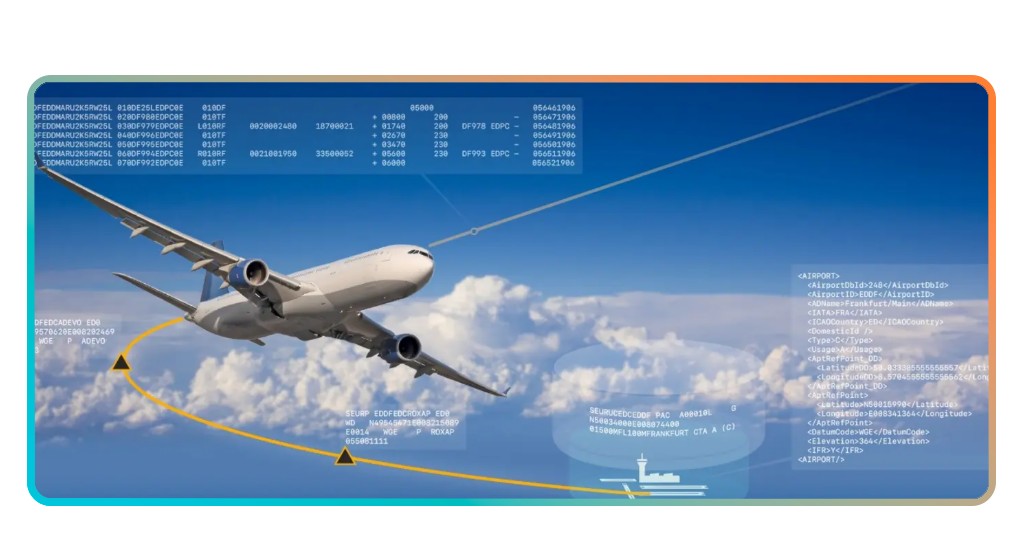
Modern software, such as Infinite Flight, incorporates real-world navigation data and accurate aircraft performance models. This means the way a Cessna 172 handles is fundamentally different from a Boeing 777.
You learn about the “six pack” of primary flight instruments, understanding how to read an altimeter and a vertical speed indicator, directly from your Android o iOS.
If you are already a fan of using technology to streamline your life, like using an AI travel planner to organize your ground trips, you will appreciate how these simulators teach you to think three steps ahead of your current position.

4.2/5
Understanding controls, routes and weather step by step
One of the most intimidating aspects of aviation is the sheer volume of information a pilot must process simultaneously. A comprehensive flight simulator breaks these down into manageable modules.
You don’t start by landing at Heathrow in a thunderstorm; you start by taxiing on a quiet runway and learning how to use the rudder pedals.
The learning curve is steep but incredibly rewarding, as each successful maneuver builds the muscle memory required for more complex tasks:
- Mastering the throttle to manage engine power during different phases of the journey;
- Learning to interpret METAR reports to anticipate wind shear or low visibility;
- Following actual VOR or GPS navigation waypoints to stay on a designated flight path;
- Understanding the importance of flaps and trim to stabilize the aircraft during descent;
- Communicating with virtual air traffic control to maintain safety in crowded airspace.
What it feels like to handle realistic flight scenarios
There is a specific kind of adrenaline that hits when you are on a short final approach and the wind starts to kick your tail around.
In a flight simulator, these scenarios are dynamic events influenced by real-time global weather data.
You might find yourself battling the legendary fog of San Francisco or the tricky terrain of an Alpine airport.
The tension is real, even if the stakes aren’t, and the satisfaction of touching down smoothly on the centerline is surprisingly addictive.
This realism extends to the systems within the plane. You have to manage fuel consumption, monitor engine temperatures, and sometimes deal with simulated mechanical failures.
It forces a level of focus and concentration that few other digital hobbies can match, trains your brain to stay calm under pressure, prioritizing tasks while a digital alarm is blaring in your ear.
You are not merely reading about a crisis; you are actually experiencing it and figuring out a solution, which is precisely the emotional engagement that makes simulation such an effective teaching tool.
Experiencing aviation without risk or high costs
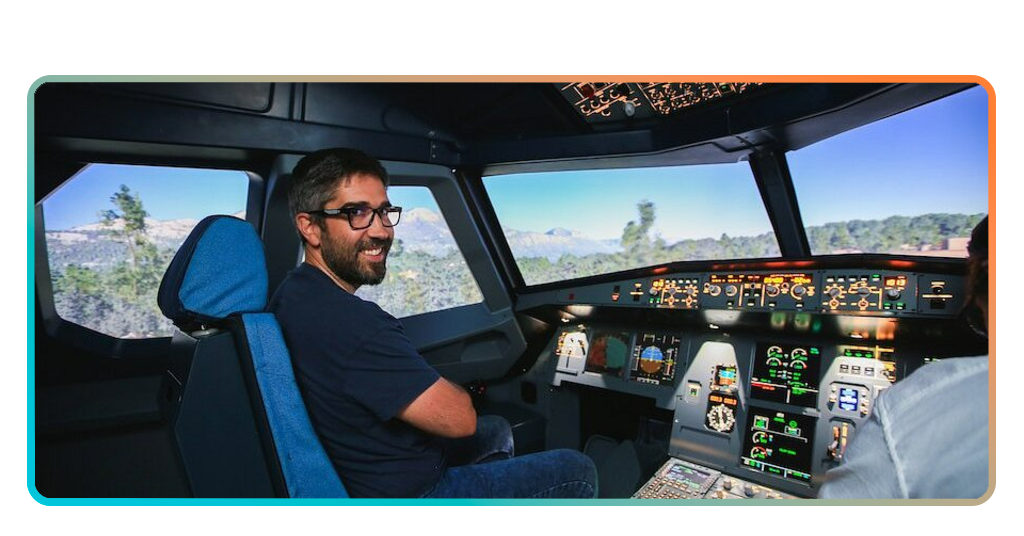
Let’s talk about the elephant in the hangar: flight school is ridiculously expensive. Between fuel surcharges, instructor fees, and aircraft rentals, the cost of a single hour in the air can be staggering.
A mobile flight simulator provides a high-value alternative for the casual enthusiast. You get to explore the entire globe, landing at thousands of airports in dozens of different aircraft types, for the price of a few lattes.
Ultimately, this digital path is about the joy of discovery. It allows you to visit places you’ve never seen, from the perspective of a pilot, while gaining a genuine appreciation for the science that makes it all possible.
Final thoughts
You’ll never look at a plane the same way again; instead of just a seat in row 24B, you’ll see a masterpiece of engineering and a complex set of procedures.
The sky is now your new playground, regardless of whether you eventually enter a real cockpit or continue to be a committed virtual captain.