

Grocery runs turn stressful when formula prices climb, and your cart total keeps rising each week. Baby formula assistance can ease that pressure, helping you shop without worry.
WICShopper scans products, checks your eligibility, and tracks remaining benefits before you reach the register. In this guide, Insiderbits will unpack every feature inside, so keep reading!
Correlato: Baby meal planner app: plan nutritious meals for your children

4.8/5
Which is the best baby formula assistance tracking app?
WICShopper (Android | iOS) is a free mobile app built specifically for households enrolled in state WIC programs, connecting your benefits directly to the products sitting on store shelves.
The app scans product barcodes and checks them against your state’s approved food list, showing whether an item qualifies under your current benefits before you commit to buying it.
Baby formula assistance works through this same scanning system, pulling from your registered eWIC card so your balance and eligible products stay accurate throughout every shopping trip.
Features available in the WICShopper platform
- Instant barcode scanning: point your camera at any product inside the store and see whether it counts toward your current benefits before buying it;
- Text-based item search: type in a product name or item number to check its eligibility status without scanning a barcode or waiting around;
- Purchase history tracking: review every past transaction in one place and see what you bought along with the benefits remaining on your card;
- Recipe and nutrition guidance: browse meal ideas built around your approved food list, giving you fresh ways to use formula, produce, and pantry staples.
States and programs currently supported
WICShopper works with programs in more than 30 states, including Alabama, Florida, Ohio, Pennsylvania, and Washington, plus a program covering WIC Overseas worldwide.
Coverage keeps expanding as new states join the platform, and checking your state before downloading confirms your baby formula assistance applies to the store where you shop.
A proven track record with families
WICShopper has served WIC families since 2012, growing through direct feedback from parents who rely on it every week at grocery stores nationwide.
The developer responds to individual reviews, addressing concerns about missing product photos or barcode issues, showing attention to the daily struggles families face while shopping.
Step-by-step: how to check baby formula eligibility with the app
Getting your benefits linked to your phone takes only a handful of steps, and none of them require you calling your local WIC office for help.
WICShopper (Android | iOS) walks you through registration once, and baby formula assistance stays connected to your account from that point forward without any extra work.
The entire setup runs through your device settings and a quick card registration, giving you full access to your benefits within minutes of opening the app.
Step 1: download WICShopper on your device
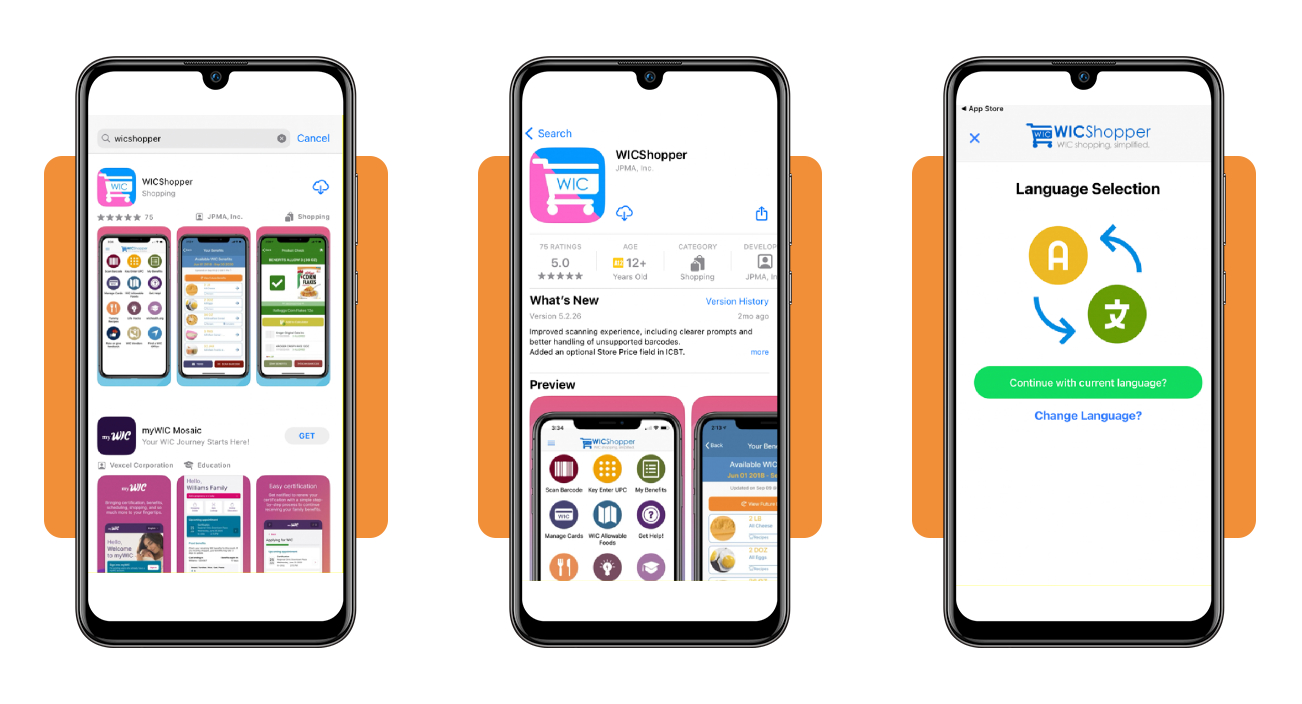
Search for ‘WICShopper’ by JPMA, Inc. on the App Store o Google Play, confirming the developer name matches before installing to avoid downloading the wrong app.
Once the download finishes, open the app and choose your preferred language from the first screen that appears, then continue past the notification permission request.
Step 2: select your state and register
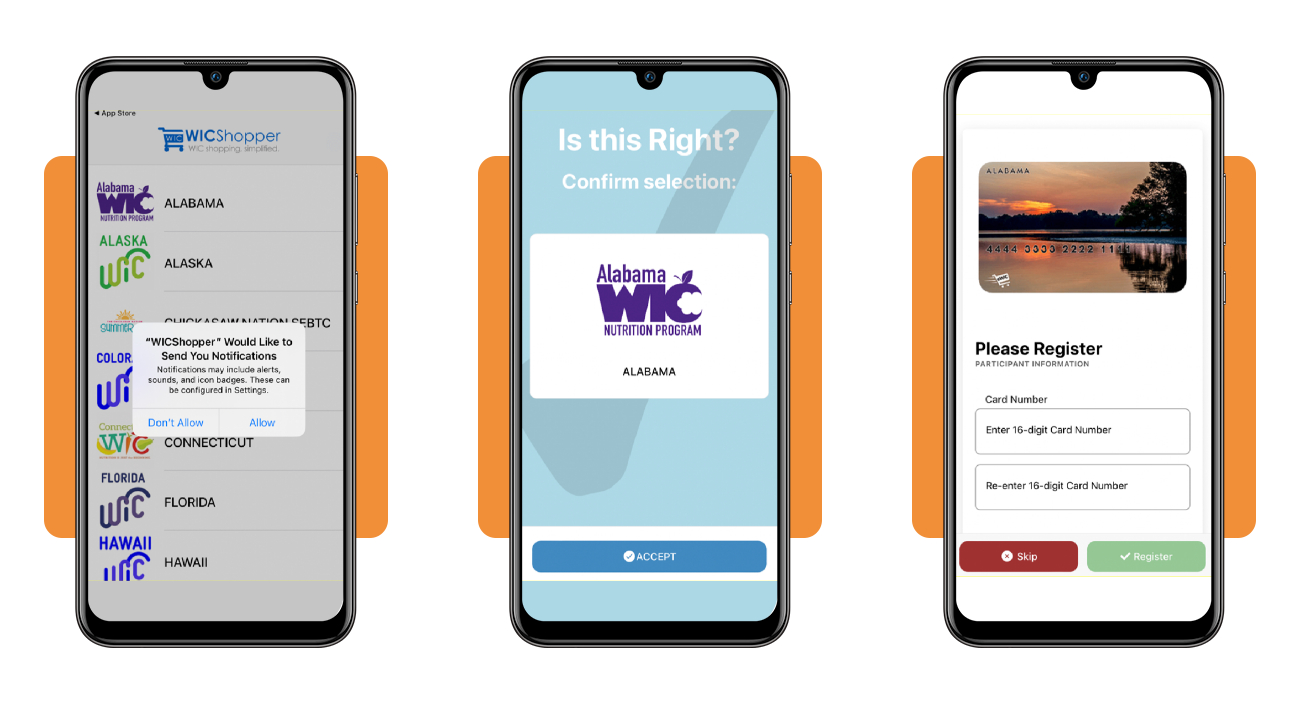
Scroll through the state list until you find your WIC program, tap it, and confirm your choice on the following screen before moving forward with registration.
Enter your eWIC card number twice to register it, and baby formula assistance benefits will sync automatically from your state’s system into your new account.
Step 3: scan or search for formula
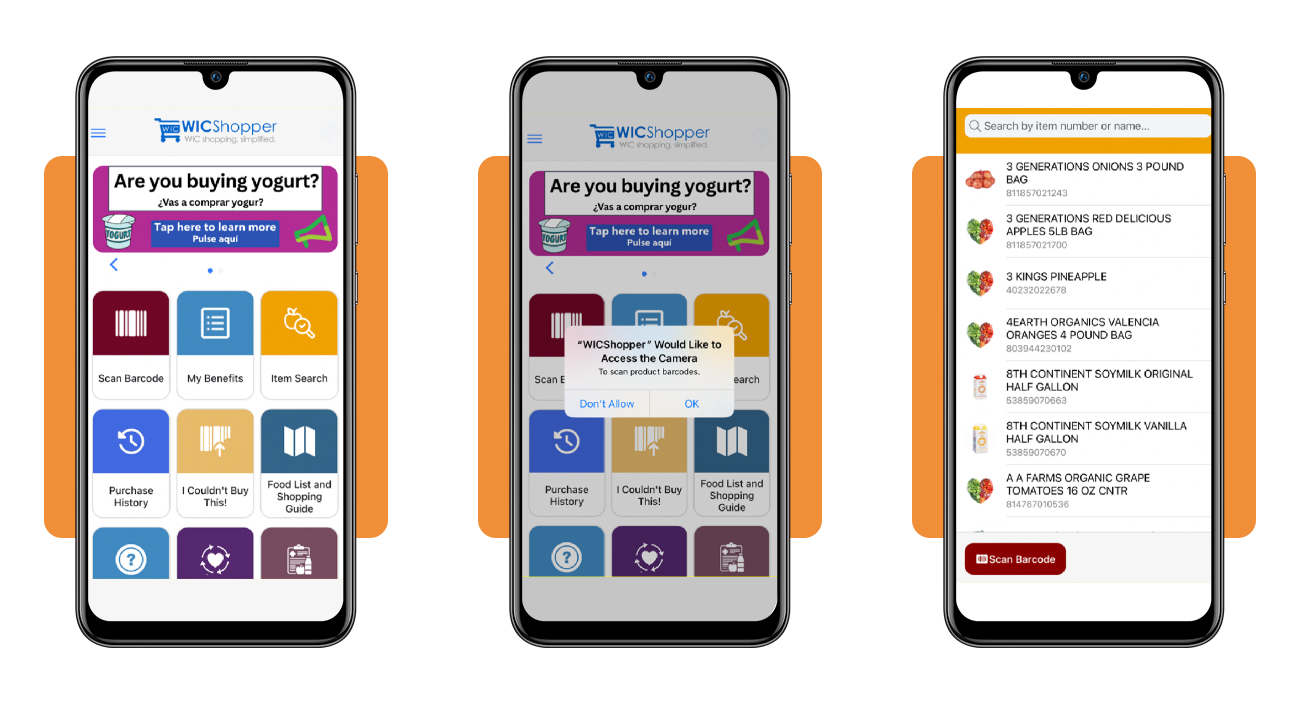
Allow camera access when prompted, then hold your phone steady over any formula barcode to receive an immediate eligibility result based on your current benefits.
Typing works just as well if scanning feels slow, so enter the product name or number into the search bar for the same instant confirmation.
Correlato: WIC SNAP qualification: check your benefit eligibility
Understanding WIC and SNAP: income limits for aid
Federal programs use income thresholds to decide who qualifies for help, and those numbers shift based on household size, location, and specific program rules.
SNAP and WIC work under separate guidelines, even though families often assume qualifying for one automatically means qualifying for the other without any additional paperwork involved.
Seeing where you stand financially makes the entire process less stressful, and understanding these limits puts you closer to unlocking baby formula assistance through the right channel.
WIC eligibility differs from SNAP
WIC sets its income limit at 185% of the federal poverty line, a threshold noticeably higher than what SNAP requires for most applicant households nationwide.
Qualifying for SNAP, Medicaid, o TANF automatically grants you WIC eligibility too, skipping the separate income calculation and moving you straight into the nutritional risk assessment.
Gross income limits for eligibility
Your household’s gross monthly income generally needs to fall at or below 130% of the poverty line before SNAP considers you eligible for benefits.
A family of three faces a limit close to $ 2,888 per month, while net income after deductions must land at or below the poverty line itself.
Deductions that lower your countable income
Several deductions reduce your countable income before the government calculates your benefit, including a standard deduction every household receives regardless of circumstances.
Earnings deductions, childcare costs, medical expenses for older members, and shelter costs all factor into securing stronger baby formula assistance through SNAP.
Top private health insurance plans for new mothers
Choosing a health plan while pregnant or caring for a newborn adds another layer of decisions on top of everything else you’re already managing.
Coverage varies widely between insurance companies, affecting everything from your monthly premium to how much you pay out of pocket for delivery and postpartum visits.
Combining solid health coverage with baby formula assistance gives your household two forms of support working together instead of relying on a single safety net.
Cigna leads in mom satisfaction
Mothers rank Cigna highest among major carriers, and a large share report feeling genuinely happy with how their prenatal visits and delivery costs were handled.
Locating an in-network doctor rarely causes frustration for Cigna members either, which matters when you’re already juggling appointments, paperwork, and a growing list of expenses.
Kaiser Permanente offers coordinated maternity care
Doctors, hospitals, and your insurance plan all live under one roof with Kaiser Permanente, cutting down on the back and forth that slows other systems down.
Expecting mothers can join CenteringPregnancy, a group program pairing you with others due around the same time while covering everything from stress relief to birth prep.
UnitedHealthcare provides more plan variety
UnitedHealthcare gives you a wider selection of plans than most competitors offer, so matching your coverage to your actual budget becomes far more realistic.
Stacking that flexibility with baby formula assistance means your household gets support on two fronts, easing pressure on both your medical bills and grocery costs.
Correlato: Assicurazione Sanitaria ACA: scopri come fare domanda online senza burocrazia
Best financial and budgeting tips for new parents
Raising a child comes with expenses that stretch far beyond diapers and formula, touching nearly every part of your household budget over the years ahead.
Building a plan now saves you from scrambling later, especially once higher costs like childcare, medical bills, and college tuition start showing up on your radar.
Smart financial habits combined with resources like baby formula assistance give your family more breathing room during those early years.
Protect your family with insurance
Life insurance makes sure your family has financial resources available if something happens to you, covering costs like a mortgage payment or your child’s future tuition.
Disability insurance matters just as much, replacing lost income if illness or injury keeps you from working, so your household can still cover rent, groceries, and bills.
Build a solid emergency fund
Setting aside 3 to 6 months of essential expenses gives your family a cushion against job loss, medical emergencies, or any unexpected financial surprise.
Between diapers, doctor visits, and baby formula assistance covering part of your grocery bill, that safety net keeps small setbacks from turning into serious financial stress.
Save early for college and retirement
Starting a college fund at birth grows your savings significantly more than waiting until your child reaches elementary school, thanks to years of extra compounding.
Retirement savings still come first, though, since your child has loans, scholarships, and grants available, while you can’t borrow your way into a comfortable retirement.
4.8/5
From formula aisle to full coverage
WICShopper puts your WIC benefits right in your pocket, scanning barcodes and tracking what’s left before you ever reach the busy checkout line at the store.
In this article, we explained how baby formula assistance works, walking you through eligibility, income limits, and insurance options that support your growing family this year.
Stay with Insiderbits and read more articles that teach you how to save money, from helpful apps to government benefits designed to support your household through every stage of life.