ChatGPT is emerging at a moment when educators face growing pressure from lesson planning, grading, administrative demands, and constant adaptation to different student needs, all within schedules that leave little room for rest or reflection. Teaching no longer ends with the classroom bell, since evenings and weekends are usually consumed by various activities like preparing materials, correcting assignments, and rewriting explanations.
Within this context, ChatGPT for teachers is a great tool that positions itself as a pedagogical assistant that supports educators in those operational tasks, allowing teaching energy to return to instruction rather than repetitive preparation. Understanding how this tool fits into daily routines opens space to streamline teaching workflows, explore ethical and practical uses of AI in education, and reshape how time is allocated inside and outside the classroom.

4.8/5
Why AI Helps Teachers Reduce Workload and Stress
One thing is for sure: AI is helping professionals in different areas to reduce workload and stress through practical support in repetitive tasks that traditionally consume a lot of time.
For teachers, this is not different, mainly when lesson preparation accumulates beyond classroom hours.
When these responsibilities stack up, mental fatigue grows and available time for pedagogical reflection steadily shrinks.
Some tools powered by AI handle operational layers of teaching with speed and consistency, transforming raw ideas into organized lesson outlines and clear explanations aligned with curriculum goals.
Consequently, stress reduction follows naturally when workload pressure eases, as teachers regain control over schedules and mental bandwidth that can be redirected toward student interaction and instructional quality.
This way, planning stops feeling like an endless cycle of catch-up and starts aligning more closely with realistic workdays.
Understanding this dynamic explains why AI adoption in education can be all about sustainability, and opens a path toward teaching routines that support long-term professional well-being.
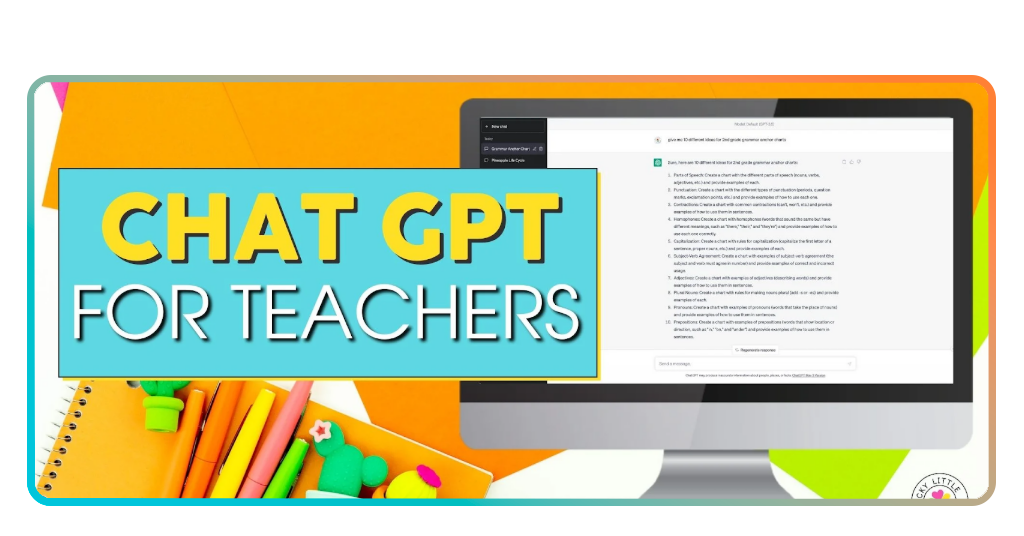
- ChatGPT Image Generation: Innovative Uses and Ethical Concerns
- ChatGPT Sora: Everything About OpenAI’s New Image Generator
- ChatGPT Tips and Tricks: Become a Power User
How to Use ChatGPT for Teachers to Create Lessons Fast
Quando si utilizza ChatGPT for teachers, professionals in this area can create lessons fast with reframing preparation as a guided dialogue.
This interaction shortens preparation cycles while preserving instructional intent and academic rigor.
Moreover, lesson creation accelerates when prompts specify learning goals, time limits, assessment criteria, and classroom realities.
ChatGPT supports rapid iteration across different formats, and adjustments can be made instantly to match available time or student engagement level, in accordance with priorities for a specific day.
Through this workflow, ChatGPT for teachers functions as an extension of the planning process, and educators are able to prepare lessons efficiently while keeping control over pedagogical decisions.
Best Prompts for Activities, Quizzes, and Explanations
Effective prompts sit at the center of productive use because ChatGPT responds most accurately when instructional intent and context are stated with precision.
That said, when prompts describe the audience, voice tone, learning objective, and time constraints, generated material aligns more closely with real classroom dynamics.
For classroom activities, prompts that frame a clear scenario and a measurable outcome help generate engaging tasks that fit available time and student ability, keeping activities grounded in pedagogy.
In addition, things like quiz creation improve when prompts define assessment scope and difficulty progression.
This way, teachers retain control through quick edits, while the initial draft removes the burden of constructing each question manually.
Lastly, explanations benefit from prompts that specify prior knowledge and instructional tone, allowing complex ideas to be presented in accessible language adapted to the class level.
This method supports faster preparation of explanations that can be reused, adjusted, or expanded across different lessons without restarting the process.
Tips to Personalize Content for Different Student Levels
The first thing you need to know when using ChatGPT for teachers is that personalizing content for different student levels starts with recognizing that classrooms contain varied learning speeds and background knowledge.
Those topics require instructional materials to adjust without fragmenting lesson structure.
When personalization is handled intentionally, students receive support that matches their stage without isolating them from shared learning goals.
When using ChatGPT, teachers can adapt the same core lesson into multiple difficulty layers aligned with grade level or proficiency.
Content adaptation also extends to pacing and format, as prompts can request shorter explanations, step-by-step breakdowns, or enrichment extensions tied to the same concept.
This is all done through intentional personalization, as AI-assisted planning supports inclusive classrooms where materials respond to student diversity with efficiency and respect.
If you want to streamline your teaching today and use adaptive content to support every learner with precision and balance, download ChatGPT from the App Store o Play Store.
4.8/5
Get Your Evenings Back: ChatGPT for Teachers Plans and Grades for You – Conclusion
In this article, we understood that ChatGPT for Teachers reframes educators’ approach to overall preparation, addressing the growing strain created when teaching responsibilities extend far beyond classroom hours into personal time.
If positioned as a pedagogical assistant, this approach supports all tasks during a lesson.
Ethical use and thoughtful prompts ensure that technology enhances teaching practice while preserving educational responsibility and academic integrity.
Exploring how AI fits into daily routines opens space for more sustainable teaching habits and greater control over time and energy.
Correlato: Stop writing emails: those free AI tools for work do it for you in seconds
Enjoyed this article? Save the Insiderbits blog to your favorites for the latest tools, creative tech tips, and photo editing breakthroughs.