

An anxiety test app can be more relevant than people expect since stress doesn’t arrive as an obvious emotional crash. More often, it slips into users’ lives through restless sleep, constant overthinking, irritability, racing thoughts, and that strange feeling of being mentally tired. The difficult part is that this kind of emotional overload can start to feel normal after a while, and people get unsure if they are having a rough week or dealing with something that deserves closer attention.
That uncertainty is part of what makes self-assessment apps appealing, and even more because some offer a private way to reflect and put vague feelings into a more understandable format. The Anxiety Test app (iOS/Android) can create that moment of pause through guided questions and quick score-based feedback. Read below the article by Insiderbits and discover how you can have a clearer snapshot of how you have been feeling lately.
- Chatbot per ansia e terapia: Conoscere Wysa, la vostra app per la salute mentale
- ASMR Slime: Feelsy for Stress and Anxiety Relief
- Le 5 migliori applicazioni gratuite che aiutano a gestire l'ansia
What’s the best anxiety test app?
If you want to know how an anxiety test app can stand out, you need to know that it needs to balance simplicity with meaningful feedback.
This plays an important part because a useful assessment needs to be quick enough to complete while still offering results that feel grounded and relevant.
That’s why users look for tools that do more than assign a score, preferring apps that help them understand patterns and reflect on how their stress evolves over time.
Oggi, Insiderbits highlights the Anxiety Test app (iOS/Android). An app that is known for using questionnaires inspired by clinical screening approaches.
This type of approach gives the results a sense of consistency without turning the experience into something overwhelming.
The questions are designed to capture common symptoms and behavioral patterns so users are able to see how their responses align with different levels of anxiety.
In addition, the effectiveness of the app depends on whether users feel comfortable returning to it regularly.
Ultimately, repeated use allows users to observe changes in their responses, turning a one-time check into a more continuous form of self-awareness.

4.9/5
Features available in the app
Now, let’s explore what we have when it comes to the features within the Anxiety Test (iOS/Android).
Firstly, the app focuses on making emotional self-assessment accessible without requiring prior knowledge of mental health frameworks.
Also, as we mentioned above, the app provides questionnaires that guide users through common anxiety-related symptoms.
Those questionnaires are responsible for helping organize thoughts that might otherwise feel scattered or difficult to describe.
Alongside, instant scoring offers immediate feedback, allowing users to see where their responses fall within different stress ranges, creating a clearer starting point for reflection.
And last but not least, the overall design of the anxiety test app keeps the process simple, encouraging use without turning the experience into something heavy or time-consuming.
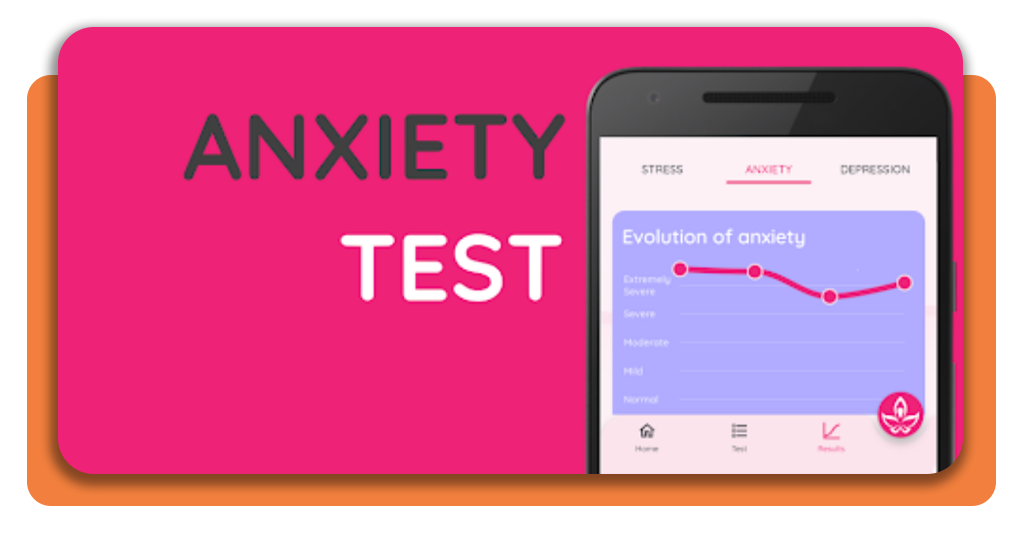
Step-by-step: how to check your stress score using the Anxiety Test
The usefulness of the anxiety test app is way better if you know how to approach it. Check the steps below:
- Fase 1: first task to do is download the Anxiety Test app on App Store o Play Store;
- Fase 2: now, you need to install. After opening the app, next is starting the assessment;
- Fase 3: once you start the questionnaire, answer each question honestly, focusing on how you have felt recently instead of overthinking each response;
- Passo 4: after completing the questionnaire, review your stress score once the app generates the result;
- Passo 5: read the explanation provided alongside the score to understand what the result represents.
Keep in mind that the process works best when responses reflect real feelings, since accuracy depends on honesty.
4.9/5
How to deal with your anxiety
So, one of the main goals of using an anxiety test app is that it can help identify patterns.
Still, managing anxiety involves adjustments that extend beyond the app itself.
Awareness is useful, for instance, although it gets more effective when paired with actions that support emotional balance.
Alongside, simple routines like maintaining consistent sleep, taking short breaks during the day, and reducing exposure to constant digital stimulation can influence stress levels.
Overall, all these small changes tend to have a cumulative effect, especially when applied consistently.
In addition, you can add breathing exercises and short moments of pause to help regulate immediate stress responses and create a space to regain control during intense moments.
Ultimately, when anxiety feels persistent or difficult to manage alone, professional guidance is an important step, as support can provide more personalized strategies.
A more informed way to understand your own mind
Working with an anxiety test app (iOS/Android) tends to shift the way people relate to their own emotional state, since it replaces vague impressions with something more observable.
As soon as these check-ins become more consistent, patterns start to emerge in a way that feels less abstract and more practical to interpret.
And this gradual awareness reduces the sense of unpredictability that surrounds anxiety, making it easier to anticipate reactions and adjust behaviors before they escalate.
Gradually, the combination of observation and action transforms the experience into a manageable one, where stress is understood and addressed with greater intention.
Correlato: Guida al sollievo con l'app Rootd Anxiety
Enjoyed this article? Save Insiderbits to your favorites and discover the most useful tech tips!