

Deciding to pursue a career in law enforcement is a commitment to a recession-proof future, often starting with a salary around $70,000 plus a pension. However, the selection process is known for being rigorous. Failing the written entrance exam or the physical ability test is the number one reason high-potential recruits are turned away before they even see the inside of an academy. But you can avoid that with the right police exam prep.
Truth be told, police and public safety departments have become more selective in recent years. Candidates are expected to demonstrate both strong physical conditioning and solid cognitive skills. The written exam now tests memory, reasoning, and decision-making under pressure. For those aiming to advance, preparation needs to cover both academic knowledge and physical performance.
- Hear breaking news first with this live police scanner app
- Ready to serve? See how to become a police officer
- Hear local sirens? Download this free police scanner app now
Where to find preparation for the American police exam?
When it comes to mastering the cognitive side of the recruitment process, Kaplan provides one of the most trusted police exam prep platforms available.
Their system is designed to eliminate Test Day stress by mimicking the exact environment you will face, whether your jurisdiction uses a paper-and-pencil format or a computer-based exam.
Le Kaplan platform counts with a specialized Qbank (Question Bank) that includes 450 test-like questions accompanied by detailed explanations.
This allows you to not only see if you got an answer wrong but to understand the logic behind the correct choice—a critical skill for situational judgment sections.
The interface provides performance feedback, allowing you to target your specific weaknesses and customize your study plan by content area.
Cost of the training
Navigating the costs of becoming an officer can be confusing, but Kaplan offers a tiered approach to fit different budgets:
- Free practice quizzes: you can get started immediately with free preview questions to gauge your current level;
- Full Qbank access: for a one-time fee of $49, you get complete access to all 450 realistic practice questions and explanations;
- Application fees: note that while the prep is affordable, individual jurisdictions may charge separate application fees for the actual exam, though fee waivers are sometimes available for eligible candidates.
Step-by-step: how to master police exam prep using Kaplan
Success in the recruitment process requires a structured approach. Follow these steps to ensure you are ready for both the written and physical hurdles.
Step 1: research your specific jurisdiction
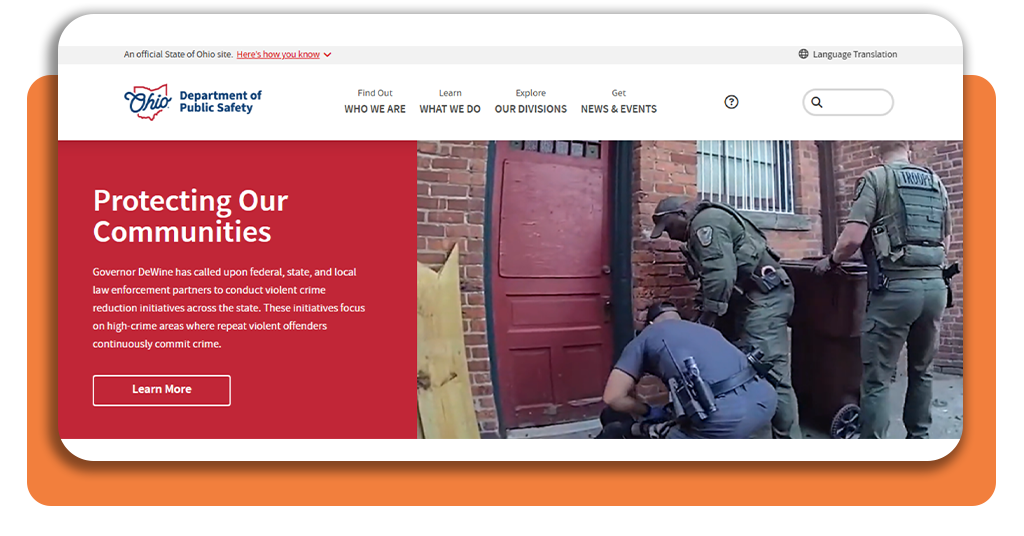
Visit your local department’s website (search “[City Name] Police Department”) and look for keywords like “Careers” or “Recruitment” to find specific age (minimum 21) and testing requirements.
Step 2: access the free practice portal
Aller à la page Kaplan Police Exam Prep page to start your first set of free practice quizzes and establish a baseline score.
Step 3: customize your study sessions
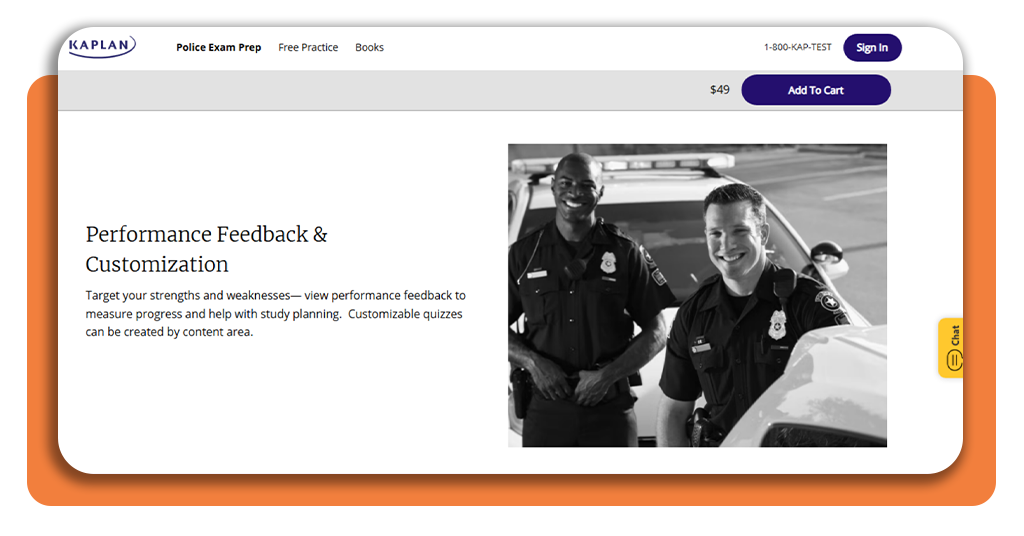
Use the performance feedback tools to identify if you struggle more with math, reading comprehension, or situational reasoning, then create custom quizzes to focus on those areas.
Step 4: upgrade for the full Qbank
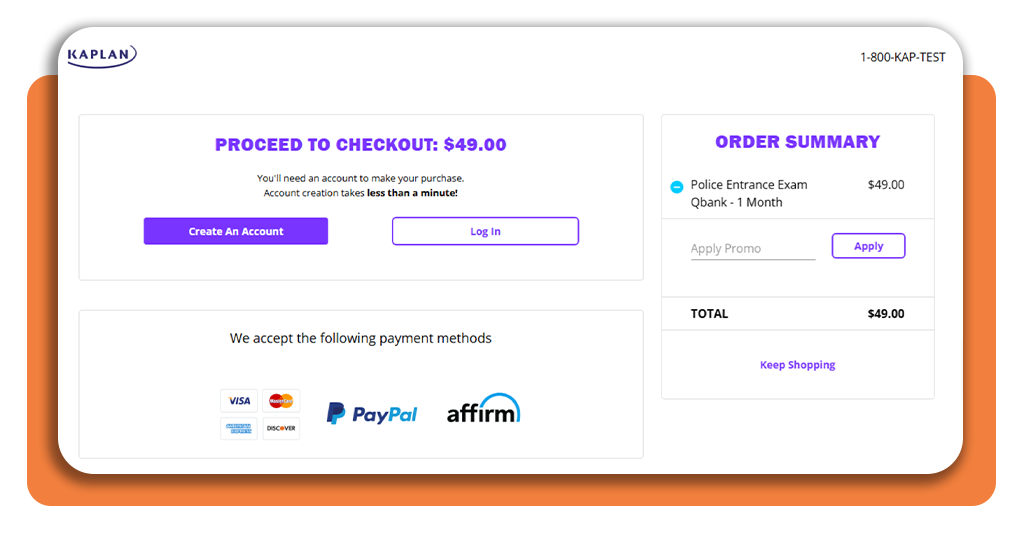
If you need more depth, the $49 upgrade provides 450 realistic questions that mirror the actual difficulty of the state or city exam you’ll be taking.
Step 5: prepare for the physical test
While studying, begin training for the physical portion, which typically includes running, obstacle courses, weightlifting, sit-ups, and push-ups.
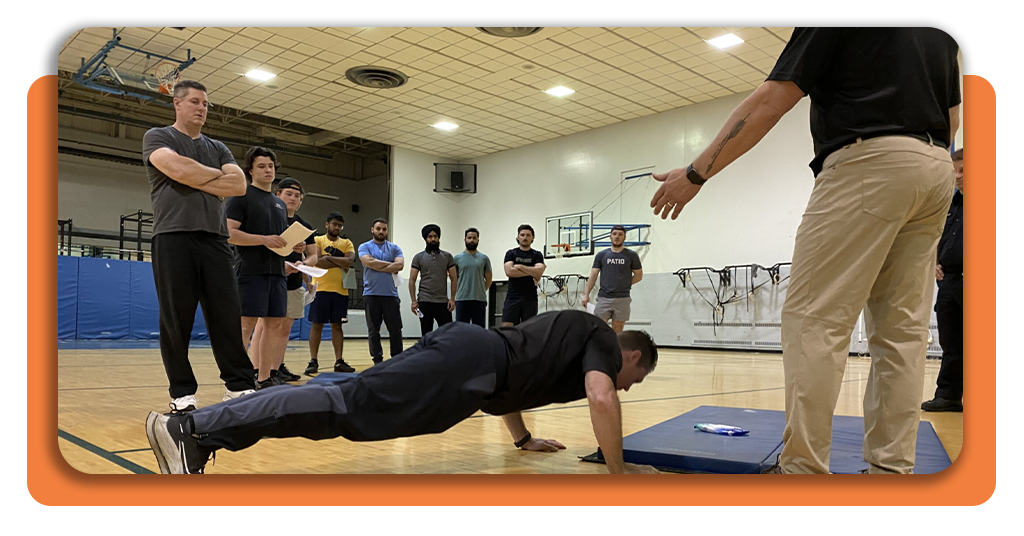
Would you like to check on a (free) training perspective? Access the Columbus Division of Police Academy Training Fitness Video available on YouTube.
Step 6: schedule your psychological and polygraph prep
Once you pass the written and physical exams, review our guide on how to become a police officer to prepare for the background investigation and polygraph stages.
Common mistakes to avoid during physical training
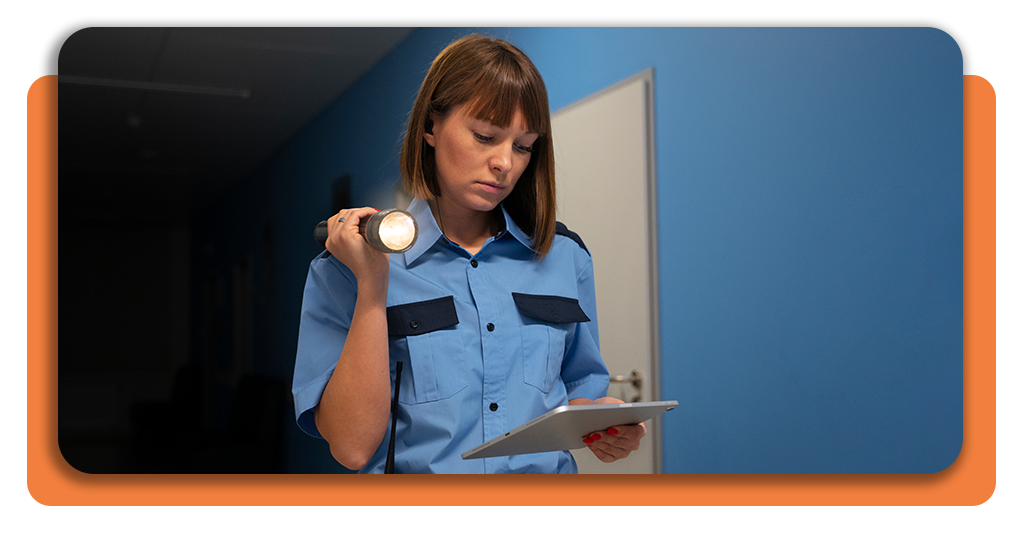
Even with a perfect written score, many candidates fail during the Physical Ability Test (PAT).
A common mistake is focusing solely on “gym strength” like heavy bench pressing while neglecting the functional mobility needed for an obstacle course.
You aren’t just being tested on how much you can lift, but how quickly you can move your own body weight under stress. Another frequent error is underestimating the specific “passing” requirements for your state.
Every jurisdiction has different benchmarks for run times and repetition counts. To avoid a “Did Not Pass” result, you should treat your physical training with the same academic rigor as your police exam prep.
Tips on the written and physical evaluation
The written exam is designed to gauge your potential as a candidate for the academy, but it is rarely the only hurdle.
Most departments require a passing score on the entrance exam followed by a psychological evaluation, a polygraph test, and a thorough background investigation.
Furthermore, a separate physical ability test is standard in almost all jurisdictions.
Eligibility and logistical details
- Age requirements: while specific rules vary by location, the minimum age to be appointed as a law enforcement officer is typically 21;
- Test formats: depending on your location, the exam may be computer-based or a traditional pencil-and-paper test;
- Statewide vs. city testing: some states utilize one standardized test where scores can be sent to multiple agencies. However, larger cities often require their own specific exam, meaning you might need to take both a statewide and a city-specific test;
- Fees and dates: application fees are common, though fee waivers are available for some candidates. Because exam dates are scheduled based on the specific needs of the jurisdiction, you must monitor department websites to know when the next testing window opens.
For more “study hacks” and specific drills to boost your overall readiness, check out these professional study hacks from industry veterans.
Securing your place in the academy
Choosing a career in law enforcement often reflects a commitment to public service and community safety. For many candidates, the path begins with structured preparation and a clear understanding of the hiring process.
Using the right police exam prep can make a meaningful difference when facing competitive selection stages. It allows applicants to build confidence in both written assessments and practical evaluations.
Au Idées reçues, we see preparation as a key factor in turning interest into a viable career path. With the right tools and consistency, candidates can approach the process with greater clarity and purpose.