
Many people in the United States still use a money order to pay bills, especially when paying rent, sending utility payments, or dealing with landlords who prefer a guaranteed paper payment. This option remains especially useful for people who don’t rely on traditional bank accounts, as well as for those who want a payment method that feels more secure and easier to track than cash.
Although the process may seem unfamiliar at first, understanding how money orders work can make bill payments safer and more predictable. In the article below, you will see how to obtain a money order through institutions, how to complete it correctly, and what limits and fees usually apply. By the end of this guide, Idées reçues will have shown you exactly how this traditional payment method works and when it may still be useful in everyday situations.
- Best App to Pay Bills Automatically
- Get Help Paying Utility Bills: Apply Today
- Pay bills through the US Postal Service: step-by-step
Money Order to Pay Bills: Step by Step
Firstly, we need to understand what a money order is. A money order is a prepaid payment document that works similarly to a check, although it doesn’t require a bank account.
The person purchasing the money order pays the full amount upfront at the time of purchase. That’s what differentiates it from a check.
Because the funds are guaranteed, recipients accept money orders as a reliable way to receive payments.
Then, if you learn correctly how to use a money order to pay bills, you can make certain payments much easier.
That’s even better in situations where cash is not accepted or where the recipient requires a guaranteed form of payment.
For example, landlords and some government services in the country still accept money orders as a reliable alternative to checks.
The process is relatively simple, although each step must be completed carefully so the payment reaches the correct recipient.
In order to do it, most people obtain money orders through the United States Postal Service.
Once purchased, the money order works similarly to a prepaid check, allowing you to send funds safely without sharing bank account information. Check the step-by-step guide below and learn how to do it effectively.
Step 1: go to a USPS agency
The first step is visiting a local post office operated by the United States Postal Service.
Usually people choose this option because USPS money orders are widely recognized and accepted by landlords, government agencies, and service providers.
At the counter, you can request a money order and specify the amount you need. Most locations accept payment in cash, by debit card, or by traveler’s checks.
Step 2: request a Money Order
Once you reach the service counter, tell the clerk the amount you want the money order to cover.
Of course this amount should match the payment you intend to send.
Then, the clerk will issue the money order after collecting the payment and a small service fee.
At that point, you will receive the document along with a detachable receipt that should be stored for your records.
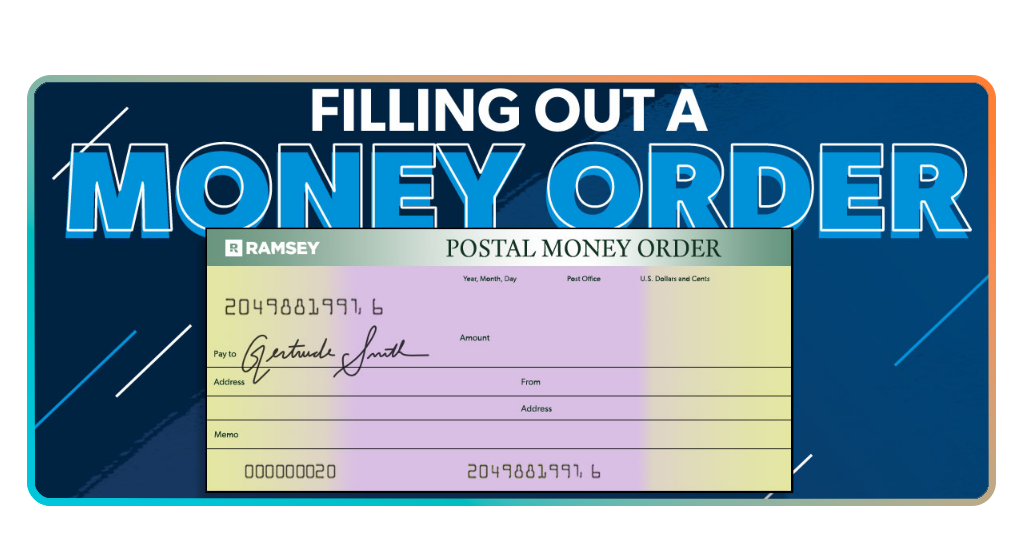
Step 3: fill out the Money Order correctly
Before sending the payment, the money order must be filled out properly.
Keep in mind that this step is one of the most important, because an incomplete form could delay the payment or make it difficult for the recipient to cash it.
Typically, you will write the name of the person or company receiving the payment, add your name and address in the sender section, and sign the document.
Always check that the amount written on the money order matches the payment required for your bill.
Step 4: send the payment
After completing the form, the money order can be mailed or delivered to the recipient.
It is common for people to place it inside an envelope along with a payment slip or account reference number, helping the company apply the payment correctly.
If the bill requires mailing the payment, using the mailing services offered by the United States Postal Service is usually the most straightforward option.
Step 5: keep the receipt
The final step is keeping the receipt attached to the money order. This small document contains a tracking number that can be used to verify the payment if any issue occurs.
Holding on to the receipt is important because it provides proof of payment. If the money order is lost or delayed, the tracking number allows you to request a replacement or investigate the status of the payment.
What is the maximum amount for each Money Order?
When using a money order to pay bills, one of the first things to understand is the maximum value allowed for each payment.
Since money orders are designed for relatively moderate transactions, it helps keep the process secure and easier to track.
Answering the questions: In the United States, the limit depends on where the money order is issued.
For example, money orders purchased through the United States Postal Service generally have a maximum value of $1,000 per money order.
This means that if a bill exceeds that amount, multiple money orders may be required to complete the payment. Meanwhile, other providers have similar limits.
Financial service companies such as Western Union or MoneyGram also commonly issue money orders capped at around $1,000.
Although fees and exact policies can vary slightly depending on the location and service counter.
Because of that, large expenses such as rent or contractor services may require more than one money order.
Fees charged for this service
Using a money order to pay bills is convenient and widely accepted in the United States, although this service usually includes a small processing fee.
The exact amount varies depending on where the money order is purchased and the value of the payment.
At the United States Postal Service, domestic money orders usually cost around $2 to $3, depending on the amount issued.
This fee covers the secure payment document, tracking capability, and the official receipt that allows you to verify the transaction later if necessary.
On the other hand, Western Union and MoneyGram often set their prices based on the purchase location and payment method.
Consequently, the fee can sometimes be higher in convenience stores, supermarkets, or check-cashing locations.
Even though there is a small cost involved, many people still choose money orders because they offer a secure way to send payments without using a bank account.
Advantages of paying your basic bills by Money Order
As we mentioned, a money order to pay bills remains an option for a lot of people in the United States.
That happens even more when a landlord or local service provider prefers a guaranteed paper payment.
Since the amount is prepaid at the time of purchase, the recipient knows the payment is backed, adding security that many people still value for essential monthly expenses.
Another important advantage is accessibility. Money orders can be purchased through the United States Postal Service and through many retail or financial service locations.
Because of that, they remain easy to obtain even for people who do not use online banking regularly.
Overall, for people without a bank account, or for anyone who wants a simple and traceable way to pay rent or utilities, money orders continue to serve as a reliable solution.
Paying bills with a money order: give it a try
A money order to pay bills still makes sense for some people in the United States, and we just showed that the process is not complicated and can be pretty straightforward.
This payment method also remains useful because it combines accessibility with a clear paper trail.
And those who don’t use banking services can still pay expenses in a widely accepted way, while those who prefer physical proof may find money orders easier to manage than cash.
Although digital options continue to grow, money orders still hold a practical place in everyday life.
En rapport : Virtual Mailboxes: Save on Business and Personal Mail
Enjoyed this article? Save Idées reçues to your favorites and discover the most useful tech tips!