

As financial pressure increases, new digital platforms have emerged promising easier access to financial support. Among them is Benevolent, a nonprofit platform.
But how effective is the platform? Can they realistically make a difference? Connect people facing hardships with individuals and organizations willing to help? Read on Idées reçues.
Which is the best financial support platform?
Financial support has become a growing concern for millions of Americans navigating rising housing costs, medical bills, and everyday expenses.
A significant share of adults would struggle to cover an unexpected emergency expense without borrowing money, using savings, or seeking outside help.
There is no single solution for every financial emergency. Some people qualify for government assistance, others turn to charities, and many rely on family or friends.
Des plateformes comme Benevolent occupy a different space within the broader financial support landscape.
Rather than offering loans or traditional grants, Benevolent helps connect people with networks of community support.
The platform focuses on practical needs such as housing stability, transportation, food access, employment barriers, and other challenges that can create financial hardship.
This approach reflects a broader trend in social services. Many experts argue that effective financial support often involves more than simply providing money.
Access to transportation, job opportunities, childcare, or stable housing can sometimes have a greater long-term impact than a one-time payment.
Features available in the Benevolent platform
Benevolent offers several tools intended to facilitate financial support and community assistance:
- Community-based assistance requests;
- Connections to nonprofit organizations;
- Resource referrals;
- Support networks for urgent needs;
- Local service coordination;
- Digital case management tools.
Unlike crowdfunding platforms, which often depend on social media reach, Benevolent’s model focuses on connecting individuals with existing support systems and nonprofit resources.
After all, not everyone facing hardship has thousands of online followers ready to share a fundraising campaign.
Step-by-step: how to find people willing to help you
For individuals seeking financial support, the process involves some steps.
Step 1: identify your immediate need
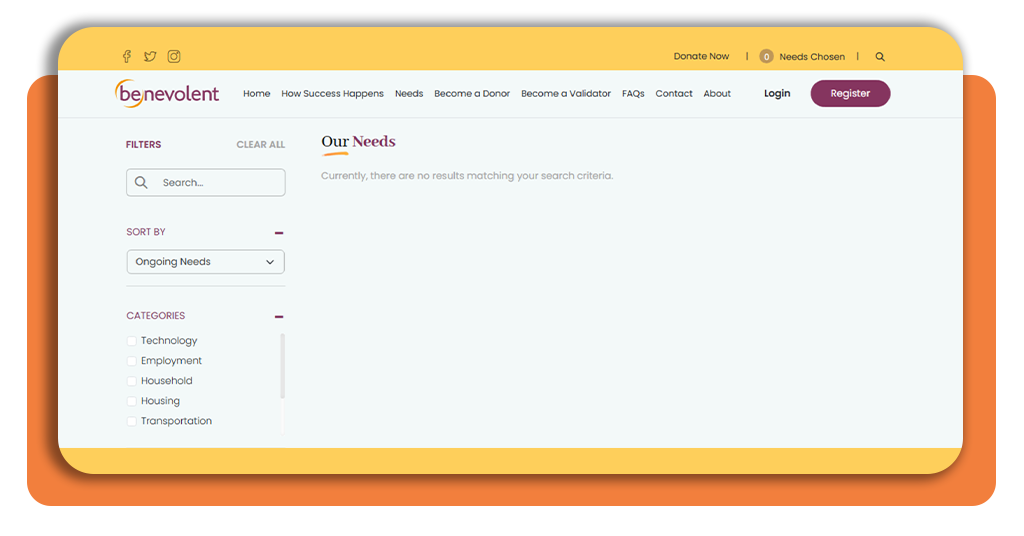
Start by defining the specific challenge. Is the issue rent, utilities, transportation, food, childcare, healthcare, or employment-related expenses? Clear information often improves access to appropriate financial support resources.
Step 2: contact a partner organization
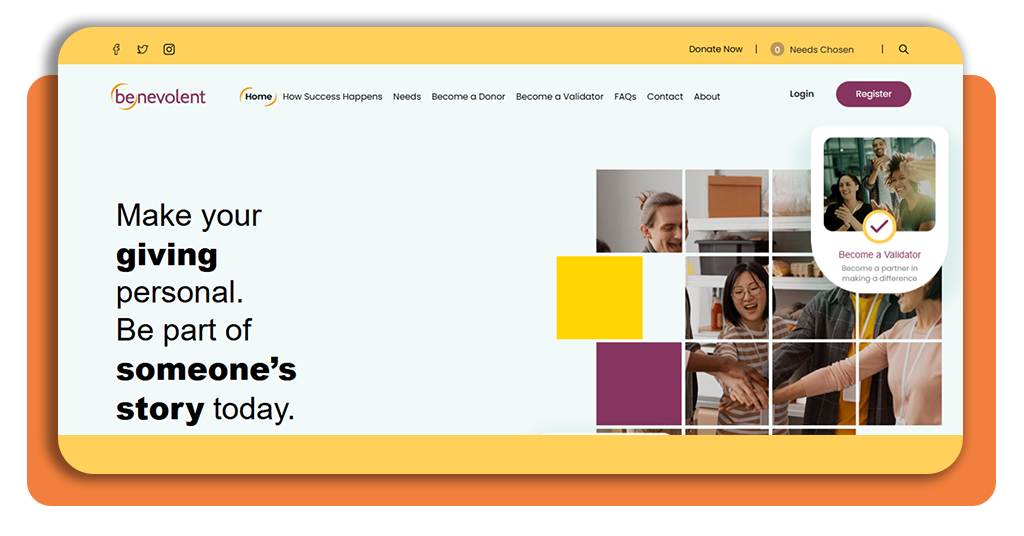
Many assistance platforms like Benevolent work directly with nonprofits, social workers, or community organizations. These partnerships can help verify needs and connect individuals with available services.
Step 3: find your validator
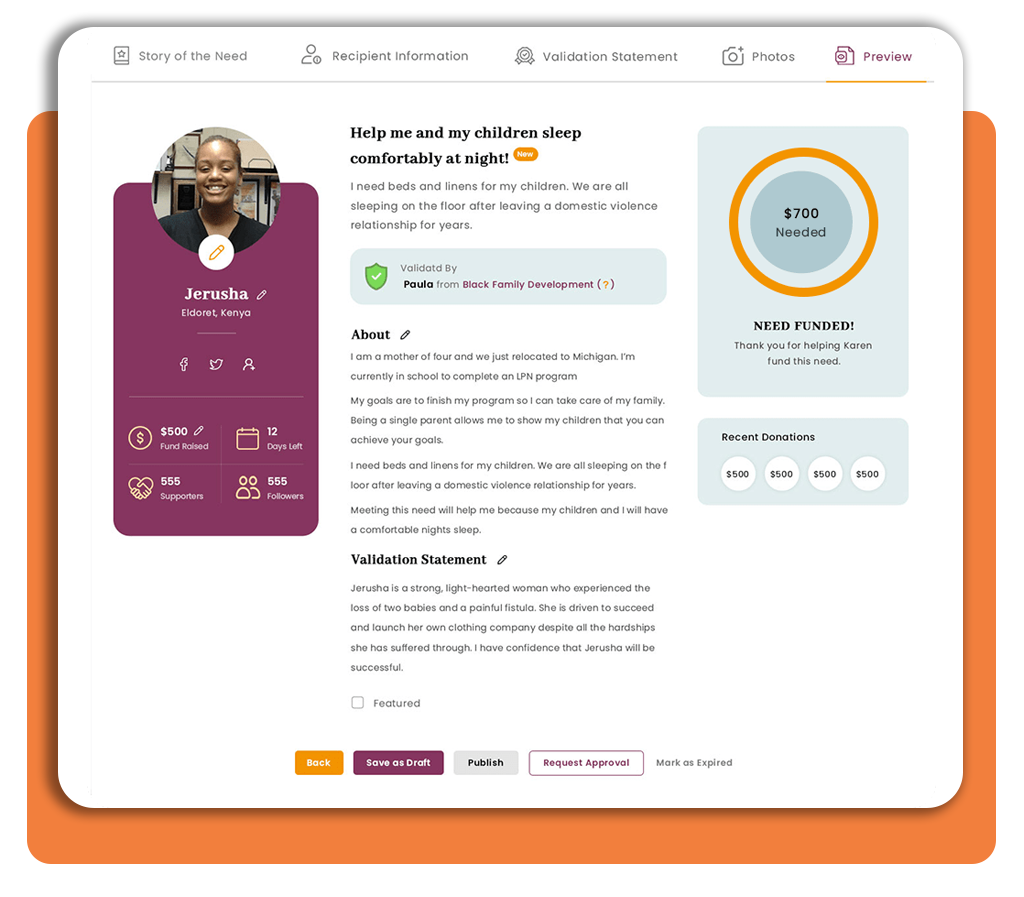
To receive donations on Benevolent, individuals in need cannot apply directly; they must partner with a Validator.
Validators are trusted professionals from local nonprofits, churches, government agencies, or schools who verify your story, needs, and goals.
Your validator submits the validated need to the Benevolent Website. Once published, donors can read your story and contribute.
Benevolent sends the collected donations directly to your Validator, who then uses the funds to purchase the items or pay the bills on your behalf.
Best online personal loans for low-income families
When grants or community assistance are unavailable, some families consider personal loans. However, experts recommend caution.
While loans can provide immediate financial support, they also create future repayment obligations. Interest rates vary significantly depending on credit history, income, and lender requirements.
For borrowers with limited income, comparing multiple lenders and understanding the total repayment cost is essential before accepting any loan offer.
In many cases, nonprofit assistance programs may be a safer first step than high-interest borrowing.
Affordable health insurance options for unexpected medical bills
Healthcare costs remain one of the leading causes of financial stress in the United States.
For households seeking financial support related to medical expenses, subsidized health insurance plans may help reduce future costs.
Programs available through Healthcare.gov include options designed for individuals and families with varying income levels.
Some plans provide premium subsidies, while catastrophic plans may offer lower monthly costs for eligible individuals.
Medical debt can quickly become a long-term financial burden, making preventive coverage an important component of overall financial support planning.
Government assistance programs for urgent financial needs
Government programs continue to serve as a major source of financial support for millions of Americans. Depending on eligibility, assistance may be available through:
- SNAP (food assistance);
- Medicaid;
- Temporary Assistance for Needy Families (TANF);
- Housing assistance programs;
- Utility assistance initiatives;
- Unemployment benefits.
According to federal data, these programs collectively support millions of households each year, particularly during periods of economic uncertainty.
For immigrants and newcomers seeking guidance, resources explaining available benefits can also help navigate complex eligibility requirements.
En rapport : Benefits for Immigrants Guide
The growing demand for financial support
The increasing popularity of assistance platforms reflects larger economic realities.
Housing costs have risen faster than wages in many metropolitan areas. Healthcare expenses remain a significant concern. Inflation has increased the cost of necessities ranging from groceries to transportation.
As a result, demand for financial support continues to grow.
Here’s a thing about modern personal finance. People can transfer money across the world in seconds, order groceries from their phones, and manage investments with a tap.
Yet many still struggle to cover a surprise car repair or emergency medical bill.
Technology cannot solve every financial challenge. But it can make finding financial support resources faster and more accessible.
When community becomes part of the safety net
The idea behind financial support platforms like Benevolent is that financial hardship is often easier to overcome when people are connected to resources, organizations, and communities that can help.
That doesn’t mean every request will be funded or every challenge will be solved overnight. Assistance programs have limits, eligibility requirements, and funding constraints.
Still, where unexpected expenses can disrupt an entire household budget, access to reliable financial support resources can make a meaningful difference.
Sometimes our most valuable resource can be knowing where to look before a difficult situation becomes an emergency.