

The traditional university model made us believe that without a massive debt load and half a decade of lectures, we are somehow unqualified to participate in the modern economy. No worry, the corporate world has finally caught a case of common sense, realizing that a candidate who can actually code or manage a project is better than one who just wrote an essay about it.
We are seeing a massive shift toward alternative credentials that allow you to bypass the bureaucracy and dive straight into the workforce. Utilizing a fast-track approach to education trims the fat and focuses on the surgical precision of high-demand skills. If you are tired of being “over-educated and under-employed,” it is time to stop waiting for a graduation cap and start building a portfolio that speaks for itself.
- 3 cours gratuits d'IA pour débutants avec certificats
- Best Free JavaScript Course Online With Certificate 2025
- Best Free Python Coding Course With Certificate in 2025
Why certifications are opening doors faster than degrees
The hiring landscape has undergone a tectonic shift in which “skills-first” recruitment is no longer just a buzzword.
Major tech giants and service providers have realized that the four-year lag of a degree often means students graduate with obsolete information.
Bureau des statistiques du travail explains that individuals with professional certifications often see higher median earnings and lower unemployment rates compared to those without specific technical training.
This happens because a certificate proves you have mastered a singular, relevant competency that an employer can utilize on day one.
Furthermore, the sheer speed of industry evolution requires a workforce that can pivot.
A degree is a static milestone, whereas a fast-track certification is a dynamic upgrade, enabling people to stay ahead of new software ecosystems or AI implementation without having to move back into a freshman dorm.
Employers are increasingly looking for “micro-credentials” that demonstrate a commitment to lifelong learning rather than a one-time academic achievement.
It is the difference between owning a map of the world from 1990 and having a live, updated GPS in your pocket.

How a fast-track certification simplifies your life
The primary appeal of these programs is the removal of the “all or nothing” pressure associated with higher education.
You don’t have to quit your job, move to a college town, or spend your weekends studying subjects that have zero relevance to your career goals.
A fast-track program allows for a modular lifestyle where you can gain a credential in data analytics or digital marketing while maintaining your current responsibilities.
It is education designed for the person who actually has a life to lead.
These certifications often come with built-in networking opportunities and job-search resources that are more direct than a university career center.
For instance, programs like Google Career Certificates are specifically designed to connect graduates with a consortium of over 150 employers.
If you are looking for even more specific niche markets, exploring virtual assistant training can show you how a few weeks of focused study can lead to immediate remote work opportunities.
By simplifying the path from “learning” to “earning,” these tools remove the financial and emotional paralysis that often prevents people from pursuing a new direction.
Finding certifications that fit your time and budget
The market is currently flooded with options, which is great for competition but confusing for the average person. To make a fast-track strategy work, you need to be a savvy consumer of your own time.
Look for platforms that offer peer-reviewed content and are recognized by the industries you actually want to enter.
There is a massive difference between a random “completion badge” from an unknown site and a professional certificate from a reputable institution like Coursera ou edX:
- Check the “Alumni” section of LinkedIn to see if people with that specific certificate are actually working at companies you admire;
- Evaluate the time commitment to ensure it aligns with your “deep work” windows during the week;
- Search for financial aid or scholarship options, as many platforms offer subsidized access for those in transition;
- Prioritize hands-on projects over multiple-choice quizzes to ensure you have something to show in an interview;
- Verify if the certification requires annual renewals to stay current with software updates.
edX
edX is an academic-first platform, available for Android et iOS, offering courses developed by universities and institutions with established credibility.
Its catalog includes programs from organizations such as Harvard, MIT, and major research universities, which gives its certificates a level of recognition that random completion badges simply do not have.
The platform emphasizes peer-reviewed content and structured learning paths, making it particularly useful for professionals who need theoretical grounding alongside practical skills.
For learners aiming to enter regulated or research-driven fields, edX provides a level of rigor that aligns with industry expectations.

4.8/5
Coursera
Coursera focuses on career-oriented education, blending academic credibility with applied, job-ready skills.
The platform partners with universities and global companies to deliver courses, professional certificates, and specialization tracks designed to align with current labor market demands.
Coursera, also available for Android et iOS, allows learners to move quickly through content, focus on specific competencies, and earn certificates that are widely recognized by employers across technology, business, and data-driven roles.

4.8/5
Focusing on skills employers are actually hiring for
It is easy to get distracted by “trendy” courses that promise a lot but deliver very little. The secret to a successful fast-track transition is identifying the “hard skills” that are currently in short supply.
Data science, cybersecurity, project management, and UX design are the gold mines of the current era.
These are roles where the demand far outstrips the supply of qualified candidates, making employers much more willing to overlook the lack of a traditional degree in favor of a verified certification.
Coursera shows that the focus on practical application helps bridge the “experience gap” that plagues entry-level applicants.
When you finish a specialized course, you aren’t just telling an employer you “know” Python; you are showing them a repository of code you actually wrote, proving ability is worth more than a thousand words on a resume.
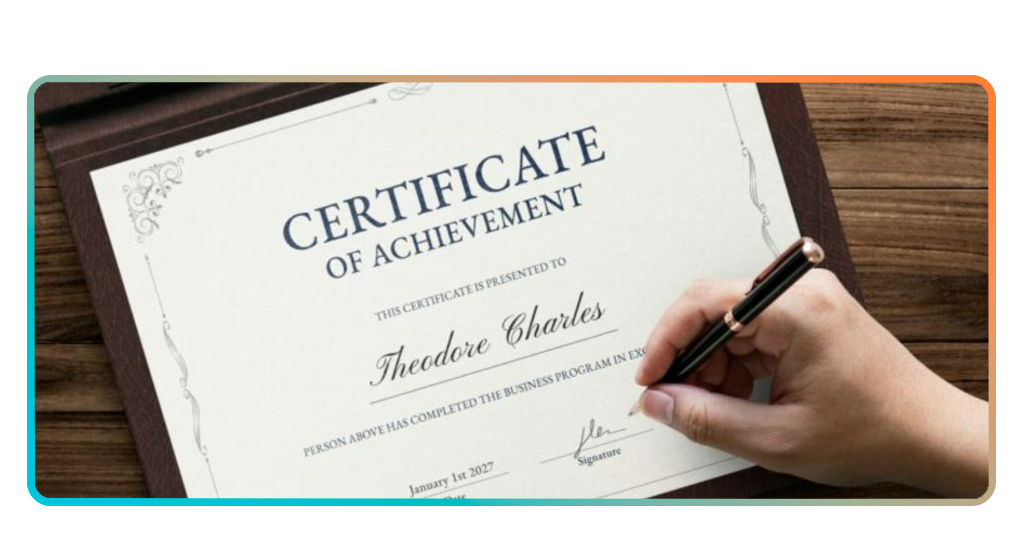
Using certifications to change direction without starting over
Mid-career crises are expensive if you try to solve them with another degree. If you are thirty-five and realize you hate accounting, spending another four years in school to become a web developer is a financial suicide mission.
A fast-track certification allows you to “re-skill” horizontally.
You can take your existing soft skills—like communication or organization—and layer a technical certification on top of them, creating a “T-shaped” professional profile that is highly attractive to recruiters.
This approach also reduces the psychological barrier to change, since it’s much easier to commit to a six-week intensive program than to a four-year commitment.
The bottom line
By taking these micro-steps, you can test-drive a new industry without burning your bridges or draining your savings. I mean, you gotta be agile in a world that refuses to stand still, right?
Ultimately, your career should be a series of intentional upgrades, and certifications are the patches that keep your professional operating system running smoothly without a total reboot.