

Home is meant to be a refuge from the outside world. Yet concerns about indoor air quality are growing as studies show pollutants can accumulate inside living spaces. Dust, mold spores, pet dander, and chemicals released by everyday products may linger unnoticed. At Idées reçues, we often see how these hidden factors contribute to headaches, fatigue, or worsening respiratory symptoms.
The challenge is that poor air is difficult to detect without reliable information. Most people can sense smoke or strong odors, but many pollutants remain invisible. That is where digital monitoring tools come in. With an air quality app, users can track conditions inside their homes and gain clearer insight into the environment they breathe every day.
- Air quality alert app: get local pollution updates in real time
- Pollen Tracker: Check the Air Quality in Your City
- How the Air Quality Monitor App Can Help You
What’s the best air quality app?
The most dependable resource available right now is the IQAir AirVisual app, which is compatible with both iOS et Android.
The app provides hyper-local data by utilizing the largest network of ground-based sensors in the world.
Whether you are tracking outdoor pollutants that might seep in or integrating the app with indoor monitors, it provides a comprehensive 360-degree view of the air you breathe.

4.8/5
Features available in the IQAir App
The app acts as a digital shield, offering several high-value tools for home health:
- Real-time aqi tracking: displays the Air Quality Index (AQI) based on PM2.5, PM10, ozone, and nitrogen dioxide;
- Health recommendations: provides actionable advice, such as when to close your windows or turn on an air purifier;
- 7-Day pollution forecast: helps you plan outdoor activities or deep-cleaning sessions when outdoor pollution is at its lowest;
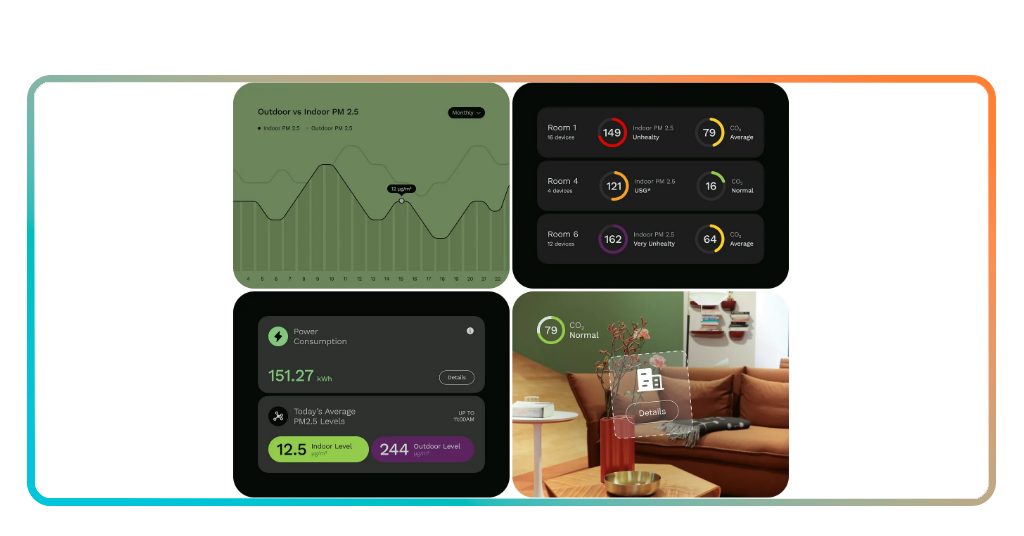
- Integration capabilities: seamlessly connects with indoor monitors to give you a specific room-by-room safety report.
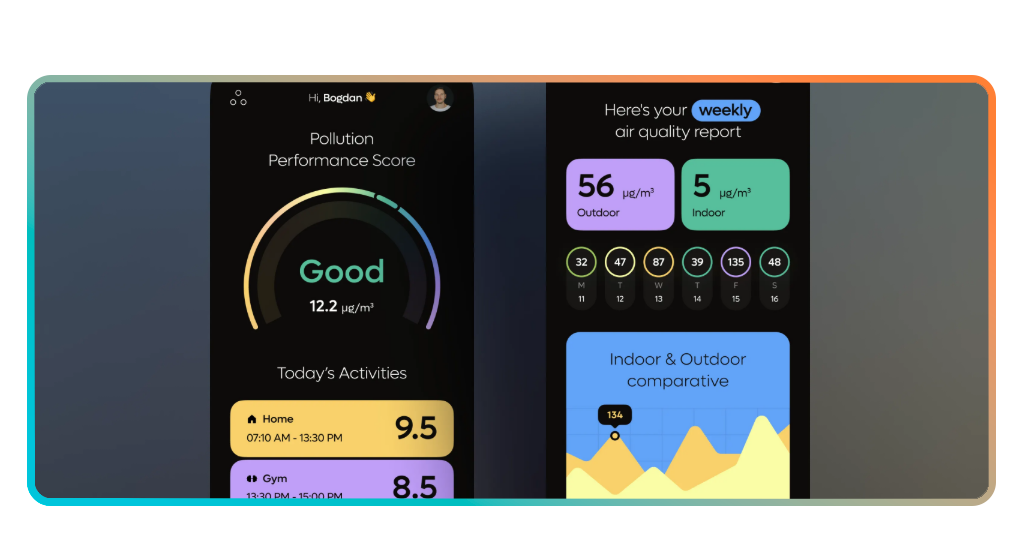
Step-by-step: how to monitor home air quality using the IQAir
Taking control of your home environment is a straightforward process when you follow a structured audit. Here is how to launch your air safety mission:
Step 1: calibrate your location data
Start by allowing the app to access your GPS. This provides the baseline outdoor air quality for your specific zip code.
Knowing the outdoor levels is crucial because most indoor pollutants enter through ventilation systems or open windows.
Step 2: identify the pollution hotspots
Walk through your home and observe areas with high humidity (like bathrooms) or high chemical use (like the kitchen or garage).
If you don’t have a physical sensor yet, use the app’s air quality map to see if your neighborhood has high levels of industrial runoff or traffic-related PM2.5.
You can also set up an air quality alert to get notified the moment outdoor levels turn hazardous.
Step 3: implement a flush strategy
Once you see a spike in pollutants, use the app’s forecast to find a window of “Green” (Good) air quality.
Open your windows during these times to create a cross-breeze, effectively “flushing” the stagnant, indoor toxins out of your living space.
Step 4: monitor the impact of changes
If you buy an air purifier or change your HVAC filters, track the change in your symptoms and the app’s data. Seeing the AQI numbers drop provides the clinical validation that your investments in health are actually working.
Diseases that can arise from polluted air
Ignoring air quality is not just about comfort; it is a long-term health risk. According to the National Weather Service, prolonged exposure to poor air quality can lead to several severe conditions:
- Respiratory infections: high levels of PM2.5 can weaken the immune response in the lungs, making you more susceptible to pneumonia and bronchitis;
- Chronic obstructive pulmonary disease (COPD): long-term inhalation of indoor pollutants like smoke or VOCs is a leading cause of lung tissue damage;
- Cardiovascular issues: microscopic particles are small enough to enter the bloodstream, causing inflammation that can lead to heart attacks or strokes over time;
- Asthma and allergy exacerbation: for children, poor air quality can lead to the permanent development of reactive airway diseases.
Tips to improve air quality in your home
Technology is your guide, but habits are your cure. Improving your air quality requires a mix of high-tech monitoring and low-tech maintenance.
Control the source
The best way to fix air quality is to remove the pollutant. Switch to non-toxic cleaning supplies and avoid “air fresheners” that actually just release synthetic chemicals into your lungs.
If you are balancing a budget and managing medical bills, prioritizing source control is the most cost-effective way to improve your health.
Maintain your hardware
Your HVAC system is the “lungs” of your home. If the filters are clogged with dust and mold, the system is simply recirculating toxins.
Use the app to set a “Filter Change” reminder every 90 days. High-efficiency MERV 13 filters are highly recommended for homes with pets or allergy sufferers.
Introduce natural filters
While not a replacement for a mechanical purifier, certain indoor plants like Snake Plants or Peace Lilies can help absorb trace amounts of VOCs.
Plus, they improve the humidity levels in your home, which can soothe irritated nasal passages during dry winter months.
4.8/5
Breathe better, live better
Every household deserves clear information about the environment inside their walls.
Air pollution is not always visible, yet it can shape daily comfort and long-term health. An air quality app gives families a practical way to track what they are breathing at home.
With real-time readings and alerts, the data becomes easier to understand and act on.
Instead of worrying about unseen pollutants, families can make smarter choices about ventilation, cleaning, and overall home safety.