

We live in a world of constant notification pings and digital clutter, yet we expect our gray matter to function like a high-end hard drive without ever clearing the cache. It is a chaotic existence where “where did I leave my phone?” has become the unofficial slogan of our generation. The irony is that every time we blank on a coworker’s name or miss a dentist appointment, a tiny voice in the back of our heads whispers about early-onset catastrophes.
We spend more time googling our symptoms and scaring ourselves into a frenzy than actually investigating how our recall works in the first place. Using a digital memory check, you’ll be gathering data on how your focus fluctuates throughout the week. If you are tired of feeling like your brain is a sieve, it is time to turn that anxiety into actionable insight.
- AI-Powered Memory Boosters: Apps That Train Your Brain
- TOP Apps de mémorisation
- Rewind AI: The Memory Extension Device You’ll Actually Use
Forgetting small things creates bigger worries than we admit
The psychological weight of forgetfulness is far more taxing than the actual inconvenience of losing your car keys.
When we experience a “brain fog” moment, it triggers a subtle sense of vulnerability that ripples through our professional and personal lives.
We start to doubt our competence in meetings or feel guilty for forgetting a friend’s birthday, leading to a cycle of stress that, ironically, makes us even more forgetful.
It is a cruel feedback loop where the fear of losing our edge actually causes the very cognitive decline we are trying to avoid. In reality, most of these incidents are simply “lapses of attention” rather than structural failures.
Our ability to retain information is heavily influenced by how much we are juggling at once.
If you aren’t paying attention when you set your keys down, your brain never actually encoded that data, so “forgetting” is technically the wrong word—you never knew it to begin with.
With a memory check tool, you can begin to differentiate between genuine recall issues and simple multitasking overload.
How this memory check app uncovers your recall patterns
Des applications telles que MindPal act as a personal laboratory for your mind, using gamified challenges to probe different facets of your cognition.
Instead of a boring, clinical test, you engage with tasks that measure spatial orientation, linguistic agility, and short-term retention.
Disponible pour Android et iOS, this memory check methodology allows the software to build a comprehensive profile of your strengths and weaknesses.
Perhaps you are a wizard at remembering faces but struggle with sequences of numbers; knowing this helps you adjust your daily strategies accordingly.
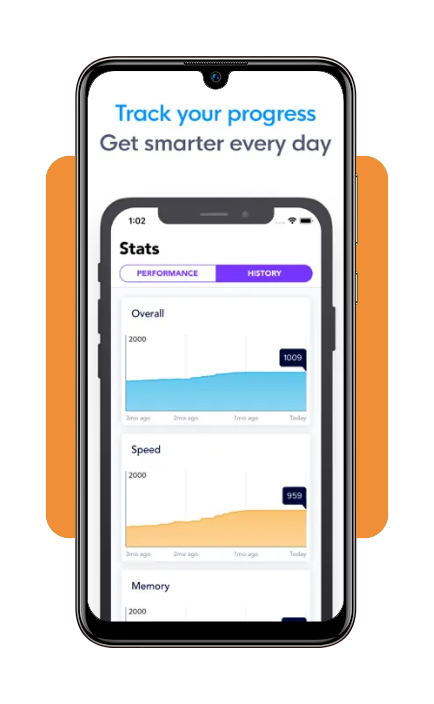
In addition to providing you with a static score, this technology tracks your progress over time and demonstrates how your performance relates to your lifestyle choices.
Did you score lower after a night of poor sleep? Was your recall sharper on a day when you managed to disconnect from your devices?
For those who find that external distractions are the main culprit, integrating white noise apps into your workspace might be the missing link in sharpening your concentration.

4.7/5
What your results say about focus, attention and mental load
Once you complete a session, the data reveals the “why” behind your recent absent-mindedness.
Often, the results indicate that your “memory” is perfectly fine, but your “attention span” is being stretched to its breaking point.
In the age of short-form content and infinite scrolling, our brains have become accustomed to shallow processing.
A thorough memory check might show that you are struggling to move information from your working memory into long-term storage because you are constantly interrupted by the next shiny object.
Understanding your mental load is the first step toward reclaiming your confidence. When the application shows that your recall is actually within the normal range for your age group, that invisible weight of worry evaporates.
You realize that you aren’t “losing it”; you are just human. Research from Monash University suggests that training your brain through targeted exercises can significantly improve your ability to filter out irrelevant information.
It turns out that a little bit of digital discipline goes a long way in keeping your thoughts organized.
Daily habits that quietly help — or hurt — your memory
While an app can provide the data, your daily routine provides the foundation. We often sabotage our own cognitive health through habits that feel harmless but are actually detrimental to our neural pathways.
To ensure your next memory check shows an upward trend, it is essential to look at the factors you can control:
- Excessive multitasking, which forces the brain to constantly switch gears and lose data in the process;
- Chronic sleep deprivation, as the brain “cleans” itself and solidifies memories during deep rest cycles;
- Dehydration, which can lead to immediate drops in cognitive speed and clarity;
- A lack of novel experiences, which prevents the formation of new synaptic connections;
- Over-reliance on digital reminders for even the smallest tasks, which can lead to “digital amnesia.”
Using awareness to reduce anxiety and regain confidence
The ultimate goal of monitoring your mind is to achieve a state of informed calm. When you understand the mechanics of your own forgetfulness, it stops being a source of shame and starts being a manageable variable.
Using a memory check allows you to approach your day with a strategy rather than a prayer. You learn to write things down when you know your mental load is high and trust your recall when you are rested and focused.
Confidence is a self-fulfilling prophecy. When you stop worrying that you are going to forget something, your cortisol levels drop, which naturally makes your brain function better.
It is about being an active participant in your own mental maintenance.
By checking in with your cognitive health as regularly as you check your bank balance, you ensure that you stay sharp, present, and—most importantly—kind to yourself when you occasionally forget why you walked into the kitchen.
Final thoughts
We have all been there: standing in the middle of the kitchen, staring at the refrigerator like it holds the secrets of the universe, only to realize we have absolutely no idea why we walked in there.
Speaking for myself, it is annoying (to say the least) when my brain can remember the lyrics to a 2010 pop song but forgets where I put my glasses while they are literally on top of my head.
For those who are constantly distracted, a memory check can serve as a kind of reality check, giving us a much-needed baseline so we can stop worrying about every little attention lapse.