
Thousands of warehouses across the US are offering forklift operator jobs with solid hourly pay, schedules, and reliable benefits. All you have to do to snag one is to learn how to find them.
Dans cette Idées reçues article, we’ll explain how you can use Indeed to build a standout profile, apply with confidence, and land interviews that turn into consistent paychecks and a rewarding career.
En rapport : Forklift certification online: become a certified operator

4.8/5
Where to find forklift operator jobs and apply online quickly?
Indeed (Android | iOS) started as a simple job search engine and grew into one of the largest hiring platforms in the world, giving you access to openings across nearly every field.
You can build a full profile, upload your resume, and let the platform match you with openings that fit your skills, your experience level, and your future career goals in that area.
Finding forklift operator jobs with Indeed is simple, since the platform sorts postings by relevance and freshness, putting the roles worth your time near the top of your screen.
Browse thousands of listings in seconds
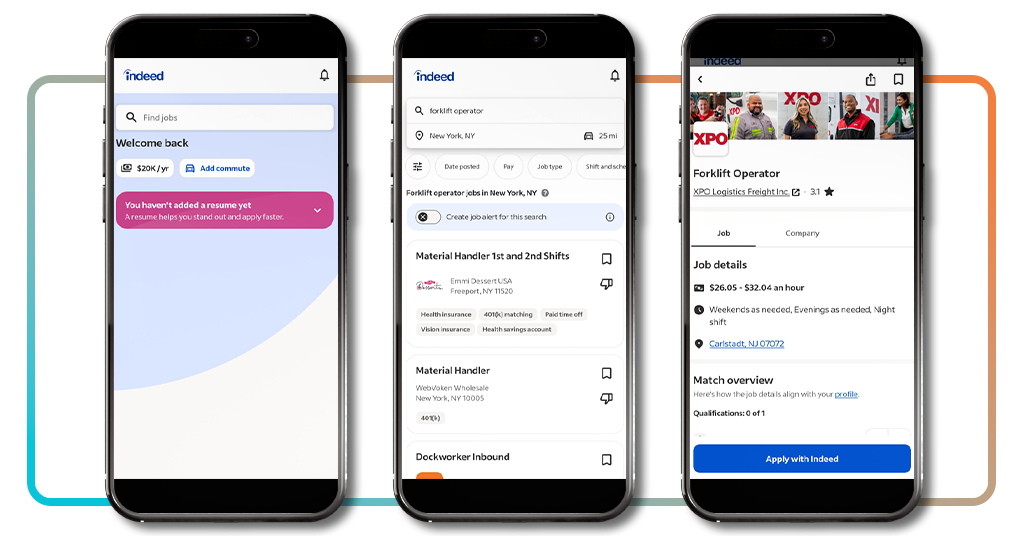
Open the search bar and type in what you want to do, and results load almost immediately, showing warehouse roles from every corner of your zip code area.
New postings show up throughout the entire day, giving you fresh options to scroll through, and you can land the right fit before someone else takes the opening.
Filter results by pay and location
Once your full list of matches appears, you can narrow opportunities down by distance, choosing a radius that keeps your commute short and your gas costs under control.
A pay slider also lets you set the minimum rate you’ll accept, cutting out roles that don’t match your budget and saving you from applying to jobs you’d deem underpaid.
Save searches and get instant alerts
Once you find a search that works well for you, you can save it with a single tap, and the platform remembers your criteria instead of forcing a fresh start.
Turn on notifications, and you’ll get a ping the moment new forklift operator jobs go live, putting you well ahead of other candidates still checking the app manually.
Step-by-step: how to submit your resume for open positions
Filling out warehouse job applications over and over gets tedious quickly, but Indeed (Android | iOS) cuts that hassle by saving your details after your first official submission.
Your resume is the backbone of every application you submit, and Indeed lets you attach a single, clean document that hiring managers review before reaching out for interviews.
Getting from a blank profile to a completed application takes no time at all, and finding the best forklift operator jobs starts with a few quick screens on your phone.
Step 1: download the app and sign up
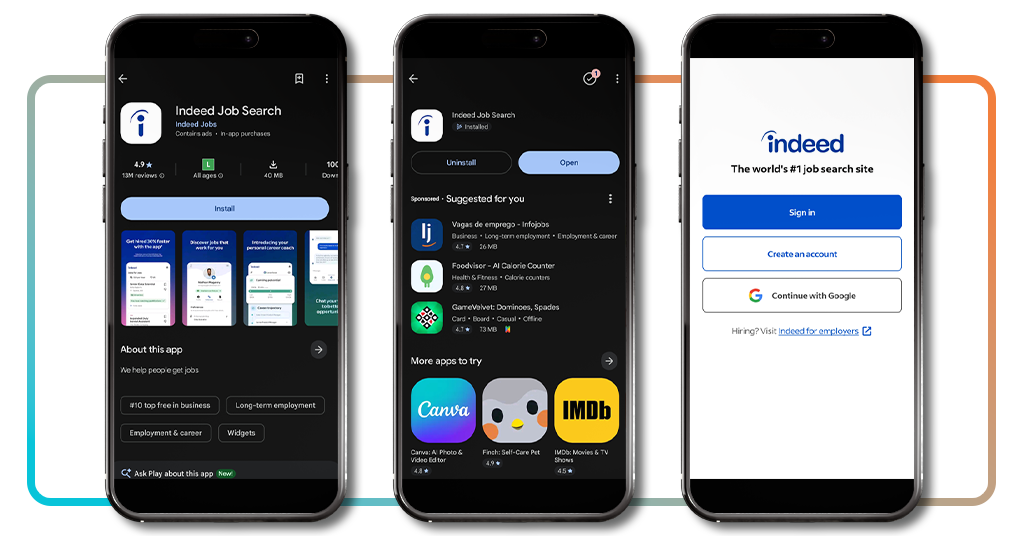
Downloading Indeed takes only a few seconds from the App Store ou Google Play, and account creation asks for basic contact information before granting full access to job postings.
You can sign in through Google for a faster setup or create a brand new account using your personal email if you’d rather keep everything separate and private.
Step 2: build your profile and resume
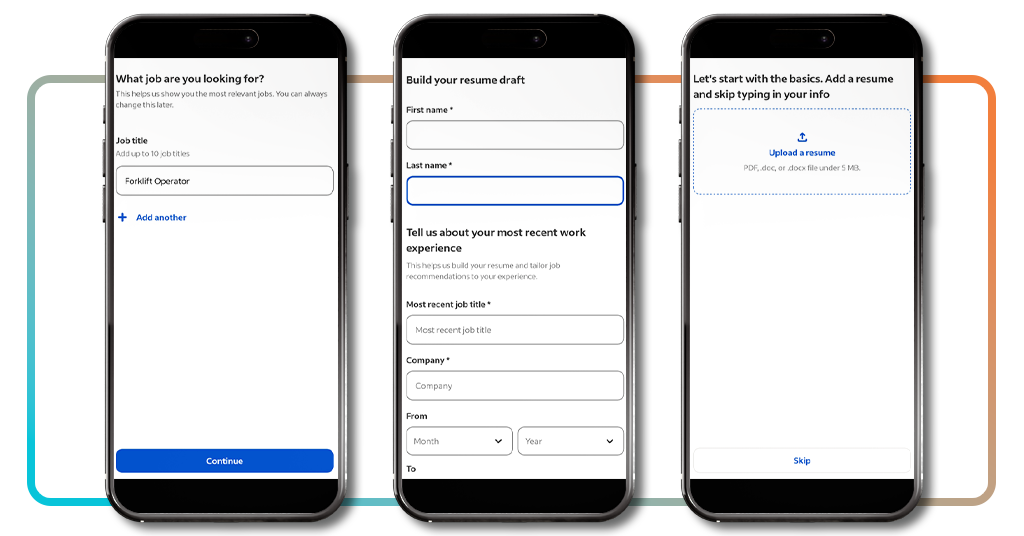
Once you’re logged in, Indeed asks for your first and last name along with details about your most recent job title, current company name, and full employer address.
You also have the option to upload an existing resume file, which lets the app skip several manual fields and pull your work history straight from that document.
Step 3: set your job preferences and pay
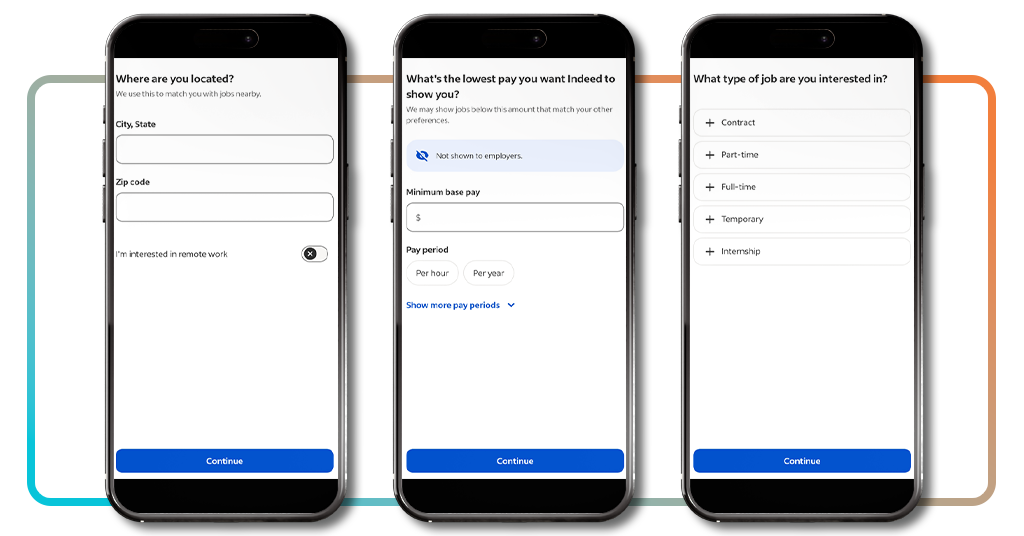
This step covers your current location, and you’ll enter a city or zip code, letting the app match you with openings close enough for a reasonable daily commute.
After that, you’ll set a minimum hourly rate and pick the job type you want, and this filter keeps lower-paying forklift operator jobs from cluttering your results.
Step 4: search and tap to apply
With your profile complete, you’ll land on a home screen where a search bar sits front and center, ready for you to type in any role you want.
Tap any listing that catches your eye, review the pay and schedule details, then hit ‘apply with Indeed’ and fill in your contact information to send that completed application off.
En rapport : AI resume optimizer: fix weak resumes with one upload (free)
How much does a forklift operator earn?
Pay for this role swings wider than most people assume, stretching from entry-level rates at small local warehouses to premium wages at major distribution centers nationwide.
Companies also sweeten offers with signing bonuses, shift differentials, and overtime rates that push your paycheck higher than the base number listed on listings for forklift operator jobs.
Indeed and ZipRecruiter’s current data gives you real figures here instead of vague ranges, so you’ll walk away knowing what warehouses actually pay their operators across the country.
National average pay per hour
En effet reports an average base rate of $ 19.18 per hour nationwide, with typical pay landing somewhere between $ 15.54 on the low end and $ 23.66 for experienced operators.
ZipRecruiter shows a slightly lower average around $ 17.84 per hour, translating to roughly $ 37,097 a year for someone working full time at a standard warehouse position.
Top paying cities and states
Phoenix leads the pack, with forklift operator jobs paying $ 19.98 per hour, with Ontario, California following close at $ 19.75, and Groveport, Ohio rounding out the top three at $ 19.47.
Soledad, California takes the crown according to ZipRecruiter data, offering $ 26.68 per hour, while Surry, Virginia and Avenal, California, both pay operators above $ 24.00 per hour.
Overtime and yearly earning potential
Beyond your base hourly rate, Indeed data shows operators earning an additional $ 5,437 in overtime pay annually, pushing total yearly compensation past what base pay alone suggests.
Top earners nationwide can reach $ 43,000 a year, while specialized roles like forklift supervisor positions climb even higher, averaging around $ 44,221 annually for experienced workers.
OSHA certifications and machinery experience sought by recruiters
Employers won’t hand over the keys to a forklift without proof you know how to handle one safely around coworkers, tight aisles, and stacked pallets.
Federal law backs this up as well, and recruiters screening candidates for forklift operator jobs check for valid credentials before scheduling a single interview or warehouse tour.
Getting certified isn’t complicated, but skipping this step closes doors on you, since most companies won’t train you from scratch when qualified applicants are already available.
Required training before operating equipment
OSHA requires formal instruction covering truck controls, stability limits, and workplace hazards specific to your assigned equipment, plus hands-on practice supervised by a qualified trainer.
Your employer must also evaluate your performance before letting you operate independently, confirming you can handle real warehouse conditions instead of just passing a written quiz.
Certification renewal every three years
Your credentials don’t last forever, and employers must reevaluate your skills at least once every three years to confirm you still operate equipment safely on the floor.
Companies posting forklift operator jobs prioritize applicants with current certifications, since expired paperwork means additional training costs before you’re cleared to start working.
Machinery skills recruiters value most
Recruiters look for experience with multiple truck types, including sit-down counterbalanced models, reach trucks, and order pickers used across different warehouse layouts.
Familiarity with attachments, load handling, and daily inspection routines also catches a hiring manager’s attention, showing you understand equipment beyond basic driving skills alone.
En rapport : Ready for your OSHA card? Take this OSHA 10 practice test
Workplace safety protections and insurance for industrial operators
Le National Safety Council recorded 70 forklift-related deaths in 2021, a number that makes safety training feel less optional and more like basic survival knowledge.
Companies posting forklift operator jobs today build programs around preventing accidents like these, backing training with insurance policies that protect both you and your paycheck.
Understanding hazards, coverage, and daily habits together gives you a full picture of what keeps warehouse floors running without turning into a scene from an accident report.
Common hazards on the warehouse floor
Forklifts driven off loading docks cause serious injuries every year, along with pedestrians struck by moving equipment in blind spots near narrow aisles and busy intersections.
Falls from elevated pallets and tines create additional danger, especially when operators skip proper lifting procedures or ignore weight limits printed directly on the equipment.
Insurance coverage for forklift accidents
General liability insurance typically covers accidents, though underwriters review a company’s safety record before approving coverage or setting premium rates for forklift operator jobs.
Serious OSHA violations can bring penalties reaching $ 15,625 per incident, with repeated or willful violations climbing as high as $ 156,259 for employers who ignore safety standards.
Daily practices that prevent injuries
Pre-operation inspections catch mechanical issues before they turn into accidents, so checking brakes, steering, and hydraulic systems every shift keeps you and coworkers protected.
Wearing high-visibility gear, sounding your horn near blind corners, and parking with brakes engaged when you step away all reduce your chances of causing harm.
4.8/5
Start your forklift career today
You’ve got the tools now to stop scrolling job boards aimlessly and start applying for new opportunities with a plan, thanks to what Indeed puts right at your fingertips.
Dans cette Idées reçues guide, you saw the pay behind forklift operator jobs, the certifications recruiters check, and the safety standards that separate a good warehouse from a risky one.
Stay with Idées reçues and learn more ways to chase job opportunities and new careers without wasting time on guesswork or applications that go nowhere.