

Managing tasks without a plan usually leads to delays. A good project tracker keeps everything clear so progress flows better, even when multiple things happen at once.
Trello helps turn messy notes into organized boards that actually move work forward. Whether it’s personal planning or team projects, it adapts to how you get things done.
This is a guide by Idées reçues made to show how better structure makes work lighter. Keep reading to discover how to track deadlines, tasks, and goals effortlessly.
En rapport : Project Management Course: From Beginner to Expert + Certificate!
How to use a project tracker and organize workflows easily
Trello helps you build a visual system to stay organized without extra effort. Boards, cards, and timelines give you control over how work is viewed and tracked.
You don’t need experience managing big projects to make Trello useful. Its drag-and-drop style feels natural, and the calendar, timeline, and checklist tools simplify everything.
It works for teams or solo use. From personal to-do lists to shared team boards, this project tracker gives you a better way to organize everything that matters.
4.4/5
Visualize your entire project at once
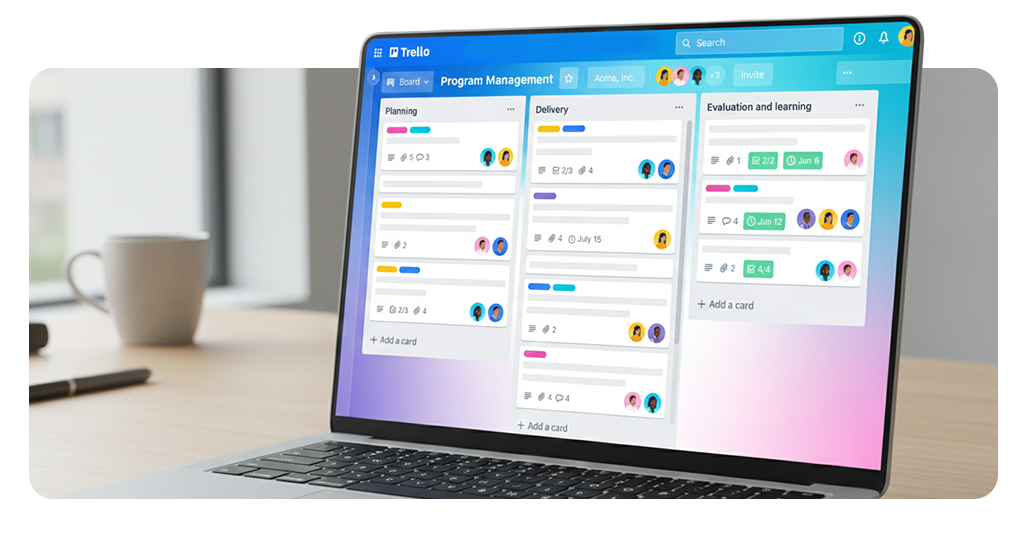
When you open Trello, the full view tells a clear story. Each column represents progress, while cards inside hold the real details behind each step or task.
Timeline and calendar views help when dates matter most. You’ll quickly spot delays or bottlenecks and can shift priorities without losing sight of what comes next.
Use this layout to visualize every step of your project and keep your team aligned. It’s a structure that shows progress at a glance without complications.
Organize tasks with lists and cards
This project tracker uses lists as columns to track work stages. Cards inside hold checklists, attachments, deadlines, comments, and everything your task needs.
Each card moves from one list to another as things progress. This visual shift replaces long messages or endless spreadsheets with quick and useful status updates.
You can even turn Trello into a habit builder or content calendar just by changing labels, layouts, or the way your cards are grouped.
Use labels to group similar work
Color-coded labels are more than decoration. They help connect tasks by type, priority, status, or team. One glance shows you what’s urgent or what’s related.
You can filter cards using labels to show just the tasks that match what you’re focused on today. It’s a quiet way to remove distractions fast.
This small feature makes a big difference when using a project tracker that handles personal tasks, assignments, and repeatable workflows without mixing things together unnecessarily.
Features that boost collaboration
Getting things done together works better when everyone sees the same plan. Trello keeps updates visible so each person knows what’s happening and what comes next.
Assign tasks, leave comments, attach files, and track updates without switching tools. Everything lives on the same board, ready to support shared progress without extra steps.
Instead of chasing updates or repeating messages, teams stay aligned through cards that hold all the details. It keeps collaboration focused and easier to manage every day.
Collaborate in real time with shared boards
This project tracker keeps the whole team on the same page. Everyone can see what’s happening, move tasks, and stay aligned without needing to explain each step.
Changes update instantly, so if one person moves a card or adds a detail, it’s reflected for everyone. It keeps progress flowing without interruption or delay.
You can also adjust board permissions to control who can edit, view, or comment. That flexibility makes it easy to work with clients, teammates, or partners confidently.
Communicate efficiently with comments and mentions
Leaving a quick comment on a card can replace long threads of messages. Everyone knows where to look and nothing important gets buried in a chat app.
Tag teammates with @mentions to notify them directly, ask questions, or assign tasks. It’s fast, clear, and fully integrated with your project tracker.
This setup helps reduce confusion and keeps the context in one place. No need to switch tools or chase updates across different platforms anymore.
Automate workflows with Trello Butler
Repetitive tasks eat up time. Trello Butler helps you set rules so things happen automatically, like moving cards when a task is marked complete or sending reminders.
You can create buttons that trigger actions, schedule recurring tasks, or build custom rules. It’s flexible enough to fit how you already like to work.
By automating routines, this project tracker reduces busywork and keeps progress moving. It brings structure to your workflow without needing constant attention or manual updates.
En rapport : Todoist : #1 Gestionnaire de tâches et liste de tâches
Where to download Trello
Trello is available across devices, giving you freedom to manage tasks from anywhere. Downloading the app is the first step to building better daily structure.
You’ll find it on Android, iPhone, and desktop. Each version is built to support teamwork, individual goals, and project updates without switching between tools or platforms.
Installation takes just a moment. Once downloaded, Trello opens with clean menus and quick access to boards, cards, and everything you need to stay productive without distractions.
Download on Android and iPhone for free
This project tracker works wherever you do. The mobile version gives you the full experience in your pocket, perfect for remote check-ins or tracking ideas on the move.
You can download Trello from Google Play or the App Store. Setup is fast, and the layout adjusts smoothly for both Android and iPhone screens.
Cards, labels, and checklists respond quickly to touch, making mobile task planning feel natural. Push notifications keep you informed, even when you’re away from your computer.
Downloading on Android
- Open Google Play and type Trello in the search bar;
- Select the official Trello app from Atlassian;
- Tap “Install” and wait for it to download;
- Open Trello and sign in to begin working.
Downloading on iOS
- Open the App Store and search for Trello by name;
- Tap the download icon next to the Trello app;
- Wait for the installation to finish completely;
- Launch the app and log in to your account.
4.4/5
Use Trello on desktop for team management
Larger screens support detailed project views. Trello on desktop offers more space for expanding boards, adding attachments, or scanning checklists across multiple cards at once.
It’s especially helpful for distributed teams. Desktop access makes it easier to comment, assign work, and monitor multiple workflows across projects using one connected system.
The project tracker syncs between mobile and desktop, so nothing is lost between meetings, devices, or teammates. Collaboration becomes clearer when everything lives in one place.
Sync your boards across all devices
Trello automatically keeps your boards in sync. Changes made on one device appear instantly on others, so your progress stays visible, current, and easy to follow.
Switching devices doesn’t mean reloading or repeating steps. Whether you’re adding cards on your phone or reviewing updates at your desk, everything stays connected.
No setup required to sync across platforms. This feature makes the project tracker consistent everywhere, giving you flexibility without losing track of tasks, people, or deadlines.
Step-by-step: manage tasks and deadlines
Managing work in pieces helps you stay focused. With Trello, structure comes naturally, and each task finds its place instead of being lost in the shuffle.
You don’t need complex systems to stay organized. When your ideas live in cards and checklists, deadlines become easier to follow and progress becomes easier to see.
A simple plan beats a scattered one. If you want work to feel lighter, plan smarter — organize your next project with Trello today.
Step 1: create cards for actions and ideas
Creating a card gives every idea room to grow inside a system your project tracker keeps organized, turning loose thoughts into something you can track and complete effectively.
Each card holds notes, attachments, comments, and steps that shape your progress. You decide how to develop it, moving pieces until the task reaches completion today.
Cards move along your lists to show growing progress. This simple flow supports consistent pacing and keeps every task visible while you manage each stage carefully.
Step 2: add deadlines checklists and colored labels
Deadlines guide your workload by placing tasks where attention is required. Assign due dates inside each card so things stay visible and timing stays balanced today.
Adding labels and checklists turns each card into something easier to review because your project tracker groups information, guiding your eyes to what demands attention first.
Use labels to signal priority, task type, or owner without cluttering your board. Checklists divide work into steps that make progress easier to measure accurately today.
Step 3: use calendar to schedule daily tasks
The calendar view brings your deadlines into a format you can scan quickly. Seeing tasks placed by date helps you adjust plans before bottlenecks slow progress.
You can drag cards across dates when schedules shift. This flexibility keeps your workflow stable while letting you shape routines around changing priorities or new commitments.
Viewing your tasks by day ties planning to real time needs because your project tracker arranges deadlines visually, giving you a sense of pace across each week.
En rapport : Best Notion templates to organize your life in 2025
Keep your projects clear and connected
Trello brings structure to work in a way that feels natural, helping you manage ideas, deadlines, and collaboration without stress while keeping everything organized in one space.
This was a guide by Idées reçues designed to show how a project tracker supports productive routines and workflows for anyone who wants practical tools that make tasks easier to manage.
If you want more helpful tips, keep reading Idées reçues for articles about task management apps, productivity tools, and practical ways to organize projects that fit your personal or team goals.