
Digging through most websites to track what’s happening close to home is always a hassle, but what if we told you that there’s a local news app with constant updates about your community?
NewsBreak pulls all sorts of local alerts into one feed, keeping you in the loop 24/7. In this guide, Idées reçues shows you how it works and how you can use it for free. Keep reading!
En rapport : Turn Your Phone Into a Real-Time Emergency Broadcast Tool

4.8/5
Which is the best local news app?
NewsBreak (Android | iOS) grew out of one idea: to give people a real way to see what happens on their own streets instead of getting lost in national headlines every single morning.
The feed pulls in weather warnings, traffic snarls, and small stories that never reach bigger outlets. People stick with this local news app because it covers their actual block.
What makes NewsBreak different is how personal it gets once you set it up, as the feed adjusts to your home location and the topics you choose to follow.
Features available in the NewsBreak app
- Local crime map: lets you keep an eye on nearby incidents without digging through unrelated national crime stories that have nothing to do with your own block;
- Personalized feed: learns what you read and adjusts your daily stories around the topics, sports teams, and neighborhoods you choose to follow each week closely;
- Weather and traffic alerts: sends warnings about storms, road closures, and delays straight to your phone before they catch you off guard on the road.
Local stories curated for your block
Most news apps treat your entire city as one giant blob, but NewsBreak narrows things down to your own neighborhood instead of lumping you in with people miles away.
That means the stories sitting in your feed come from people who live close to you, writing about the same streets, schools, and shops you walk past every day.
A community built around shared news
Reading isn’t the only thing people do on this local news app; they also comment on stories and swap takes with neighbors who showed up to the same town meeting.
You can mute topics you’re tired of seeing or follow ones you care about, so your feed stays full of things you want to see day after day, too.
Step-by-step: how to track neighborhood alerts online
Mise en place NewsBreak (Android | iOS) alerts for your area takes less time than waiting in line at a coffee shop, yet plenty of folks never bother thinking it involves a dozen tricky settings.
A few taps on your phone connect you to weather warnings, road closures, and neighborhood news the moment it breaks, instead of refreshing five different sites throughout your day.
None of this takes technical skill, and this local news app walks you through each step right on your phone without making you dig through hidden menus or settings.
Step 1: download the app or browse online
Access your app store, search ‘NewsBreak’ and download it, or skip the download entirely and pull up the site web on your laptop if you’d rather check things from a bigger screen.
Either route gets you to the same place, so pick whichever fits your day better and switch between them later without losing any of your saved settings or preferences.

Step 2: set your home location
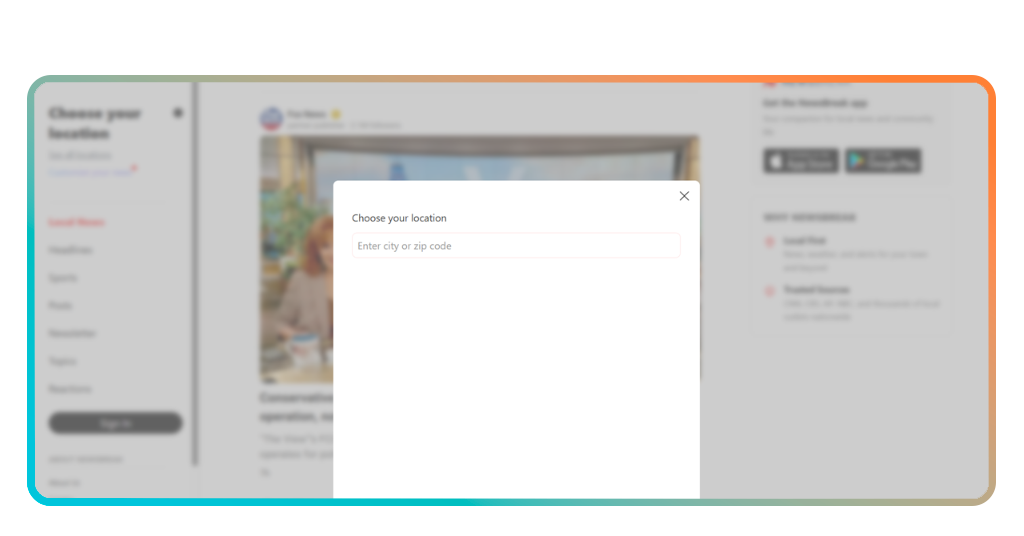
Once you’re in, drop a pin on your home address or type your zip code so the platform knows which streets and neighborhoods to pull stories from going forward.
You can add a second spot if you want, like your office or a parent’s house across town, and flip between the two whenever you want a fresh set of updates.
Step 3: customize your feed
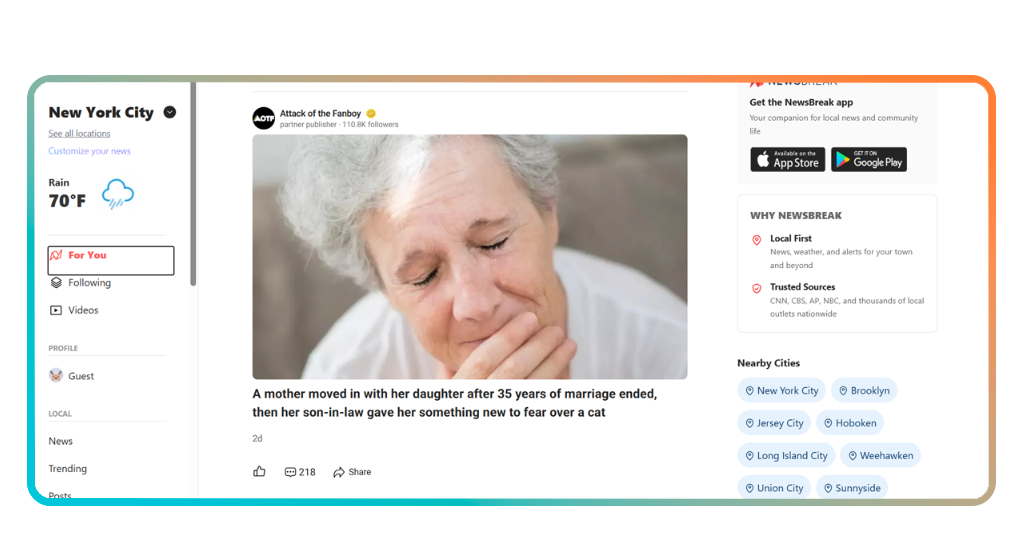
Look for topics that interest you and make sure to follow them. Doing so customizes your ‘for you’ page, which then only shows news about the themes you want to see.
Following topics also save you from opening the local news app out of habit, because your phone buzzes the moment something worth knowing happens close to where you live.
Step 4: check the crime map regularly
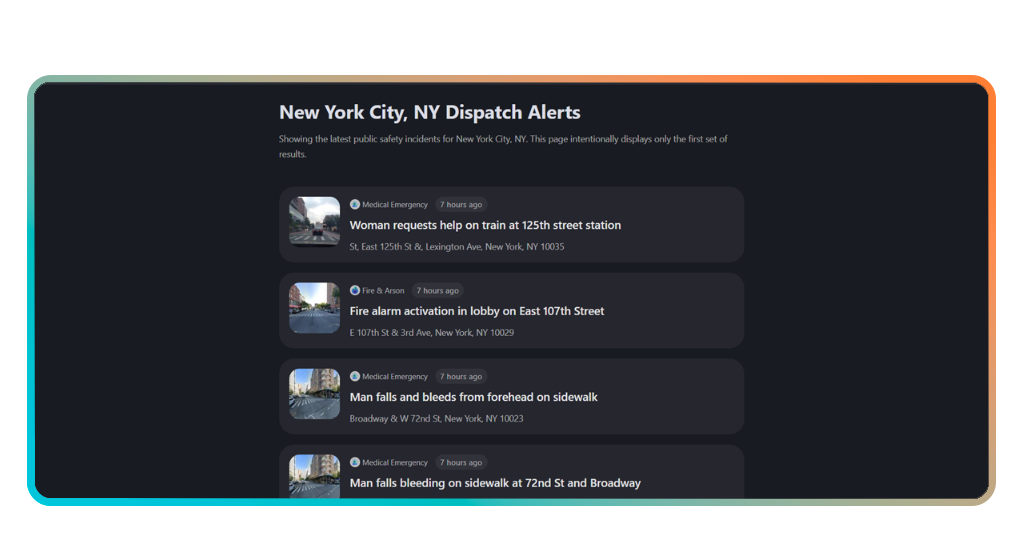
Scroll the left-side menu and open the crime map every so often to see recent reports near your home, your kid’s school, or anywhere else you spend a good chunk of your busy week.
It won’t replace calling the police in an emergency, but it keeps you posted on your area, so nothing sneaks up on you during your normal busy weekly routine.
En rapport : Neighborhood social network: connect with your neighbors
How to call and report a local emergency quickly
Panic makes people freeze right when they need to act the fastest, fumbling for the right number or rambling details that don’t help the dispatcher figure out what’s going on.
A clear head and a few basic facts make all the difference here, turning a chaotic call into one that gets help moving toward you within minutes rather than later.
Picking the correct number to dial saves precious seconds, and pairing that with the alerts from this local news app means you sometimes hear about danger before you dial anything.
Dial 911 for life-threatening danger
Fires, break-ins in progress, serious injuries, and anything putting someone’s life at risk call for 911 right away, no second-guessing or trying to handle things on your own.
Stay on the line until the dispatcher tells you to hang up, even after giving the basics, because they might still need more while help is already heading your way.
Use non-emergency lines for minor issues
Noise complaints, blocked driveways, or a stray dog wandering the block don’t call for sirens, so look up your city’s non-emergency police line instead of dialing straight to 911.
That number gets logged just like any other call, but it frees up the main line for someone whose situation can’t wait those extra minutes for any kind of response.
Share your location and details clearly
Give your cross streets or nearest landmark right away. GPS pins can land you a block off, especially inside large apartment complexes or buildings with multiple entrances nearby.
Describe what’s happening in plain terms, mention anyone hurt, and answer the dispatcher’s questions instead of talking over them. That back and forth speeds up the entire response.
Best home security systems to protect your family
Calling for help works only after something’s gone wrong, so plenty of families now look for ways to stop trouble from reaching their front door in the first place.
A solid security setup keeps watch while you’re at work, asleep, or out running errands, catching movement near your doors and windows long before anyone steps inside your home.
Combining a system like that with the alerts from this local news app gives you two layers of protection, one watching your property and one watching your whole neighborhood.
ADT for round-the-clock monitoring
ADT keeps trained staff watching your home day and night, so if a sensor trips at 3 am, someone’s already looking into it before you even reach for your phone.
That monitoring comes with a cost each month, but for families who travel a lot or work odd hours, eyes on the house bring peace of mind regardless of time.
SimpliSafe for stopping intruders early
SimpliSafe leans on loud alarms and live voice warnings that talk straight to whoever’s outside, scaring off intruders before they even set foot past your front door at all.
You can set it up yourself in an afternoon, skip long contracts other companies push, and still get a system that reacts the moment something seems off around your home.
Cove for budget-friendly protection
Enfin, Cove strips things down to what keeps a home safe without piling on extra gadgets, landing you a full setup for a fraction of what bigger brands charge each month.
Discounts pop up regularly enough that the price drops even lower, and once it’s running, this local news app fills in the rest, watching your neighborhood at no cost.
En rapport : Traveling? Secure Your Home With this Free Home Security App
Top internet providers with fast connections in your area
None of those cameras or sensors does much good if your home connection drops the second a storm rolls through or devices fight for bandwidth all at once each evening.
Picking a provider that holds up under pressure counts just as much as picking the right alarm system, since a weak signal leaves your whole setup running half blind.
Streaming, video calls, and security footage all eat through data quickly, and this local news app adds to that pull once alerts and stories start coming in all day.
T-Mobile Fiber for budget-friendly speed
You can get strong speeds through T-Mobile Fiber without paying premium prices, and the plans stay simple, with rates rarely creeping up the way other contracts tend to over months.
Symmetrical speeds mean uploading footage or jumping on a call feels just as solid as a download, which is a difference people notice only once their old plan starts struggling.
Google Fiber for steady, reliable service
You might care less about rock bottom pricing and more about the steady connection Google Fiber tends to deliver night after night, without any random slowdowns out of nowhere.
That reliability pays off the moment severe weather hits, seeing as your security cameras, your phone, and this local news app all need a working signal at the same moment.
Xfinity for wide nationwide availability
You’ll find Xfinity reaches more zip codes than most other options, which helps if you move around a lot or split your time between two homes in the same country.
Bundling options also come into play here, letting you pair internet with TV or phone service under one bill instead of juggling separate companies with different due dates monthly.
4.8/5
One app for every local update you need
Your neighborhood holds more stories than any national broadcast will ever cover, from school closings to the weather rolling in tonight, and now you know right where to find them.
In this guide, Idées reçues walked through how this local news app keeps your block on your radar, alerts you to danger early, and connects you with neighbors who are always on watch.
Browse more Idées reçues articles for other local news apps, home security picks, and the best internet providers currently, all written to help you protect and stay closer to home.