
Finding an effective tinnitus relief app can transform how you manage phantom noise, shifting your brain’s focus away from internal auditory perception and toward calming background environments.
While tinnitus has no single universal cure, sound therapy is one of the most clinically validated approaches for reducing its impact. Read on Idées reçues.

4.6/5
How sound masking helps manage tinnitus
Living with persistent ringing, buzzing, or humming in your ears can disrupt your sleep, shatter your focus, and elevate daily stress. Known clinically as tinnitus, this phantom sound affects millions of people worldwide.
Le Mayo Clinic overview on tinnitus symptoms and causes makes clear that sound masking works by introducing neutral acoustic signals that lower the contrast between the internal ringing and the surrounding environment.
Rather than forcing your auditory cortex to fixate on high-pitched ringing in a quiet room, a reliable tinnitus relief app delivers targeted acoustic stimulation designed to habituate your brain to the perception of sound.
Which is the best tinnitus relief app to manage constant ear ringing?
When selecting digital tools to alleviate ear ringing, choosing a specialized tinnitus relief app over a generic audio player provides significant advantages.
Basic audio tools typically offer static pink or white noise, whereas advanced hearing care applications provide multi-layered audio mixing, frequency controls, guided relaxation routines, and clinical habituation plans.
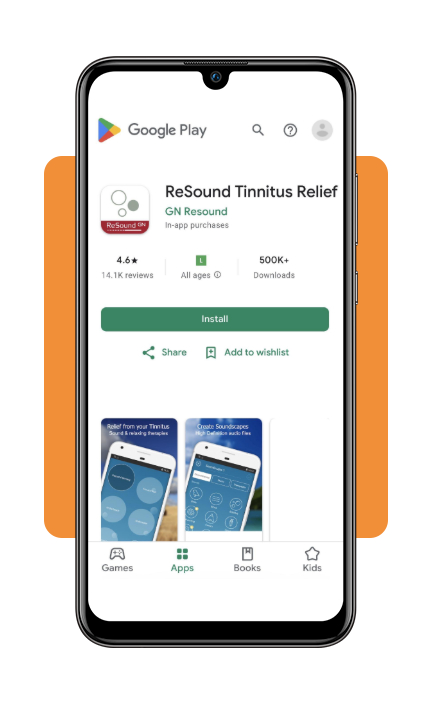
Among the leading options available on mobile app stores, there’s the ReSound (iOS | Android) platform.
Engineered by GN ReSound—a global leader in hearing care technology—it caters to both hearing aid users and individuals without hearing devices who suffer from persistent ear ringing.
You can download the application directly for your device via the ReSound Tinnitus Relief iOS App Store or the ReSound Tinnitus Relief Google Play Store.
Features available in the ReSound Tinnitus Relief platform
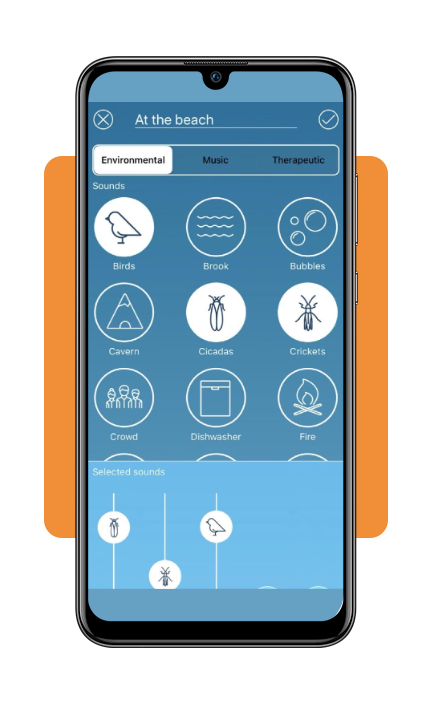
This tinnitus relief app allows users to layer up to five distinct audio sources—combining natural sounds, ambient music, and therapeutic tones—to build customized soundscapes tailored to their specific frequency profile.
Key features include the following:
- Dynamic soundscape generator: blend environmental sounds like ocean waves, rainfall, and forest breezes with acoustic white noise to create a soothing acoustic mask;
- Personalized balance and volume control: independently adjust the volume and left/right audio balance to accommodate asymmetrical ear ringing;
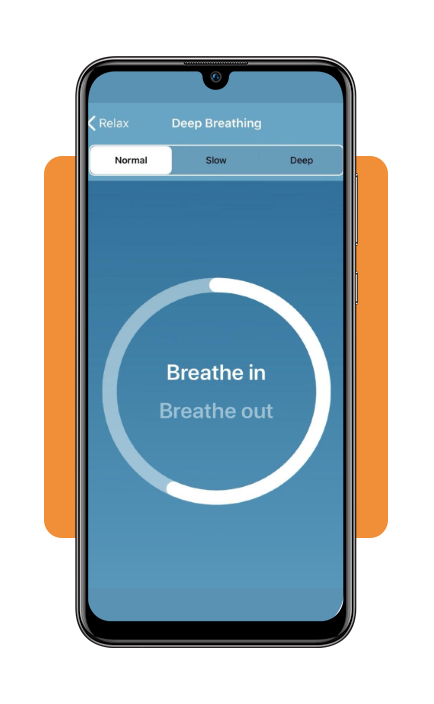
- Guided mindfulness and CBT exercises: access guided breathing routines, progressive muscle relaxation, and cognitive exercises designed to calm an overactive nervous system;
- Daily tracker and progress log: monitor your daily sound therapy usage to identify trigger times and observe long-term habituation progress;
- Universal Bluetooth compatibility: stream soundscapes directly to wireless earbuds, headphones, or Bluetooth-enabled hearing aids.
Step-by-step: how to mask your specific tinnitus frequency
Simply cranking up ocean sounds to maximum volume can strain your hearing or cause auditory fatigue.
Sound masking is most effective when the therapeutic background sound is set slightly below the volume of your ear ringing—a technique known as partial masking or habituation therapy.
Follow this step-by-step for your sound masking routine:
Step 1: identify your baseline pitch and tone
Sit in a quiet space and open the ReSound app on your iOS ou Android.
Listen carefully to your ear ringing to determine whether it resembles a high-pitched hiss, a low hum, or a buzzing tone. Select an initial sound layer that matches that tone’s character.
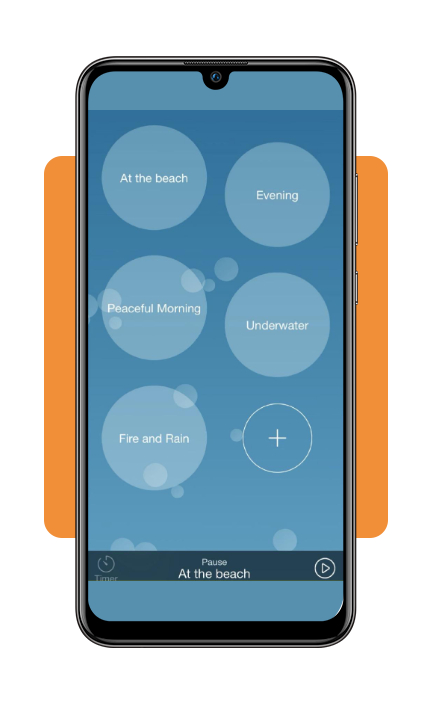
Step 2: layer natural sounds with acoustic tones
Combine broad-frequency environmental audio (such as gentle rain) with a soft therapeutic tone.
A good tinnitus relief app lets you layer ambient background noise with subtle white, pink, or brown noise to obscure high frequencies without overwhelming your ears.
To explore broader sound therapy tools, browse our curated guide to the best sound therapy apps.
Step 3: adjust volume to the mixing point
Set the volume of your soundscape so that it blends with the ringing rather than completely covering it up.
The goal is to allow your brain to hear both signals simultaneously, training your neural pathways to ignore the phantom tone over time.
Step 4: set timers and schedule daily sessions
Use built-in sleep timers when going to bed or playing background sound during work hours.
For specialized nighttime soundscapes, check out our review of White Noise Sleep Sounds by TMSoft or review our top picks for les meilleures applications de bruit blanc.
Hearing aids for chronic sound sensitivity
For individuals who experience ear ringing alongside age-related or noise-induced hearing loss, combining software-based sound masking with prescription hardware offers powerful relief.
In many cases, tinnitus is the brain’s attempt to compensate for missing auditory input by turning up its internal ‘volume.’
When ambient sounds are amplified through specialized hearing instruments, the contrast between internal ringing and external noise shrinks significantly.
Furthermore, integrating a tinnitus relief app with modern Bluetooth hearing aids provides discreet, direct streaming of therapeutic soundscapes without needing external headphones.
Many individuals with tinnitus also suffer from sound sensitivity or hyperacusis, where everyday moderate sounds feel uncomfortably loud.
Properly calibrated hearing instruments with dynamic sound compression can cushion harsh ambient noise while simultaneously playing soothing sound masking signals.
Best relaxation and mindfulness tools
There is a direct bi-directional relationship between tinnitus perception and autonomic nervous system stress.
When ear ringing triggers anxiety, the body releases stress hormones like cortisol and adrenaline, making the central nervous system hyper-vigilant—which, in turn, amplifies the perceived intensity of the ear ringing.
Breaking this reaction loop requires a few steps, such as:
- Deep diaphragmatic breathing: slow, paced breathing stimulates the vagus nerve, slowing heart rate and lowering auditory hyper-awareness;
- Progressive muscle relaxation: tensing and releasing muscle groups releases physical tension that accumulates from chronic ear ringing;
- Mindfulness meditation: practicing non-judgmental awareness helps reframe tinnitus from a threat signal into a neutral background sensation.
Pairing your tinnitus relief app with evidence-based relaxation exercises accelerates brain habituation. If nighttime ear ringing keeps you awake, explore dedicated apps to help you sleep better to restore restful sleep patterns.
4.6/5
Take back control of your peace of mind
While managing chronic ear ringing takes patience, modern sound therapy puts powerful solutions right in your pocket.
Downloading a dedicated tinnitus relief app gives you the tools needed to construct custom soundscapes, practice guided relaxation, and train your brain to tune out unwanted noise.
Take the first step toward quiet relief today by downloading ReSound Tinnitus Relief, tailoring your sound masking setup, and reclaiming your daily focus and nighttime rest.