

Conducting a lost assets search is one of the most effective ways for individuals and families to recover funds that legally belong to them or their ancestors.
Every year, billions of dollars in forgotten bank accounts, uncashed paychecks, stock dividends, life insurance payouts, and utility deposits are turned over to state treasuries. Read on Insiderwissen.
Best tool for lost assets search and unclaimed funds
When property owners move, change names, or pass away without leaving detailed financial records, financial institutions are legally required to surrender those dormant funds to state custody.
Initiating a lost assets search across official databases allows heirs to trace these long-lost funds and submit formal ownership claims.
Understanding official regulations on what unclaimed property is highlights why a lost assets search is essential: state governments hold these assets in trust until the rightful owner or heir steps forward.
Exploring official search portals, document requirements, and inheritance growth strategies ensures you do not leave money behind.
When launching a lost assets search, using a single multi-state portal saves time compared to visiting individual state websites one by one.
The premier government-endorsed resource for locating abandoned financial assets across North America is Unclaimed.org and its sister database, MissingMoney.com.
Created and maintained by the National Association of Unclaimed Property Administrators (NAUPA) in partnership with state treasurers, this portal provides a centralized, 100% free search tool across participating state databases.
Using an official government tool for your lost assets search guarantees that you never pay fee-based asset finders or fall victim to commercial search scams.
Features available on Unclaimed.org and MissingMoney
Using government-backed databases streamlines your lost assets search with features such as the following:
- Centralized multi-state queries: allows users to search multiple state databases simultaneously by entering a first name, last name, and state of residence;
- Direct state treasury links: connects searchers directly to official state claims departments to begin submission securely;
- Deceased owner database match: displays property registered under deceased relatives, enabling living heirs to initiate estate property claims;
- Zero commercial markup: ensures 100% of recovered funds go directly to verified property owners without third-party finder fees.
Common scams and fee-based finders to avoid
When conducting a lost assets search, remaining vigilant against commercial scams protects your personal data and wallet.
Unofficial third-party ‘finder’ companies often scan public registries and offer to recover lost property in exchange for 10% to 50% of the asset’s total value.
- Never pay upfront fees: official government state treasuries never charge money to locate or process claims for unclaimed property;
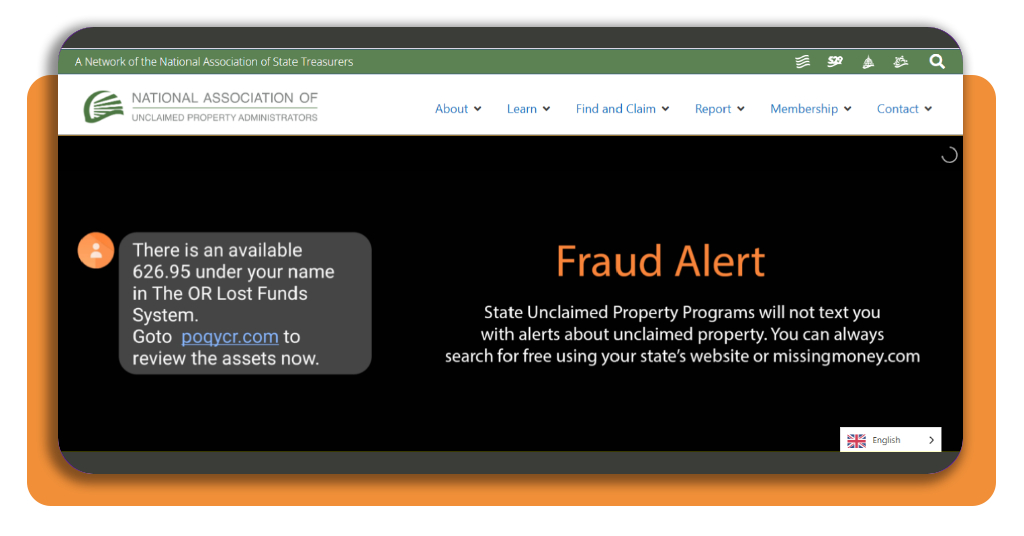
- Beware phishing emails and texts: authentic state agencies do not send unsolicited text messages or urgent emails asking for sensitive banking details or Social Security numbers;
- Verify official web domains: always confirm you are on a legitimate government URL ending in .gov or using official NAUPA portals like Unclaimed.org.
Step-by-step: how to scan state databases
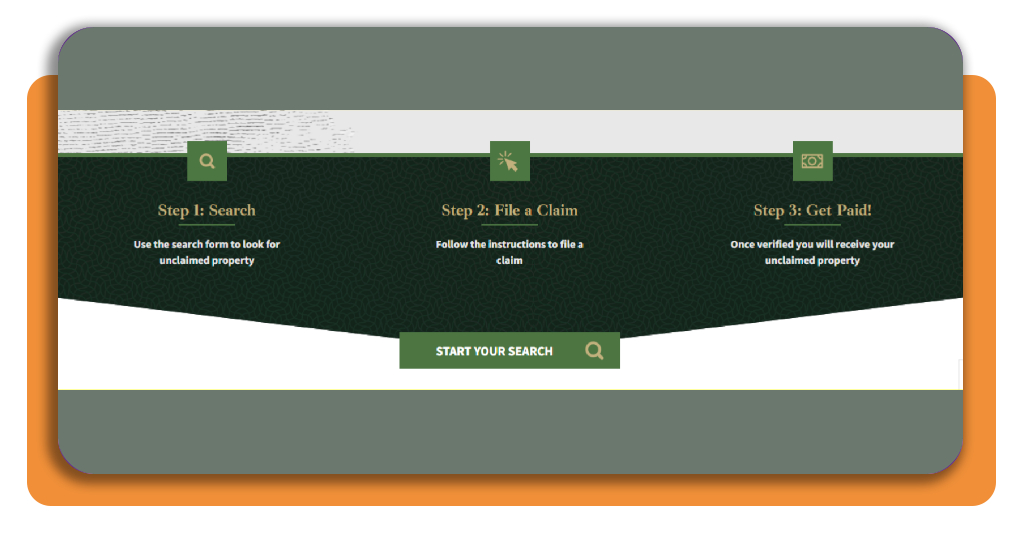
A thorough lost assets search follows a clear, multi-step process to ensure no regional or historical records are overlooked. Follow this four-step strategy to locate and claim abandoned funds:
Step 1: gather candidate details and alternate names
Collect full legal names, maiden names, past residential addresses, and Social Security numbers for yourself and any deceased relatives.
Having varied name spellings ready helps maximize match results during your lost assets Suche.
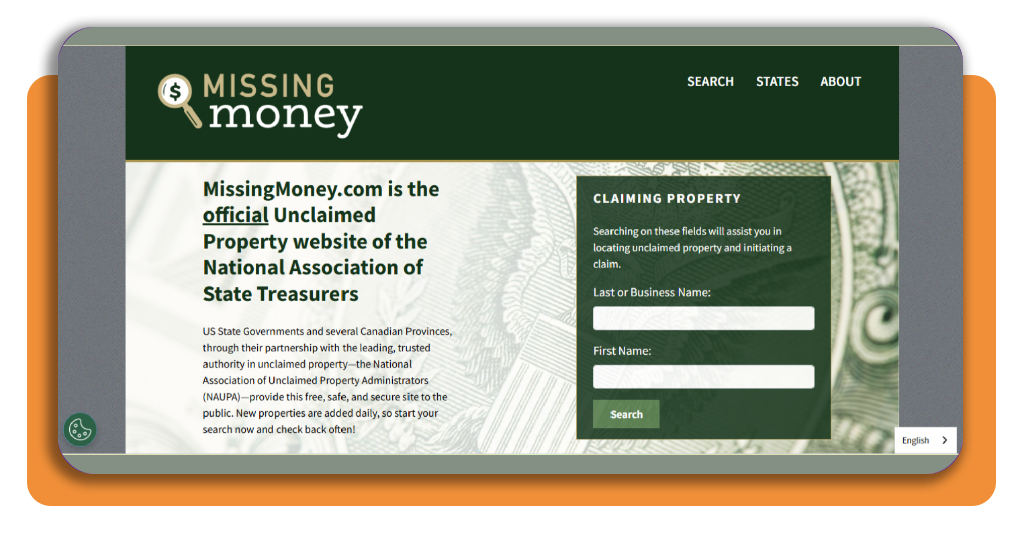
Step 2: query multi-state and individual state treasuries
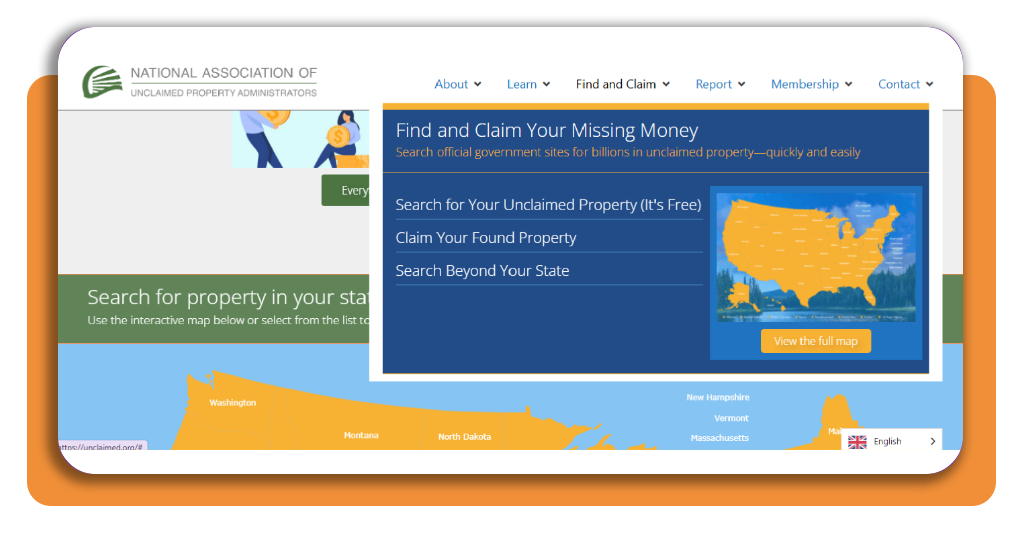
Navigate to Unclaimed.org. Perform a broad multi-state query first, followed by direct searches on individual state treasury websites for every state where your family lived, worked, or operated a business.
Step 3: verify asset ownership and collect supporting documentation
When a match is located during a lost assets search for deceased relatives or you, select the property record to view claim requirements.
Prepare proof of identity (photo ID), proof of address history (utility bill), and estate documents if claiming on behalf of a deceased heir (death certificate, probate court documents).
Step 4: submit your claim online and track status
Submit the required proof documents online or by mail through the state’s official claims portal. Save your claim confirmation code to track progress as state auditors verify ownership, completing your lost assets search.
Tools to secure your family’s future inheritance
Beyond completing an immediate lost assets search, protecting family wealth against future loss requires proactive estate planning and digital recordkeeping.
Unclaimed assets frequently accumulate because families lack awareness of an aging relative’s financial accounts, policy numbers, or property deeds.
When investigating potential family inheritances, utilizing genealogy platforms like MyHeritage helps trace ancestral family trees, verify maiden names, and identify lost family connections.
Documenting your family tree makes it significantly easier to prove heirship when filing state claims for deceased ancestors.
To safeguard assets across generations, financial advisors recommend adopting structured estate management tools:
- Digital asset vaults: use encrypted password managers and cloud vaults to store account numbers, insurance policies, and estate documents for family beneficiaries;
- Comprehensive estate planning: establish clear wills and living trusts to outline asset distribution and prevent accounts from falling dormant;
- Regular financial audits: review guidelines on securing your family’s financial future to maintain active ownership records and prevent property escheatment.
Financial strategies to grow your inheritance
After your lost assets search returns unclaimed funds, managing that inheritance wisely ensures long-term financial security.
Whether recovering a modest uncashed check or a substantial financial account, putting the capital to work compoundingly builds wealth.
Consulting expert recommendations on what to do with an inheritance highlights smart financial priorities for sudden windfalls:
- Pay down high-interest debt: prioritize paying off credit cards or high-rate loans to immediately reduce interest drag and boost cash flow;
- Build an emergency fund: direct a portion of recovered funds into a high-yield savings account to cover 3 to 6 months of living expenses;
- Invest in broad-market index funds: allocate long-term inheritance capital into diversified stock index funds or bonds to foster inflation-protected growth over time;
- Fund tax-advantaged accounts: contribute to individual retirement accounts (IRAs) or 529 college savings plans to optimize tax efficiency.
Reclaim your family’s financial heritage
Conducting a lost assets search costs nothing, takes only a few minutes, and can reunite your family with valuable financial resources.
Start your search today on official state databases to ensure no part of your inheritance remains unclaimed.