
It’s 8 PM. You’re finally home after a day of work, then you start streaming Netflix, and when you finally think you’re good, the ‘buffer wheel of death’ appears. You forgot your kids are on Xbox, and your wife is on a video call. THis internet slowdown at night can be explained by fiber vs cable internet in many countless households that depend on stable connections for streaming, gaming, work meetings, and daily communication. Cable users often blame the router or Wi-Fi signal for the evening crash, but the true cause sits in the infrastructure that becomes overloaded under peak traffic.
Still, there’s something you can do: fiber changes this equation. Fiber connection relies on dedicated pathways that carry data through light pulses with a level of consistency that avoids the bottlenecks common in cable lines. This comparison reveals how technology choice matters for families seeking reliable performance across multiple devices. If you want to solve this problem, this article shows how you can check for free and in less than a minute whether fiber already reaches your address.
- Fiber vs. 5G home internet: we tested both (one is a clear winner for reliability)
- 5 beste Apps zur Überprüfung Ihrer Internetverbindung
- How 6G Will Change the Internet for Good
Fiber vs. Cable: Why Your Internet Breaks During Peak Hours
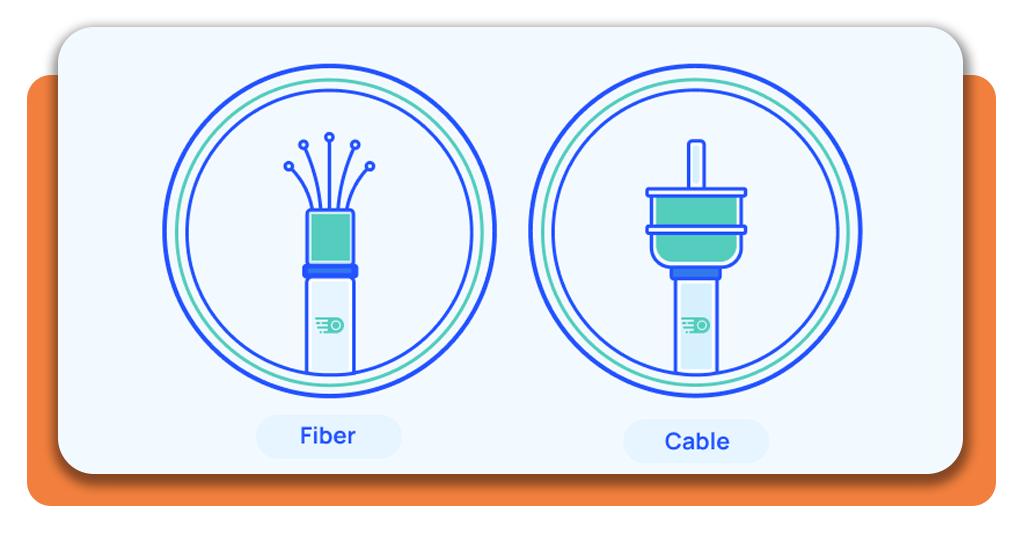
First of all, we need an understatement about how all this fiber vs cable work. To begin, cable operates through copper lines that were designed for older communication demands.
The thing is: this structure carries data along circuits shared with nearby homes that contribute to congestion each time usage increases.
Therefore, a shared environment collapses under evening pressure. This happens because every household opens apps that require heavy bandwidth even though cable lacks mechanisms to distribute these requests evenly.
In these situations, when the slowdown becomes inevitable, your frustration becomes routine.
On the other hand, Fiber sends information through glass strands that maintain signal strength independently of neighborhood activity, creating a stable channel that does not degrade under simultaneous loads.
This design delivers consistent speed from morning to night, which explains why fiber users experience smooth streaming and responsive gaming even during high-demand periods.
While cable attempts to compensate through temporary boosts that raise download speed, fiber sustains predictable behavior.
When it comes to fiber, we can summarize saying its architecture was created for modern digital environments, ideal for multiple devices demanding, without compromising stability.
The 8 PM Stress Test: Streaming, Gaming, and Zoom All at Once
The real performance gap emerges during the night. You can make a stress test, when televisions stream HD video at the same time, and consoles request rapid data exchanges.
You’ll see your connection by cable struggling. The uploads remain restricted by asymmetrical limits that create delays during activities.
Those activities depend on real-time response, generating moments when audio freezes or gameplay becomes inconsistent. This is the moment when the lag takes over.
However, fiber handles this scenario with greater resilience because its upload and download capacities operate at similar levels, allowing multiple activities to run in parallel without interfering with each other.
This symmetrical arrangement prevents delays from piling up and keeps communication smooth even when every device pushes the network to its limits. This is the opposite of cable connection.
The difference between fiber vs cable becomes clear as soon as households attempt demanding tasks simultaneously.
It can be a major change that turns the evening routine into a reliable moment rather than a daily battle against buffering and connection drops.
Why Fiber’s Symmetrical Speeds Beat Cable’s ‘Bottleneck’ Design
Well, to explain this part of fiber vs cable, we can start by saying cable relies heavily on download priority, leaving upload capacity constrained under layers of technical limitations that cannot support high-intensity modern tasks.
This imbalance harms activities like cloud backups, video conferencing, online gaming, and large file transfers because each action competes for limited upstream bandwidth that runs out quickly.
Meanwhile, fiber solves this through a balanced configuration that treats both directions with equal importance, maintaining stability during moments when digital activity increases across various categories.
The symmetrical design enhances responsiveness during interactive applications, which reduces latency and improves clarity during activities that demand constant communication between devices.
How to Check Fiber Availability at Your Address in 1 Minute
Most providers offer quick availability tools that rely on ZIP-code searches to determine whether the area supports fiber connections.
AT&T Frontierund Verizon maintain systems that detect local infrastructure with impressive accuracy since they update their networks frequently to reflect ongoing expansions.
The best part is: you can do it for free, it takes less than one minute, and the confirmation appears instantly. After that, the upgrade is right in front of you.
For example, AT&T Fiber uses a simple address field that identifies eligible neighborhoods and displays the available plans with expected speeds that compare favorably to cable lines in areas with high data consumption.
Frontier Fiber zip code check expands coverage into developing regions with a tool that tracks new installations, helping users understand when fiber becomes available even if the neighborhood is still transitioning from older systems.
If you wanna check Verizon Fios availability, it provides a highly responsive checker that identifies multi-gig options in urban zones, giving households clarity about the potential for significant speed gains once the system replaces traditional copper lines.
These tools work quickly, allowing users to explore modern options without navigating lengthy sales steps or waiting for callbacks.
Stop Buffering: Compare No-Contract Fiber Plans
Modern fiber providers deliver straightforward plans that stop internet buffering, by prioritizing stability over marketing illusions.
AT&T Fiber, for instance, highlights consistent multi-gig speeds that remain stable during peak periods, producing a noticeable improvement for households that suffer nightly interruptions on cable.
Frontier Fiber offers stable pricing that avoids sudden increases, enabling families to invest in performance without worrying about hidden adjustments that often appear in legacy cable contracts.
Verizon Fios, meanwhile, delivers premium speed tiers that perform exceptionally well in homes with numerous devices. It is also known for being capable of supporting demanding digital lifestyles across gaming, video, work, and entertainment.
Households gain real flexibility when providers remove long commitments, creating an environment where people can try fiber under everyday conditions without feeling tied to a contract.
This freedom reveals the performance gap immediately, turning the first evening test into clear proof that modern infrastructure delivers a smoother experience than cable.
Why Your Internet Crashes Every Night at 8 PM (A Real-Life Fiber vs. Cable Test) – Conclusion
Now you know better about fiber vs cable, you understand how evening slowdowns highlight the limitations of cable technology that cannot handle simultaneous demand across multiple devices.
However, households can regain reliability once symmetrical speeds replace the bottleneck design that causes lag during streaming, gaming, and video calls. And you can stop internet buffering by changing to fiber.
The upgrade becomes clear as soon as users complete a simple availability check and discover that modern infrastructure already reaches their address.
Verwandt: Measure Internet Speed on Phone With Super Accurate Tests
Hat Ihnen dieser Artikel gefallen? Speichern Sie den Insiderbits-Blog unter Ihren Favoriten, um sich über die neuesten Tools, kreative technische Tipps und bahnbrechende Entwicklungen in der Fotobearbeitung zu informieren.