I’ve found that our brains are essentially chaotic screenwriters that refuse to give us a script. We often brush dreams off as “random”, but then we spend the whole morning ruminating on why our subconscious decided to throw a rave in a haunted library. The problem with traditional analysis is that it usually swings between two extremes.
Between overly clinical jargon and “mystical” claims involving crystal balls and vague prophecies about your love life, neither helps when you just want to know why you keep dreaming about losing your teeth. This is where a digital dream interpreter steps in, acting as a bridge between that weird mental movie and your actual emotional state.
- Dream Recording Apps: Capture Your Night Visions
- Use This Viral App To Create The Fake Vacation Of Your Dreams
- Verwirkliche deine Träume und singe mit Berühmtheiten auf der Smule App
Why certain dreams keep repeating (and stick with you all day)
Recurring dreams are the ultimate “glitch in the matrix” for the human mind. These persistent themes often reflect unresolved conflicts or high-pressure situations in our daily existence.
Your brain isn’t just stuck on a loop because it lacks creativity; it is trying to process a specific emotional frequency that you might be ignoring during your nine-to-five grind.
Whether it’s the classic “I missed my final exam” panic or the “falling through infinite space” sensation, these tropes are universal manifestations of anxiety, lack of control, or the fear of being exposed.
The reason these images haunt your morning commute is due to their emotional intensity.
When a dream triggers your amygdala—the brain’s fear center—it imprints on your memory much more vividly than a boring Tuesday afternoon at the office.
Utilizing an AI dream interpreter allows you to strip away the weirdness and focus on the underlying sentiment.
Instead of obsessing over the specific “bread monster” from my earlier example, the technology might highlight a pattern of “suffocation” or “uncontrollable growth”, which is a much more useful starting point for anyone trying their best without having a meltdown.
How this AI dream interpreter turns your notes into insights
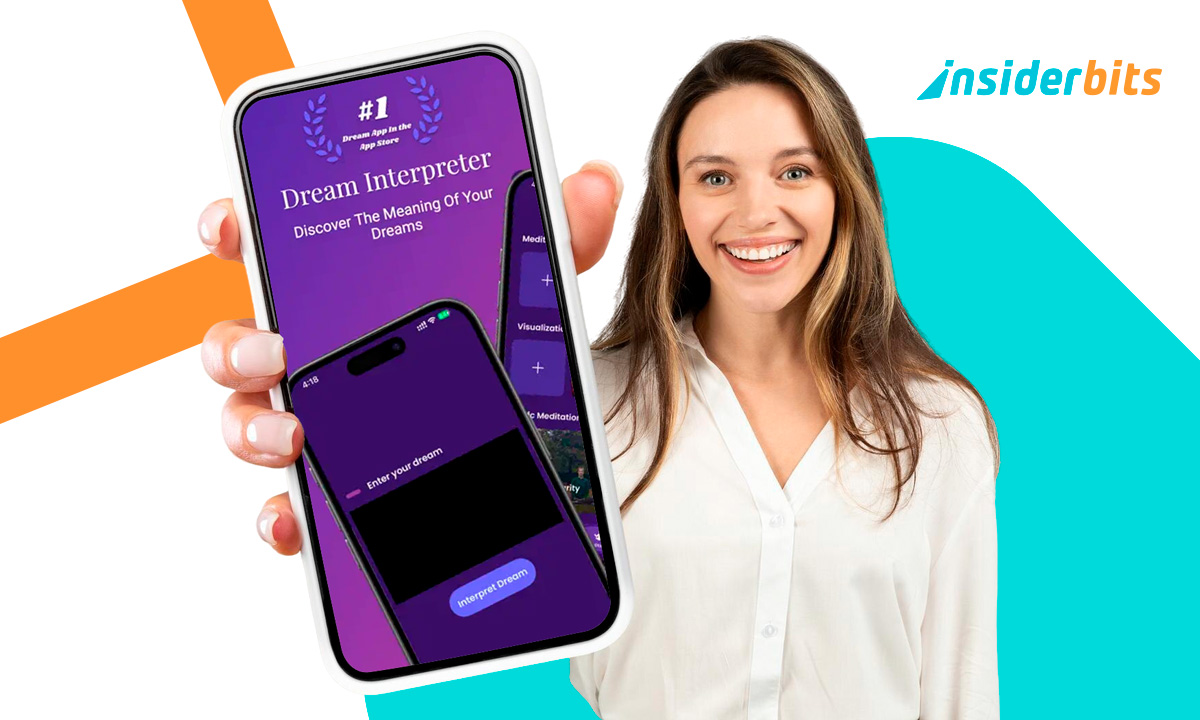
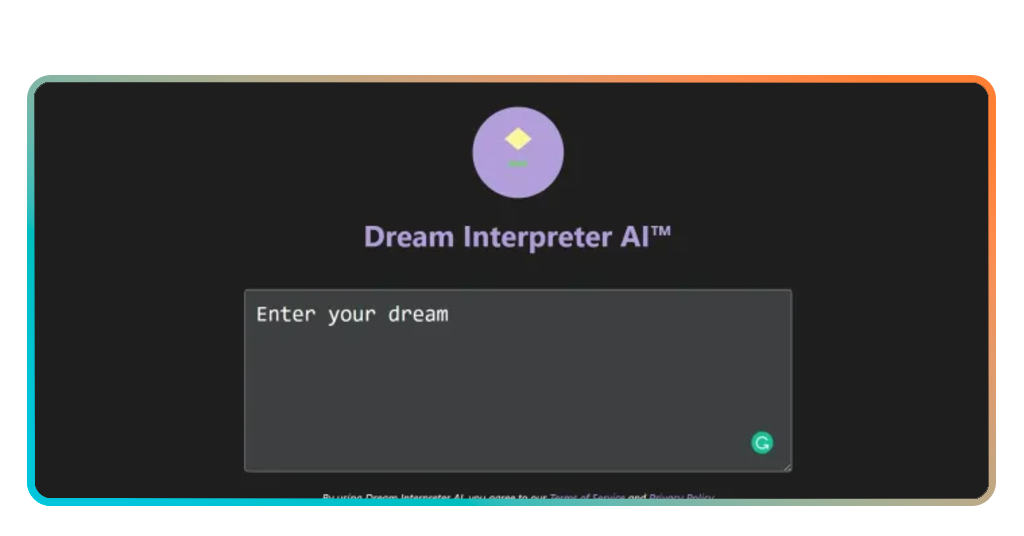
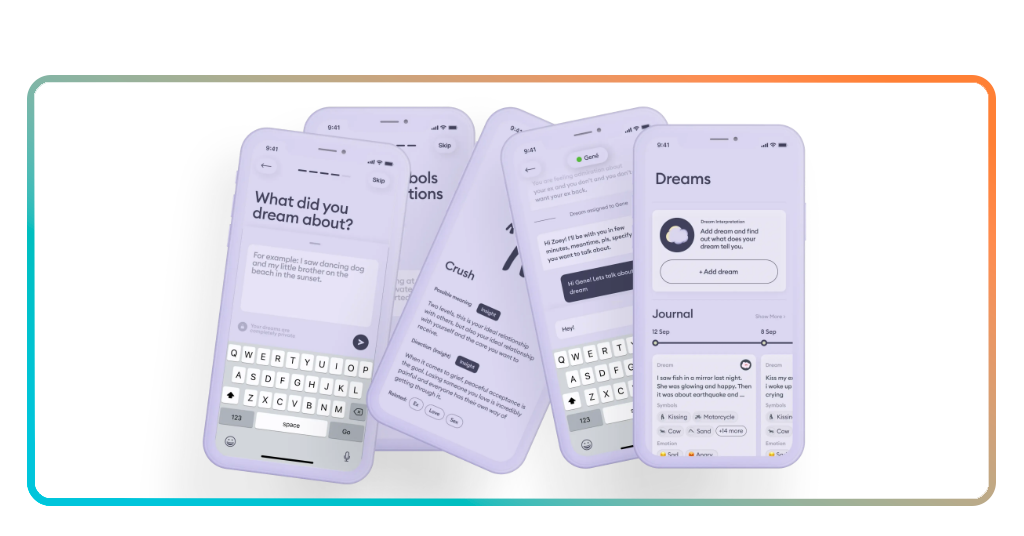
Platforms such as the app Dream Interpreter AI (available for Android und iOS), use Natural Language Processing (NLP) to scan your typed or dictated descriptions for keywords and emotional markers.
For example, dreaming of water could mean peace if you are floating in a calm pool, or total catastrophe if you are being swallowed by a tsunami.
The AI looks at the relationship between these elements to offer a hypothesis rather than a rigid definition.
Many users find that these insights act as a mirror for their mental health. If you consistently log entries that the system flags as “high-stress” or “socially anxious”, you might realize that your current job is doing more damage than you thought.
For those who struggle even to get a good night’s rest before the dreaming starts, exploring white noise apps can be a game-changer in reaching those deeper REM cycles where the most significant processing happens.
Once you’re actually sleeping, the software takes your disorganized thoughts and organizes them into a dashboard of your own psyche.

4.6/5
A simple dream-journal routine you’ll actually keep
The biggest hurdle to understanding your subconscious is the “memory fade” that happens the second your feet hit the cold floor.
If you don’t record the details within the first ninety seconds of waking, they’re basically gone, replaced by thoughts of emails and whether you have enough milk for cereal.
To make a dream interpreter actually work for you, the habit needs to be frictionless. Keep your phone—or a dedicated app—within arm’s reach, and don’t worry about grammar or making sense.
Just dump the imagery out as quickly as possible.
- Record three specific sensory details: a color, a sound, or a temperature;
- Assign an “emotional score” from one to ten based on how you felt upon waking;
- Focus on the action rather than the setting: were you running, hiding, or laughing;
- Use the voice-to-text feature to avoid fumbling with a keyboard in the dark;
- Review your weekly summary on Sunday nights to see if any themes shifted.
Common themes: stress, change, fear, desire — without “mystic” claims
Your brain is not a psychic. It is a biological supercomputer trying to make sense of the chaos you encounter every day.
Psychoanalysts have long debated the “work” of dreams, from Freudian theories about suppressed wishes to more modern views on memory consolidation.
A digital dream interpreter avoids the trap of telling you that you’re going to win the lottery. Instead, it categorizes your narratives into grounded, human themes.
For instance, “teeth falling out” is rarely about dental hygiene; it’s almost always about a perceived loss of power or communication breakdown.
Dreams about being chased often correlate with avoiding a difficult conversation in real life.
By viewing these through a lens of “emotional language”, the experience works as a tool for self-reflection rather than a spooky parlor trick.
In the end, it may lead you to the realization that if you keep dreaming about being lost in a shopping mall, you probably feel overwhelmed by the choices you’re making in your career or personal life.
What to do with the insight: reflection prompts that help
Once the AI gives you a breakdown of your nocturnal adventures, the real work begins. An AI dream interpreter provides the “what”, but you have to figure out the “why.”
If the app tells you that your dreams are dominated by themes of “unfinished business”, take five minutes to think about who or what you haven’t dealt with lately.
Is there a ghost from your past you need to exorcize, or a project you’ve been procrastinating on for months?
Use the data to set intentions for your day. If you woke up feeling empowered from a dream where you were flying, carry that confidence into your afternoon meetings.
If you woke up feeling drained by a nightmare, give yourself permission to take it easy and perhaps limit your screen time before bed.
Understanding your dreams means listening to the parts of yourself that are too quiet to speak up while you’re awake.
It turns your sleep from a passive state into an active, insightful part of your journey toward being a slightly less stressed human.
4.6/5
The bottom line
There is nothing more frustratingly awkward than waking up at 3:00 AM after dreaming that you were presenting a TED Talk in your underwear or being chased by a giant, talking loaf of bread.
You spend the next four hours of your actual, waking life feeling vaguely traumatized or nostalgic for a person you haven’t spoken to since middle school.
By using artificial intelligence to categorize these narratives, we can finally stop Googling “what does a blue cat mean” and start looking at our internal self with a bit more snarky clarity.