
Taking a reliable NREMT practice test is one of the most vital steps any aspiring emergency medical technician (EMT) or paramedic can take toward certification.
Unlike conventional multiple-choice exams that present a static set of questions, the official exam adjusts its difficulty dynamically based on your performance. Read on Insiderwissen.

4.8/5
About the test
The National Registry Cognitive Exam is famous for its challenging Computer Adaptive Testing (CAT) format.
If you answer a question correctly, the next question becomes progressively harder; if you answer incorrectly, the system presents an easier question to re-evaluate your competency.
Because the test measures minimum entry-level competency across complex clinical scenarios, taking a realistic NREMT practice test helps candidates acclimate to high-stress decision-making under time constraints.
For the official guidelines from the National Registry of Emergency Medical Technicians (NREMT), the cognitive exam tests candidates across five core categories.
Airway, Resuscitation, Medical/Obstetrics/Gynecology, Trauma, and EMS Operations.
Understanding how these topics are weighted—as detailed in the breakdown of NREMT Exam Components and Focus Areas—is essential for organizing your prep.
Combining theoretical knowledge with an adaptive NREMT practice test ensures you are mentally prepared for exam day.
Which is the best NREMT practice test app?
When choosing study software, selecting the top NREMT practice test mobile app can streamline your preparation and allow you to study anywhere, anytime.
While traditional textbooks provide foundational theory, mobile study platforms offer immediate feedback, detailed answer explanations, and performance tracking analytics that static books cannot match.
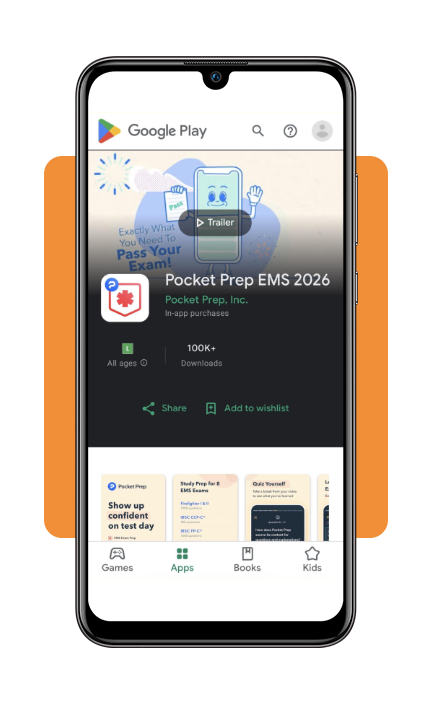
Among the various prep tools available to EMS students, the Pocket Prep EMS app is widely recognized as one of the most versatile and comprehensive choices.
Available on both iOS und Android, it provides candidates with thousands of peer-reviewed questions tailored specifically to the latest EMS educational standards.
Features available in the Pocket Prep EMS training platform
- Extensive question bank: access over 1,000 practice questions crafted by certified EMS educators and aligned with current national standards;
- Custom quiz generator: build targeted quizzes focused exclusively on your weakest subject areas, such as Pediatric Trauma or Cardiac Emergencies;
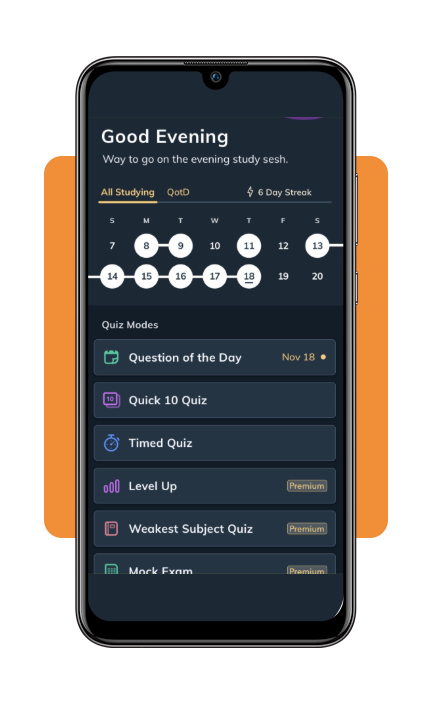
- Question of the day: receive a daily notification with a high-yield question to keep your clinical reasoning sharp between longer study sessions;
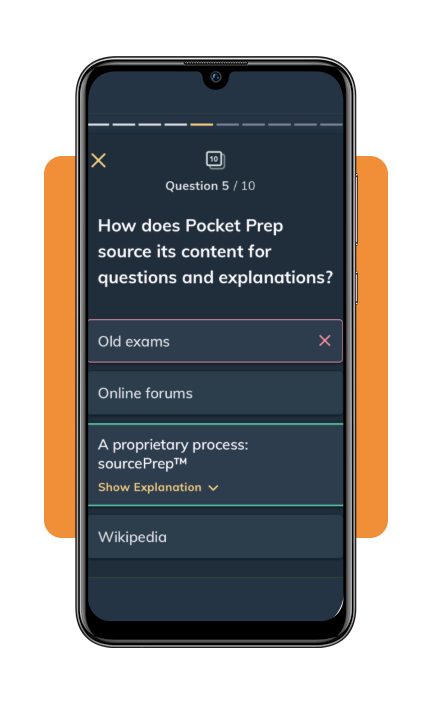
- Detailed rationale explanations: every question features a comprehensive explanation breaking down why the correct answer is right and why the distractors are wrong;
- Exam simulation mode: replicate the pressure of the actual certification test with timed practice exams that mimic real testing constraints.
Step-by-step: how to study for the exam using the app
Learning how to use an NREMT practice test app effectively during your study cycle makes a massive difference in your final score.
Merely guessing answers without a structured study plan leads to plateaued progress. Follow this proven step-by-step framework to maximize your preparation:
Step 1: establish your baseline score
Download the app on your iOS oder Android. Start your prep by completing an initial NREMT practice test without referencing notes or textbooks.
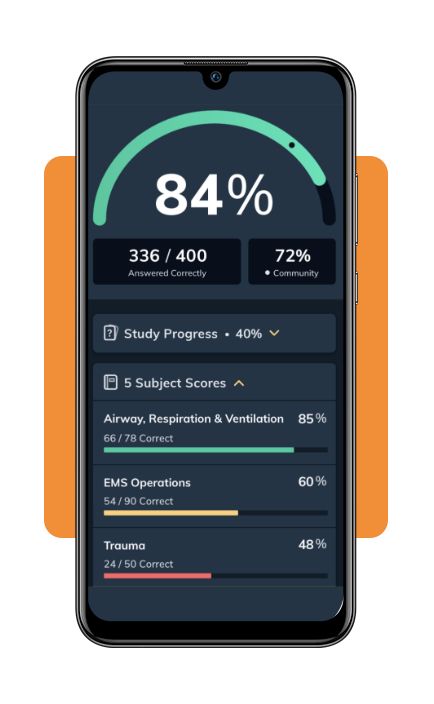
Use this baseline test to evaluate your existing knowledge across all five core domains (Airway, Resuscitation, Medical, Trauma, Operations) and pinpoint your weakest subjects.
Step 2: create daily quick-quiz routines
Incorporate short 10-to-15-minute quiz sessions into your daily routine using Pocket Prep’s ‘Quick Quiz’ or ‘Question of the Day’ features.
Spacing your practice throughout the day reinforces memory retention far more effectively than late-night cramming.
Step 3: target weak categories with custom quizzes
Filter the app’s question pool to generate customized tests targeting categories where your baseline score fell below 75%.
Read every explanation carefully, taking notes on key clinical protocols, drug dosages, and anatomical landmarks.
Step 4: simulate full-length timed exams
As exam day approaches, complete a full-length NREMT practice test under timed conditions. Turn off all distractions, avoid checking notes, and complete the test in one sitting to build mental stamina and test-taking confidence.
EMT and paramedic training programs
Before you are eligible to take the cognitive exam, you must successfully graduate from an accredited EMS training program.
Emergency medical education in the United States is structured across four progressive levels of certification, each carrying expanded clinical responsibilities and scope of practice:
- Emergency Medical Responder (EMR): provides immediate life-saving care with basic equipment prior to ambulance arrival;
- Emergency Medical Technician (EMT): the foundational certification level, authorizing basic life support (BLS), airway adjuncts, patient assessment, and emergency transport;
- Advanced EMT (AEMT): adds intermediate skills such as intravenous (IV) therapy, advanced airway devices, and select pharmacological interventions;
- Paramedic: highest pre-hospital certification level, requiring advanced life support (ALS) training, ECG interpretation, manual defibrillation, and complex pharmacology.
While completing an NREMT practice test reinforces clinical knowledge, candidates aiming for advanced career levels must meet stringent accredited course prerequisites.
To explore detailed requirements for advanced certification pathways, visit the official page on NREMT Paramedic Certification Requirements.
For instance, students exploring broader allied health paths often utilize structured prep tools like our guide to the Free Patient Care Technician Practice Test.
Best medical study resources for EMS students
While mobile apps provide convenient practice on the go, combining classroom lectures with an NREMT practice test sharpens exam-day recall when paired with authoritative medical reference materials.
Top-performing EMS students utilize a multi-faceted study approach that integrates textbooks, clinical pocket guides, and practical skill sessions. Among recommended study resources for EMS candidates, there are:
- Core textbooks: essential foundational reading such as Emergency Care and Transportation of the Sick and Injured by AAOS provides comprehensive coverage of pathophysiological concepts;
- Clinical protocol guides: compact pocket references like Tarascon EMS Pocketbook offer rapid access to pediatric dosing, Glasgow Coma Scale (GCS) scoring, and triage algorithms;
- Skill sheet checklists: official NREMT psychomotor skill sheets ensure candidates master hands-on steps for spinal immobilization, bleeding control, and airway management;
- Curated digital hubs: for a list of recommended books, podcasts, and online study modules, consult Texas Rescue Medicine’s EMT Study Resources.
4.8/5
Passing the NREMT on your first try
Earning your National Registry certification opens the door to a rewarding and impactful career in emergency healthcare.
While the exam has a reputation for being tough, consistently taking an NREMT practice test builds test-taking endurance, sharpens clinical judgment, and eliminates surprise on exam day.
Start taking a realistic NREMT practice test today, track your performance closely, and step into the testing center with complete confidence.