

Vision loss rarely announces itself. It does not knock, wave, or send a calendar invite. It slips in quietly, one slightly blurrier screen, one more squint at street signs, one headache too many at the end of the day. By the time most people notice something is off, their eyesight has often been changing for months or even years.
That silence is exactly why interest in a vision test done at home has surged. Not as a replacement for medical care, but as an early warning system. A way to check, monitor, and understand your eyesight before small issues grow teeth. In a digital world where screens dominate daily life, ignoring visual health is no longer neutral behavior. It is a risk.
- Where to find free vision clinics in your area
- The Best Free Vision Board App
- Dream Recording Apps: Capture Your Night Visions
How vision problems sneak up without warning
When it comes to compensation, the human visual system excels. The brain fills in the blanks when vision gradually deteriorates.
Many common conditions such as refractive errors, early-stage glaucoma, or digital eye strain progress slowly and painlessly, making them easy to overlook.
The Centers for Disease Control and Prevention shows that nearly 12 million people aged 40 and over in the U.S. experience vision impairment, yet a significant portion remain undiagnosed.
The reason is simple. People adapt. They increase font sizes, move closer to screens, blame fatigue, or assume aging is doing its thing.
This adaptation loop is broken by an at-home vision test. It establishes a baseline. Subtle changes cease to be invisible once you have a point of reference. They become quantifiable.
What a free vision test measures about your eyesight
A free vision test typically focuses on functional indicators rather than diagnoses. These tools assess how well your eyes perform in controlled visual tasks, not whether you have a specific disease. That distinction matters.
Most digital eye exams evaluate core components of visual performance supported by research from institutions like the National Eye Institute.
These include clarity of vision, color perception, and contrast sensitivity. While they do not replace clinical equipment, they are effective for initial screening and ongoing monitoring.
Used consistently, these tests help users answer a critical question: has something changed since last time? That awareness alone can shorten the gap between symptom onset and professional evaluation.
Understanding sharpness, color accuracy and contrast
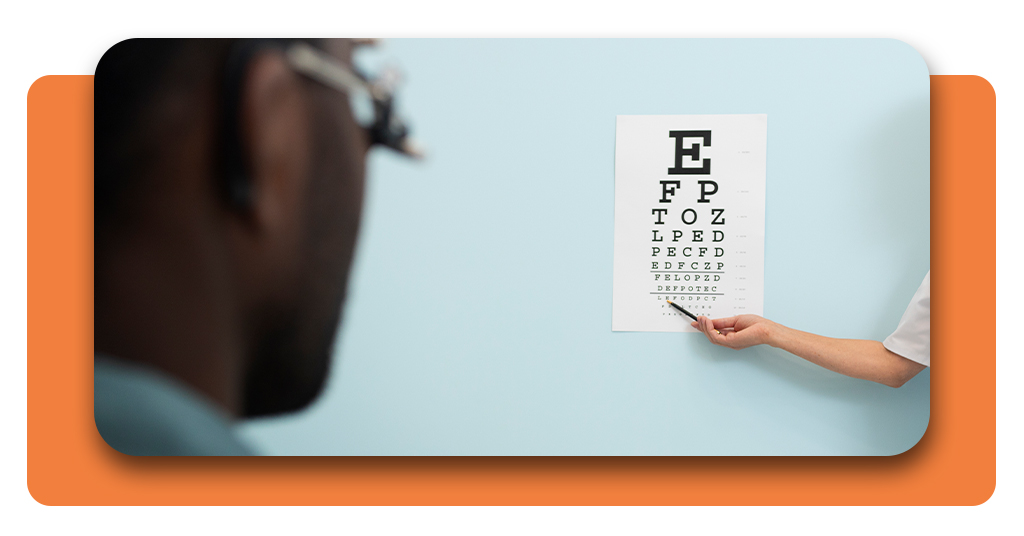
Visual sharpness, often referred to as acuity, measures how clearly you see details at specific distances. It is the most familiar element of any vision test, commonly assessed using letters or symbols that decrease in size.
Changes here may indicate refractive issues such as nearsightedness or farsightedness. Color accuracy tests evaluate how well your eyes distinguish between hues.
Subtle deficits can signal inherited color vision deficiencies or acquired conditions linked to optic nerve or retinal health.
Healthline reports that color perception changes can also be associated with certain medications or systemic conditions.
Contrast sensitivity, less talked about but equally important, measures how well you detect objects against similar backgrounds.
Reduced contrast sensitivity can affect night driving and low-light navigation. The National Eye Institute notes that this function often declines before standard acuity does, making it a valuable early marker.
Together, these components form a practical snapshot of visual performance, especially when tracked over time using the same vision test conditions.
Tracking your vision over weeks or months
One isolated result tells a story. Repeated results tell a trend. This is where at-home vision screening becomes needed.
By taking the same vision test periodically, users can observe patterns rather than guess based on daily perception.
The CDC emphasizes that early detection is a key factor in preventing vision loss from conditions that are treatable if caught in time.
While a free test cannot diagnose glaucoma or macular degeneration, it can reveal performance shifts that justify a professional exam sooner rather than later.
Tracking also brings emotional clarity. Instead of vague worry, users gain data. Instead of procrastination, they gain prompts to act.
For people already using other digital health tools, this habit mirrors broader self-monitoring trends discussed in Insiderbits’ guide to online pregnancy tests, where early signals drive timely decisions.
When it’s time to see an optometrist
A vision test at home draws a line, not a conclusion. Knowing when to escalate from self-check to professional care is essential.
To the American Academy of Ophthalmology, any persistent change in clarity, color perception, light sensitivity, or visual comfort should be evaluated clinically.
Red flags include sudden vision loss, flashes of light, eye pain, or rapid deterioration. No app can interpret those safely. Digital tools are filters, not gatekeepers. They help prioritize care, not postpone it.
Users approach appointments informed, with concrete observations instead of vague complaints. That improves communication and often speeds up diagnosis.
Why free vision tests resonate now
Screen exposure has exploded. The average American adult spends more than seven hours per day looking at digital displays.
Eye strain, dry eye symptoms, and focus fatigue are no longer edge cases. They are mainstream experiences.
A vision test fits into this reality because it is accessible, fast, and low-pressure, especially for younger adults who may delay eye exams due to perceived inconvenience rather than necessity.
It also reframes eye care as ongoing maintenance instead of crisis response, turning vision becomes something you check, like steps or sleep.
Eye exam app: accessibility and practicality
The Eye exam app is available for Android and offers a simple interface designed for home screening.
By pairing this tool with regular professional checkups, users build a layered approach to eye health. One catches changes early. The other handles diagnosis and treatment.

Seeing clearly is not just physical
Vision issues impact more than just the eyes. They affect confidence, safety, mood, and productivity. According to the CDC, untreated vision impairment raises the risk of depression, falls, and a lower quality of life.
Beyond letters on a screen, a vision test is about staying oriented in your own life—noticing when the world starts to blur and choosing not to normalize it.