
A plant identifier app can completely change the way people experience nature, since many walks often raise the same question: what exactly is that plant? Leaves, flowers, and stems can look familiar but sometimes they are impossible to name, and this simple curiosity is something that follows anyone interested in gardening or learning more about local ecosystems.
In this article, Insiderwissen will present PlantSnap (iOS/Android), an app that identifies plants through AI, so you don’t need to search endlessly through books and websites anymore, all in seconds. Below, you will discover how to transform a smartphone into a portable botanical scanner to recognize species, understand their characteristics, and learn how plants fit into the surrounding environment.
- Kultivieren Sie Ihren grünen Daumen mit Gartenarbeit und Pflanzen-ID-Apps
- Veganer Lebensstil mit diesen 5 Apps für pflanzliche Rezepte
- Identify trees with free plant recognition apps
What’s the best plant identifier app?
Everyone who loves plants can have a frustrating experience when they try to recognize plants while gardening, but they can’t.
That happens mainly because different species share similar leaf shapes, colors, or flower patterns, so identification is difficult even for people who spend a lot of time outdoors.
This is exactly why a reliable plant identifier app becomes useful. Its capability of removing the guesswork allows users to analyze plants instantly using their phone camera.
PlantSnap (iOS/Android), for example, uses visual recognition technology trained on a large botanical database to compare plant images with thousands of documented plant species.
So after taking a picture, the system scans the leaves, colors, and flower patterns to generate possible matches in just a few seconds.
Moreover, another advantage of using PlantSnap is the educational layer built into the platform.
Once a plant is identified, the app provides additional details about the species, including its scientific classification, geographic distribution, and basic characteristics.
For gardeners and nature enthusiasts, a plant identifier app transforms a simple photo into an opportunity to learn more about the plants growing in their surroundings.
Because the process is simple and fast, the app appeals to both beginners and experienced plant enthusiasts.
Now, everyone can identify plants directly in the field with a quick scan, making gardening or an outdoor walk a moment of discovery and learning.

4.6/5

Features available in the PlantSnap app
The PlantSnap app offers features designed to make plant identification simple even for people who have little botanical knowledge.
In order to facilitate this identification, the app uses image recognition technology that scans a photo and searches its database for possible matches. The instant plant recognition tool is highlighted as the main feature.
With that, you just need to take a photo directly inside the app or upload an image, and the system analyzes visual characteristics to suggest the most likely species.
One more helpful function involves access to a large plant database that contains information about thousands of species from different regions of the world.
After identification, it is possible to explore details and general characteristics that help them understand how each species fits into its natural environment.
In addition, PlantSnap has a personal collection feature that allows users to save identified plants and build a digital record of their discoveries.
Finally, PlantSnap supports learning through exploration. As users continue scanning plants, the app gradually introduces users to into deeper botanical knowledge about the natural world.

Step-by-step: how to identify native species using the PlantSnap app
Identifying plants in the wild becomes much easier when visual recognition technology assists the process.
This is how this plant identifier app helps gardeners and nature enthusiasts recognize native species when exploring their own backyard:
- Schritt 1: first, download and install the PlantSnap from the App-Store oder Google Play on your phone, and open the app after completing the installation process;
- Schritt 2: then, grant the necessary permissions so the app can use your phone’s camera to capture plant images;
- Schritt 3: now, it’s time to find a clear view of the plant, so position your phone so that the leaves, flowers, or stems are visible without obstacles;
- Schritt 4: use the built-in camera feature inside the app to take a photo and capture the plant you want to identify;
- Step 5: now, the app will analyze the image, and then the system compares the visual details of the photo with thousands of species stored in the PlantSnap database;
- Schritt 6: examine the suggested species and read the basic information provided about the plant;
- Schritt 7: lastly, store the identification in your personal library so you can revisit it later or continue learning about native species.
4.6/5
Tips for better plant identification
As you can see, a plant identifier app can make the discovery process much easier, yet the accuracy of the results depends on how clearly the plant appears in the image.
That’s because even advanced recognition systems rely on visible details like leaf edges, flower elements, petal shapes, and color patterns to compare plants against their databases.
Therefore, taking photos in natural daylight usually produces better results because shadows and artificial lighting can distort the plant’s color or texture.
Also, when possible, try to photograph the plant from multiple angles so the app can capture more visual characteristics.
One more helpful practice involves focusing on distinctive plant features. Leaves, flowers, stems, and even the way branches grow can provide valuable clues for identification.
When using PlantSnap (iOS/Android), including these details in the photo helps the system compare the image more accurately with species stored in the botanical database.
It can also help to photograph different parts of the same plant, such as a close-up of a flower combined with a wider image.
Usually, showing the overall plant shape may provide additional context that improves the accuracy of the identification. Finally, patience and curiosity go a long way.
Plant identification can be easier with experience using a plant identifier, and each new discovery builds a better understanding of the plants that grow in your environment.

Rare plants you could identify using PlantSnap
One of the most exciting aspects of using a plant identifier app is the possibility of discovering unusual or rare species during everyday outdoor activities.
You already know that with PlantSnap, you can photograph a plant and quickly compare it against a large botanical database that contains thousands of species.
This makes it possible to identify plants that may look unfamiliar at first glance, especially e those that grow naturally in specific ecosystems.
Wild orchids are a good example of plants that surprise hikers and nature enthusiasts.
Sometimes orchid species grow in forests or wetlands, displaying delicate flowers that can easily be mistaken for more common plants unless they are examined carefully.
And certain rare wildflowers can also appear along trails or in protected natural areas.
These flowers often bloom during short seasonal windows, making them easy to miss unless someone knows when and where to look.
Discovering these plants can deepen appreciation for local biodiversity and encourage people to learn more about the ecosystems around them.
Gradually, each plant identification helps users recognize how diverse the natural world can be even within places they visit regularly.
What you learned about plant identifier apps
Recognizing plants no longer requires memorizing botanical details. As we explored, a plant identifier app brings an opportunity to learn about the natural world around you.
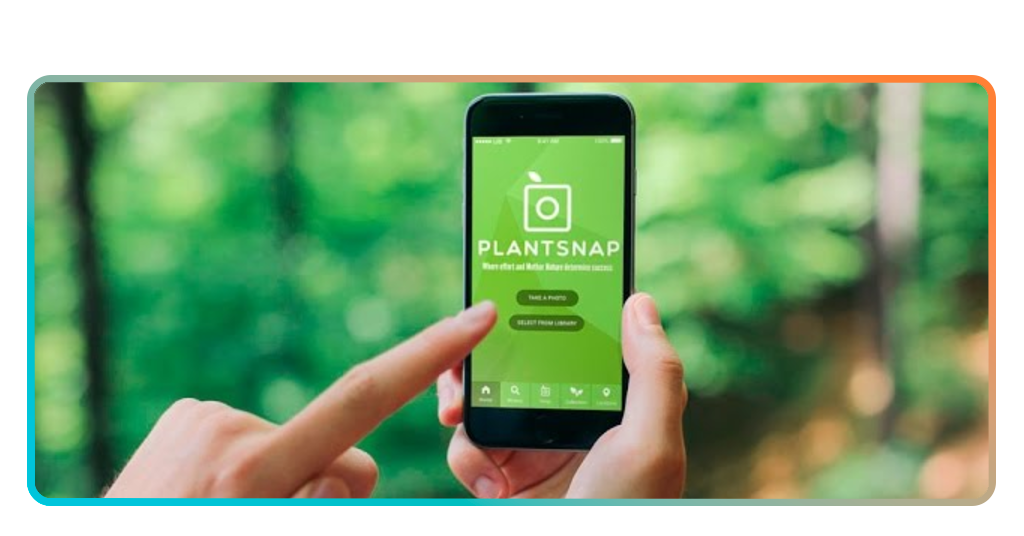
PlantSnap (iOS/Android) is one app allows users to photograph plants and instantly compare them with botanical databases, identifying flowers, trees, leaves, and native species within seconds.
Over time, this habit changes how people interact with nature. What once looked like an unknown leaf or flower reveals how diverse and fascinating the plant world truly is.
Verwandt: Check this free gardening course for beginner plant lovers
Enjoyed this article? Save Insiderwissen to your favorites and discover the most useful tech tips!