
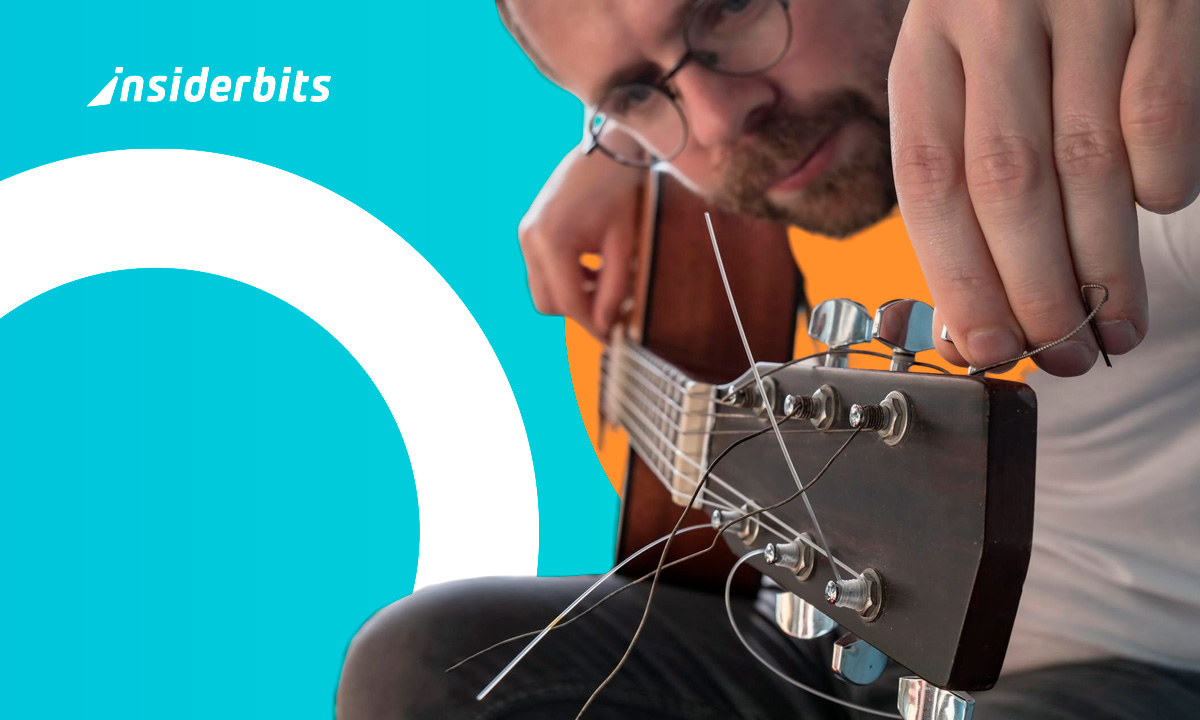
Every guitarist knows the ritual. You sit down to play, strum a chord, and something feels off. Not catastrophically wrong, just enough to ruin the mood. That tiny dissonance is the fastest way to turn inspiration into irritation. For decades, fixing it meant carrying extra hardware or relying on guesswork.
Today, that ritual fits in your pocket. A guitar tuner app has quietly become standard equipment, used by beginners and professionals alike. 47 percent of guitarists now rely primarily on smartphone tuners instead of standalone devices. Convenience did not kill quality. It replaced friction.
- Gitarrenunterricht für Anfänger: Meistern Sie die Grundlagen mit Apps
- Finde deinen Riff-Rhythmus mit der Songsterr Guitar Tabs & Chords App
- Lernen Sie zu Hause: Die besten Gitarren-Apps
Tuning your guitar without expensive hardware
Dedicated tuners still exist, but they are no longer mandatory. High-quality microphone sensors and audio processing allow apps like GuitarTuna to detect pitch with impressive precision, even on entry-level phones.
Cost is not the only benefit, relying on accessibility. You already have your phone. No need to change the batteries. There are no forgotten cables. Your case won’t be cluttered by additional equipment.
A digital guitar tuner app works by analyzing the frequency of each string as you play.
Standard tuning requires precise targets, but the app translates that technical data into intuitive feedback. You do not need to know what 440 Hz means to get your E string right.
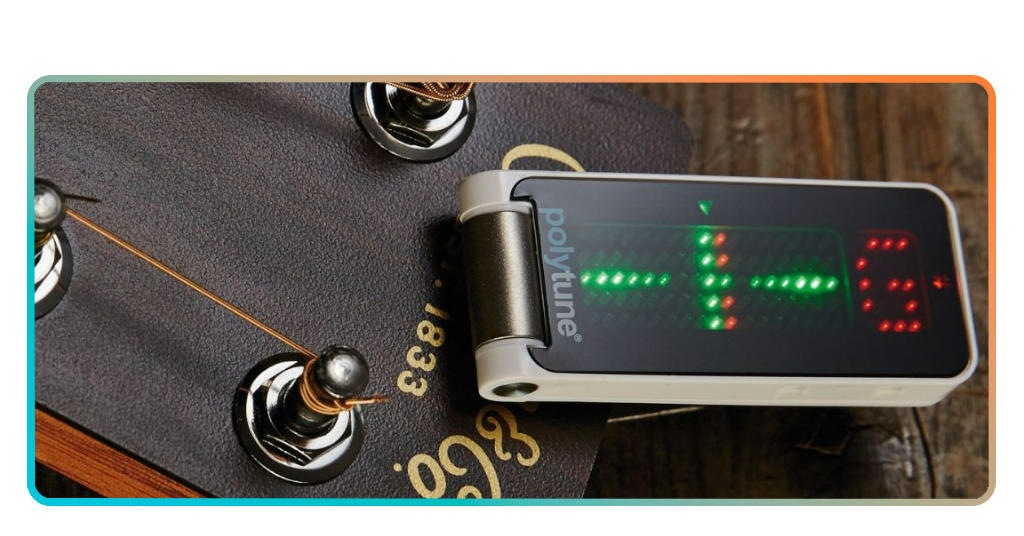
Compared to clip-on tuners, apps offer visual clarity. You see when a string is too tight or too loose, not just that it is wrong. That matters, especially for beginners who are still developing muscle memory.
Hitting the right pitch with a guitar tuner app
Accuracy is where skepticism usually appears. Can a phone really compete with dedicated equipment? The short answer is yes.
Modern guitar tuner apps use noise-cancellation algorithms to isolate string vibration from background sound. This allows them to function in rehearsal rooms, classrooms, and even noisy environments.
Positive Grid explains the underlying technology in detail, highlighting how digital tuners filter ambient frequencies to focus on the dominant pitch
GuitarTuna, in particular, is designed for speed. You pluck a string and receive immediate feedback, with clear indicators showing if you have to tighten or loosen.
For beginners, this clarity is essential. Instead of abstract numbers, the app communicates in plain language.
It tells you when a string is too tight or too loose, reducing frustration and minimizing the risk of over-tightening and breaking strings.
That accessibility is one reason smartphone tuning has become mainstream rather than a compromise, and GuitarTuna, of course, is available on both Android und iOS.

4.8/5
Supporting ukulele, bass, and other string instruments
A good guitar tuner app is not limited to one instrument. GuitarTuna supports a wide range of stringed instruments, including ukulele, bass, mandolin, and even less common options.
This matters for musicians who play more than one instrument or teach beginners across categories. Switching tuners mid-session is inefficient. A single app that adapts instantly saves time and keeps focus on playing.
Check what supported instruments typically include:
- Acoustic and electric guitars in standard and alternate tunings;
- Bass guitars with accurate low-frequency detection;
- Ukuleles in common tuning configurations;
- Mandolins and other folk instruments;
- Custom tuning modes for experimental setups.
One tool, multiple contexts.
Training your ears with built-in chord games
Here is where the guitar tuner stops being just a utility and starts acting like a teacher.
Many apps now include ear-training features, and GuitarTuna’s chord games are a standout example.
These games challenge players to recognize chords by sound, reinforcing pitch awareness without turning practice into homework.
This approach aligns with research on music education. Active listening exercises improve pitch recognition faster than passive repetition. By gamifying the process, the app lowers resistance and increases consistency.
Instead of separating tuning from learning, the guitar tuner app integrates both. You tune your instrument, then train your ear, then play. The cycle becomes seamless.
For younger players or absolute beginners, this is especially valuable. It replaces intimidation with curiosity and keeps progress measurable.
Using the metronome to improve your rhythm
Pitch is only half the equation. Timing is the other half, and many players neglect it. GuitarTuna includes a built-in metronome that turns a tuner app into a rhythm coach.
A metronome enforces discipline. It exposes rushing, dragging, and inconsistency. While external metronomes exist, having one integrated into the same app removes friction. There is no excuse not to use it.
Consistent rhythm practice helps with:
- Developing internal timing;
- Improving strumming consistency;
- Strengthening ensemble playing skills;
- Building confidence during transitions;
- Preparing for a live performance.
Used together, the guitar tuner and metronome create a structured warm-up routine that takes minutes but pays off in control.
Why guitar tuner apps replaced hardware for many players
The rise of the guitar tuner app is less of a trend and more of a response to real needs. Most players who switch to apps never return to standalone tuners, citing speed and ease of use as the primary reasons. And the reasons are consistent:
- Phones are always available;
- Apps update and improve over time;
- Visual feedback accelerates learning;
- Multi-instrument support reduces gear dependency;
- Additional tools add long-term value.
This does not mean hardware tuners are obsolete. Professionals still use them in specific contexts. But for daily practice, lessons, and casual playing, apps have become the default.
Learning music in a mobile-first world
Music education has moved closer to everyday life. Apps now teach piano, guitar, and rhythm directly on phones, lowering the barrier to entry.
If you are exploring other instruments, this broader shift is visible in tools like piano apps for children, which apply the same philosophy to beginners.
Abschließende Gedanken
A guitar tuner app is no longer a backup plan. Before scales, songs, or theory, tuning sets the stage. Doing it quickly and correctly shapes the entire experience.
Fast, accurate, and designed for real people rather than engineers, it removes friction from practice and replaces it with confidence.
Whether you are tuning in seconds before a lesson or training your ear through games, the right app transforms routine into progress.
Perfect pitch may be a myth, but being perfectly in tune is not.