

Plenty of reasons bring people to search prison records online, from settling a family mystery to checking facts before a big decision, and the process is not hard once you know where to look.
In diesem Insiderwissen guide, we’ll look into every legal way to track someone’s exact status using national databases, plus a few tips that turn searching into minutes saved. Keep reading!
Verwandt: Erhalten Sie zuerst aktuelle Nachrichten mit dieser Live-Polizeiscanner-App
Where can you check prison records online?
Court cases end, sentences get handed down, and afterward you’re left wondering exactly where someone landed and how long they’ll stay behind bars in that facility.
Government agencies track every inmate through searchable online systems, so digging into prison records no longer means driving to a courthouse or waiting on a phone call.
State corrections departments, the federal Bureau of Prisons, and the National Archives each hold different pieces of that puzzle, depending on when and where someone got sentenced.
State and local prison records
Each state runs its own department of corrections, and that agency controls every record tied to inmates held within its borders, from county jails to maximum security prisons.
You pick your state from the official directory, click through to that department’s site, and search using a name or booking number to pull up current custody details.
- Anyone can use the search tool, and no account or special credentials are required;
- You’ll need the person’s full name or a booking number;
- Expect custody status, facility location, and sometimes charge information.
Federal prison records from 1982 to present
Die Federal Bureau of Prisons runs an online locator tool that covers every inmate held in federal custody from 1982 onward, updated as cases move through the system.
Older cases sometimes lack full details, but the platform still lets you search by register number or full name, giving you a fast way to check prison records.
- Open to the public, including family members and employers;
- You’ll need a register number or a full name with basic details;
- Results show age, race, sex, release date, and facility location.
Federal prison records (1870–1981)
Before 1982, federal inmate files sat with the National Archives instead of the Bureau of Prisons, covering everything from administrative documents to case files on individual offenders.
Finding these older documents takes a bit more effort, because you search the catalog by record group number, then contact the archive for copies tied to specific institutions.
- Open to researchers, genealogists, and curious family members;
- You’ll need a record group number and the institution’s name;
- Available material includes case files, photos, and administrative records.
Step-by-step: how to view prisoner information and prison records
Knowing which government site holds the answer only gets you halfway there. Every single portal expects different details before it hands over anything useful to you.
Filling in the correct fields carries just as much weight as picking the right source, since a missing detail while searching through prison records usually returns nothing at all.
Getting from an empty search bar to a full profile with custody details takes barely any effort once you follow this exact sequence from start to finish.
Step 1: pick the right database
Start by figuring out whether the person you’re searching for landed in a state facility, a federal prison after 1982, or an older federal case predating that system.
That decision determines which portal you open next, whether it’s your state’s corrections directorydie federal inmate locator, or the correct National Archives catalog page instead.
For this example, we’ll use the search process on the Federal Bureau of Prisons website.
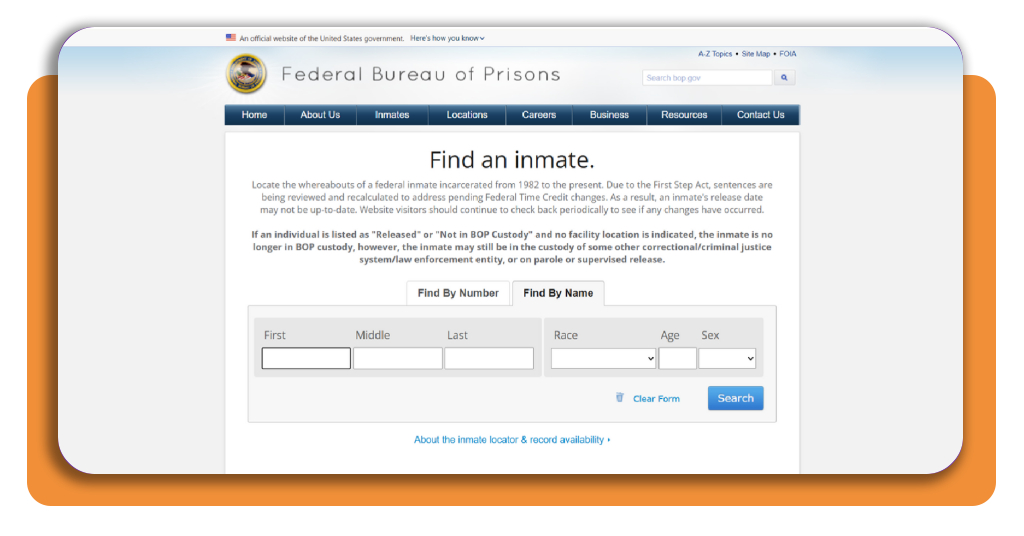
Step 2: enter the required details
Every portal asks for slightly different information, though you’ll typically need a full legal name, an approximate age of that person, or a specific number tied to the case itself.
Double-check every field before hitting search. A typo in a name or number sends your entire search for prison records off toward completely unrelated results within seconds.
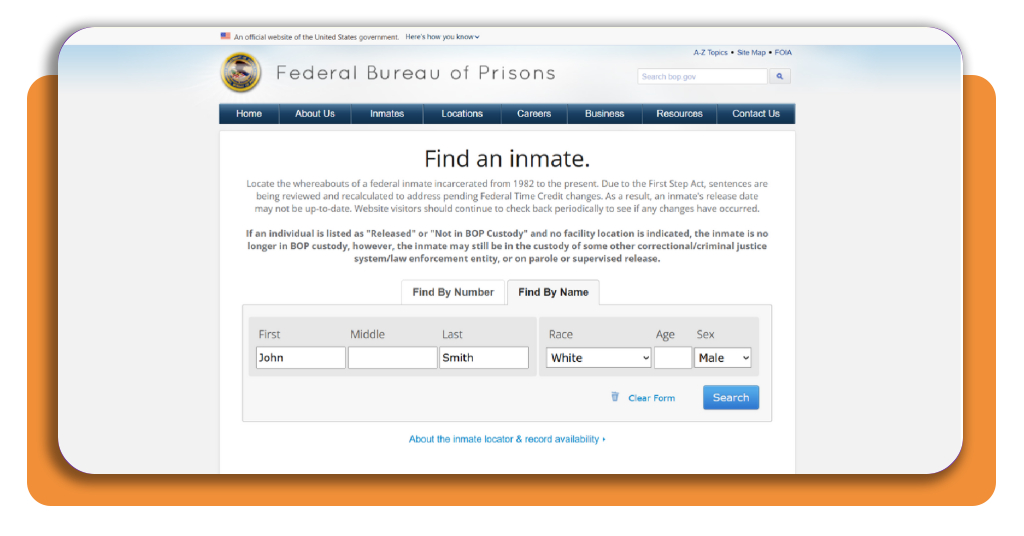
Step 3: submit and review results
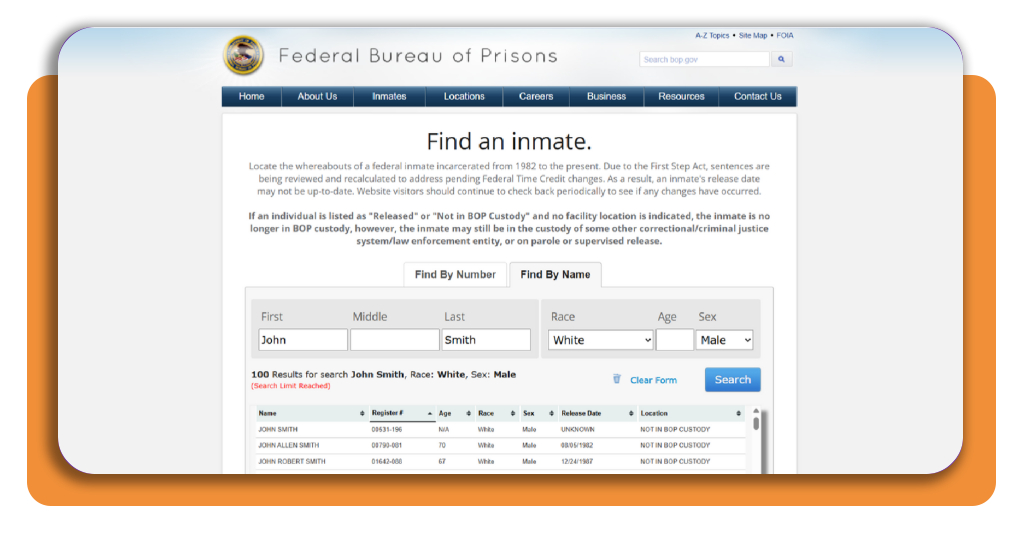
Hit the search button, and the system pulls up a possible match within moments, displaying exactly what that database has on file for the individual you entered.
Take a second to compare every detail on screen against what you already know, because names and numbers sometimes overlap between two completely different people entirely.
Verwandt: Public dispatch app: get real-time police and fire updates
Do you have to pay to conduct an official search?
Money worries pop up quickly once you start searching for someone’s custody status, especially after stumbling across lookup sites that demand a credit card before showing anything useful.
The good news is that most government portals never ask for a single dollar, letting you search freely without worrying about hidden charges popping up along the way.
Knowing which sites charge and which stay free helps you avoid wasting money, and understanding where prison records live online keeps your search fast and completely free.
Official databases cost nothing to use
State corrections departments, the federal Bureau of Prisons, and the National Archives catalog all let you search their systems without ever charging a single fee for basic lookups.
You can run as many searches as you want across these platforms, since taxpayer funding keeps every one of them open and accessible to the public at large.
Certified copies carry separate fees
Free searches only get you basic details, and ordering an official certified copy of any document requires a separate request that almost always comes with a processing fee.
These fees cover printing, mailing, and verifying authenticity, so it helps to set aside a little extra cash whenever you need something official for legal or employment purposes.
Watch out for paid lookup sites
Plenty of third-party websites pop up in search results promising instant access to someone’s full history, but most simply repackage free public information sitting behind a paywall.
Before you enter any payment details anywhere, take a moment to check whether the same prison records already sit available for free on an official government website.
Is it possible to request copies of inmate records?
A basic online search shows you plenty, but sometimes you need an actual physical copy of a document for court, employment, or a personal project you’re working on.
Government archives keep original paperwork filed away in physical storage, and getting your hands on a reproduction means submitting a formal request through the correct channel.
Depending on how old the case is and where the paperwork sits, requesting prison records involves either a quick online form or a much longer research process.
Ordering records straight from the archives
Die National Archives lets you submit a request directly through its catalog system, specifying the record group, the institution, and any details that narrow down your search.
Once you submit that request, staff members locate the physical file, scan or copy the relevant pages, and mail everything to the address you provided during checkout.
Hiring a researcher for deeper digging
Some files sit buried deep enough that finding them yourself becomes nearly impossible, especially when dealing with older cases across multiple facilities and decades of paperwork.
Hiring a professional researcher through the National Archives connects you with someone who knows exactly how to dig through those records and pull the file you need.
Processing times vary by record age
Recent federal cases tend to move quickly through the system, sometimes taking just a few weeks between your request and an envelope showing up at your door.
Older cases from decades ago sit in storage facilities that require extra handling, so expect those particular prison records to take considerably longer before reaching your mailbox.
Verwandt: Police exam prep: free training portal (start now)
Bonus tip: police radio apps for your phone
Curiosity about public safety doesn’t stop once you close out of a database, especially when sirens pass by your house or news breaks somewhere in your city.
Police scanner apps let you listen to live dispatch audio from your phone, turning your everyday device into a direct line to what’s happening around your neighborhood.
Combining that kind of real-time awareness with everything you’ve already learned about tracking down prison records rounds out a pretty solid toolkit for staying informed.
Police Scanner Radio & Fire
Police Scanner Radio & Fire (Android | iOS) connects you to thousands of live feeds covering police, fire, weather, and air traffic channels, letting you tune into activity near your location.
You can set up notifications for busy channels, save your favorite feeds for quick access, and even browse by genre if a specific type of activity interests you.
Police Scanner: Crime Radar
Built around an interactive map, Police Scanner: Crime Radar (iOS) shows you where active incidents are happening while transcribing dispatch audio into readable text as events unfold.
This app pulls you into live situations happening right now, complete with 24-hour archives in case you missed something important earlier in the day.
Police Scanner +
With over 100,000 stations covering everything from police and fire to railroad and weather channels, Police Scanner + (iOS) gives you a huge library to explore whenever curiosity strikes.
You can record specific stations for later, set alarms tied to your favorite channels, and keep listening in the background while using other apps on your phone.
The paper trail behind every cell door
Tracking down someone’s current status used to mean phone calls and long waits, but government databases now put those answers right at your fingertips.
In diesem Insiderwissen guide, we showed you where all kinds of prison records live online, covering state databases, the federal locator tool, and archives holding decades of older cases.
Explore other Insiderwissen articles and learn more ways to track down important documents, verify someone’s history, and find records that matter through trustworthy online sources.