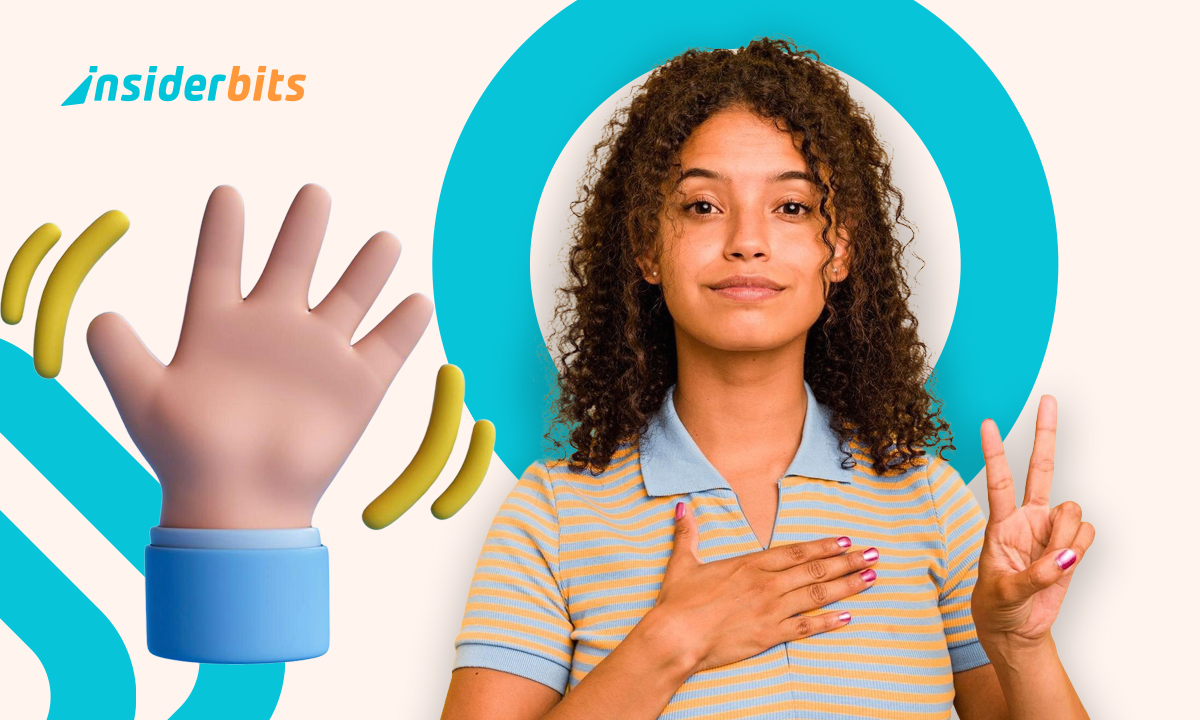
Right now, many professional paths may feel saturated or impersonal, but the demand for American Sign Language (ASL) interpreters is skyrocketing across the United States. While people are stuck in unfulfilling roles with stagnant wages, the Deaf and Hard-of-Hearing community is facing a critical shortage of qualified communication partners in hospitals, courtrooms, and schools.
What about the cost, you may ask? Career changes often come with intimidating price tags, and not everyone can gamble on expensive degrees or certifications. That’s where a free ASL course online changes the equation. These programs let you start learning the language, understand Deaf culture, and test whether this path fits you, all without debt.
- 3 Free AI Courses for Beginners With Certificates
- TOP 3 Best Apps for Learning Sign Language
- Best Free Online Course to Become a Digital Influencer
Where to take a free ASL course online?
The most prestigious starting point for anyone serious about a career in sign language is ASL Connect by Gallaudet University.
As the world’s only university designed specifically for Deaf and Hard-of-Hearing students, Gallaudet provides a bridge between casual learning and professional fluency.
Their “anytime, anywhere” learning modules are designed by Deaf instructors, ensuring you learn not just the “how” of signing, but the cultural nuances that define the language.
Other high-quality resources include:
- ASL University (lifeprint): created by Dr. Bill Vicars, this is perhaps the most comprehensive free ASL course online for those who prefer a structured, academic approach;
- Start ASL: offers a complete “Level 1” curriculum for free, including over 80 lesson videos and vocabulary for 800+ words;
- YouTube (ASL Rochelle or Manny Martin): excellent for daily practice and concise, high-energy tutorials that fit into a busy schedule.

Why learning ASL is important
Beyond the personal satisfaction of learning a beautiful, expressive language, the social impact of ASL is profound.
Research published by the National Institutes of Health (NIH) highlights that effective communication in healthcare settings is quite literally a matter of life and death.
When a hospital lacks an interpreter, Deaf patients are significantly more likely to face medical errors or avoid seeking help altogether.
By mastering ASL, you become the vital link that ensures safety and equity. In the professional world, this translates to unmatched job security.
Whether in a K-12 classroom or a high-stakes legal setting, the need for interpreters is so great that many agencies are struggling to fill positions, even as the Deaf community continues to grow.
How to work with ASL
Turning your new skill into a paycheck is a defined, multistep process.
In early 2026, the average annual pay for an ASL Interpreter in the U.S. has hit $64,020, with top earners in specialized medical or legal fields making over $80,000 annually.
Here are the primary career paths:
- Educational interpreter: working in schools to ensure Deaf students have equal access to lessons;
- Medical interpreter: navigating critical care conversations in hospitals and clinics;
- Video Relay Service (VRS): working from a call center or home office to interpret phone calls via video in real-time;
- Freelance/Legal: handling high-level assignments for government agencies, courts, or private businesses.
Step-by-Step Guide to Studying ASL
If you’re ready to transition from a “hobbyist” to a “professional,” follow this blueprint to maximize your progress through a free ASL course online:
Step 1: start with culture
Before learning your first sign, watch the cultural etiquette videos on ASL Connect. Understanding how to get someone’s attention or the importance of “backchanneling” is essential.
Step 2: master the manual alphabet
Fingerspelling is the safety net of ASL. If you don’t know a sign, you can always spell it.
Step 3: use the 31-day method
Utilize “fast-track” courses like those from ASL Rochelle to build a daily habit. Consistency is more important than intensity.
Step 4: engage in “VIBE” events
Gallaudet’s Virtual Immersion, Best Experience (VIBE) sessions allow you to interact with Deaf mentors and peers, which is the only way to move from “book learning” to real-world conversation.
Step 5: seek certification
Once you’ve exhausted free resources, look into the NIC (National Interpreter Certification). While the exam has a fee, the free foundational training you’ve done will ensure you pass on your first try.

About ASL Connect by Gallaudet University online courses
If you are ready to transition from a curious observer to a skilled communicator, here’s all you need to know about what ASL Connect courses have to offer.
ASL 1 & 2: building the foundation
Your journey begins with ASL 1, an 8 or 15-week immersive experience into the mechanics of the language. Here, you’ll master the OSV (Object-Subject-Verb) structure and the vital role of facial expressions in grammar.
This level focuses on essential conversation starters—family, school, and employment—while teaching the cultural etiquette of Deaf-friendly spaces.
In ASL 2, the adventure deepens as you explore the “sacredness” of Deaf clubs, camps, and sports teams.
You will move beyond simple introductions to describing physical environments, giving directions, and utilizing calendars for scheduling.
A key highlight of this level is the introduction of semantics, ensuring your signs are conceptually accurate, and a dive into Deaf folklore through the legend of “Planet Eyeth”.
ASL 3 & 4: deep diving into diversity and professional concepts
ASL 3 shifts the focus to the incredible diversity within the community, specifically highlighting Deaf ethnic groups and the DeafBlind community.
You will learn about the architectural designs of “Deaf-friendly” homes and practice creative handshapes to describe textures and visual aesthetics. This course is offered as an 8-week asynchronous session.
ASL 4 is where you get down to “work”. This level covers complex concepts like finance, consumerism, and emergency navigation.
You will learn how the Deaf community accesses government relief services like FEMA and how technology, such as the relay service industry, has revolutionized employment.
The curriculum even covers travel, teaching you how to navigate airports and support Deaf-owned businesses globally.
ASL 5 & 6: narrative mastery and cinematic features
The final tiers of the program move into synchronous learning, where you engage in real-time virtual classes. ASL 5 focuses on the transition to long-form storytelling or “narratives”.
You will study the history of ASL preservation and notable pioneers while learning the building blocks of ASL literature, including mouth morphemes and intensifiers.
Finally, ASL 6 represents the highest level of instruction. Here, you will apply cinematic features to your signing—bringing stories to life with a dimension similar to film.
You will use these advanced strategies to discuss specialized topics like human anatomy, medical procedures, and sports statistics.
By the end of this course, you will understand the “collective community” dynamics and universal design principles that support individuals with various sensory differences.
Course investment and registration details
To help you plan your professional development, here is a breakdown of the current costs associated with these 3-credit professional studies courses:
| Item | Cost |
| Course Fee (ASL 1 through 6) | $990.00 per course |
| Non-refundable Application Fee | $75.00 |
| True-Way ASL (TWA) Digital Textbook | $60.00 |
Payment and flexibility
All courses are designed to fit into a busy schedule, utilizing asynchronous learning for levels 1–4 (self-paced within the timeframe) and synchronous learning for levels 5–6 (real-time virtual interaction).
Full payment via credit card, check, or purchase order is required for registration, though payment plans can be arranged through the student portal.
Take the first step toward your new career
When communication fails, access to healthcare, justice, and education fails with it—the world needs people willing to step into the gaps that actually shape lives and restore access where it’s been missing.
By starting a free ASL course online today, you are investing in a future that offers both financial stability and the rare opportunity to make a tangible difference in someone’s life every single day.