

Travel brochures never warn you about silence—the paralyzing pause when you are standing in front of a cashier, a train officer, or a waiter and realize your carefully rehearsed sentence has vanished. In that instant, confidence collapses faster than airport Wi-Fi, and what should be a routine interaction turns into a source of stress and hesitation.
Language barriers affect mobility, access to services, and personal safety. Studies show that 40% of travelers experience communication difficulties as their primary source of stress abroad, particularly when dealing with local tourism and service professionals. But technology has rewritten the rules of what was once treated as an unavoidable part of travel. Understand why a real-time translator is a must-have safety net.
- Translate photos instantly and understand anything in the world
- Circle to Search Now Lets You Translate While Scrolling: Learn How!
- Decode Barks and Meows with the Dog and Cat Translator App!
Overcoming communication gaps when traveling abroad
Travel anxiety often has little to do with flying and everything to do with being misunderstood. Asking for directions, reading instructions, or explaining dietary restrictions can feel like high-stakes negotiations when words fail.
Studies on cross-cultural communication show that misunderstandings increase cognitive load, which in turn heightens stress responses and decision fatigue.
A real-time translator reduces this pressure by acting instantly, without demanding fluency.
Google Translate, for instance, supports over 130 languages and uses neural machine translation to improve contextual accuracy.
The tool may not deliver literary elegance, but it is clear, straight-forward, which is usually all you need at a bus terminal.
Besides, knowing you have linguistic backup changes your behavior. People ask more questions, explore further, and rely less on avoidance strategies. That shift alone can redefine the travel experience for many.
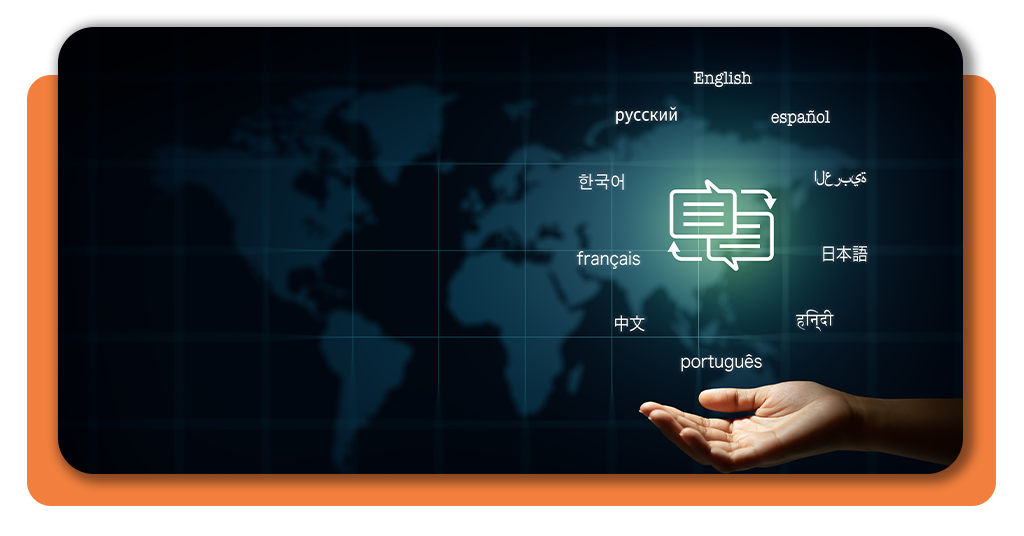
Use this real-time translator app for instant dialogue abroad
Conversation mode is a real-time translator’s most useful feature. With Google, users can converse naturally while the app listens, interprets, and reacts in a foreign language almost instantly, saving them from typing broken sentences.
Recent updates enable near-simultaneous conversations by enabling audio output via headphones. In actual circumstances, this is important. And you can use it in both your Android or iOS.
Think hotel check-ins, pharmacy counters, or ride-hailing disputes. Speed reduces friction.
The app’s speech recognition adapts to accents and informal structures, which is critical since real people rarely speak textbook sentences.
What separates a real-time translator from older phrasebook apps is automation. You do not need to press buttons constantly or switch languages manually.
The system detects language shifts, allowing conversations to flow with minimal interruption.
4.4/5
Downloading languages for offline use in remote areas
Connectivity is unreliable precisely when you need it most. Roaming plans fail. Public Wi-Fi collapses. Rural areas do not care about your data package. It is essential to have offline functionality, don’t believe otherwise.
Google Translate allows users to download language packs directly to their devices, enabling text, voice, and camera translation without internet access.
This feature is especially relevant for tourists visiting remote regions or countries with limited infrastructure.
Quoting Google’s product blog, offline neural models have significantly improved accuracy compared to earlier statistical systems.
From a practical standpoint, offline access supports autonomy. Travelers are no longer dependent on constant connectivity to navigate, read signs, or ask for help.
This independence lowers hidden costs related to mobile data and modifies planning strategies.
Pointing your camera to translate menus and signs
If conversation mode is functional, camera translation is theatrical. The moment you point your phone at a menu in French, Japanese, or Arabic and watch English text appear on screen feels like science fiction delivered on schedule.
This visual feature uses optical character recognition combined with machine learning to overlay translated text in real time. It is particularly useful for street signs, transit maps, ingredient lists, and museum descriptions.
Camera translation as the most frequently cited “wow factor” among live translation tools.
From a usability perspective, the camera tool reduces dependency on staff assistance and avoids uncomfortable interactions when pronunciation barriers are high.
It also lowers the risk of misunderstandings related to allergies or regulations, a detail often overlooked in travel planning.
Improving pronunciation with audio playback features
Translation is only half the story. Pronunciation determines whether spoken communication succeeds or fails.
A real-time translator supports learning by allowing users to hear translated phrases spoken aloud by native-like voices.
Audio playback helps users repeat phrases accurately, turning passive translation into active engagement.
Linguistic research consistently shows that auditory reinforcement improves short-term retention and pronunciation confidence.
Over time, users rely less on the app and more on their own speech, especially for recurring phrases.
This feature also encourages respectful interaction. Making an effort to pronounce words correctly, even with technological assistance, signals cultural awareness. It changes the tone of exchanges from transactional to human.
Why real-time translation has become a travel essential
The global travel market is larger and more linguistically diverse than ever.
International tourism surpassed 1.3 billion trips in 2023, with growth concentrated in regions where English is not dominant. Expecting linguistic uniformity is unrealistic.
A real-time translator aligns with this reality. It does not erase language differences, but it lowers the barrier to participation.
For digital nomads, expatriates, and short-term travelers alike, it functions as infrastructure rather than novelty. Integration with other apps reinforces this role.
Calendar tools, for example, support scheduling across time zones and cultures.
Insiderbits explores productivity platforms like Google Calendar and their role in organizing international routines highlighting how digital ecosystems now work together to support mobility.
Limitations worth acknowledging
No translation system is flawless. Idioms, humor, and cultural nuance often fall through the cracks.
Legal or medical conversations still require professional interpretation, and overreliance can lead to false confidence if users assume perfect accuracy.
However, measured use delivers clear benefits. The goal is not linguistic replacement, but functional understanding.
When used as support rather than substitution, a real-time translator enhances agency without erasing responsibility.
The bottom line
Language has always shaped access. Today, access is increasingly mediated by software. A real-time translator app may not make you fluent, but it makes you mobile.
Reduced hesitation and expanded options are shifting power dynamics in unfamiliar spaces. For travelers navigating uncertainty, that shift is the difference between shrinking your world and stepping into it prepared.