

Nobody actually enjoys looking at their utility bills. But finding an unexpected spike in your water charges is a special kind of heartbreak. It is that sinking feeling where you realize you are literally flushing money down a drain you cannot even see. The “adulting” dream of homeownership often comes with hidden drips that are the ultimate silent villains of domesticity.
With traditional plumbing maintenance, we wait for things to explode before we call for help. However, the rise of smart home integration has given us a way to fight back without having to rip through our floorboards on a whim. A digital leak finder approach is no longer just for the tech-obsessed; but for anyone who prefers spending their paycheck on travel or dining rather than industrial-strength dehumidifiers.
- How to Check Dark Web Data Leaks Before It’s Too Late
- Plumber handbook: learn to fix pipes and leaks at home in minutes
- Best DIY Home Repair Apps
The silent damage hidden leaks cause before you even notice
The anatomy of a household disaster usually starts with a single, microscopic crack in a copper pipe or a faulty seal under a dishwasher.
According to the Water Corporation, even a small leak can waste thousands of liters per year, which is essentially like leaving your garden hose running for several days straight without realizing it.
Wood rots, metal corrodes, and drywall loses its ability to support its own weight when exposed to consistent, undetected humidity. Beyond the bones of the house, there is the biological factor.
Mold thrives in dark, damp environments, and once it takes hold behind a cabinet or under a floorboard, it becomes a health hazard that is notoriously difficult to eradicate.
You might think you are just dealing with a “musty” basement, but you are actually breathing in spores that could have been prevented by a proactive leak finder strategy.
By the time you see a dark spot on the ceiling, the internal damage has likely been occurring for weeks, if not months, quietly eating away at your property value.
How a leak finder app detects moisture and water issues with precision
In the end, it’s all about sensors and mobile interfaces. When you integrate a tool like LeakBot, more than guessing based on a wet spot; you are monitoring the thermal and acoustic signatures of your plumbing system.
These systems often utilize ultrasonic technology or flow-rate analysis to determine if water is moving through your pipes when all faucets are closed.
This high-tech leak finder methodology allows for a non-invasive look into the “veins” of your home, identifying irregularities that the human eye would miss until it’s far too late.
These applications function by establishing a baseline of your typical water usage patterns.
When the software detects a micro-leak—a flow so small it wouldn’t even register on a standard analog meter—it sends an immediate alert to your smartphone.
This prevents the “slow-burn” catastrophe where a pinhole leak stays hidden for a year, gradually destroying your foundation.
For those who want to understand the basics of what their plumber is looking for during a visit, checking out a plumber handbook can provide valuable context on how these systems interact with your home’s infrastructure.

The early warning signs that save you from expensive repairs
Even without a sensor constantly running, there are behavioral cues your house gives off that should trigger your internal leak finder radar.
If your water heater is working overtime or if you notice a sudden drop in water pressure, the universe is trying to tell you something.
Early intervention is the difference between a simple washer replacement and a full-scale emergency excavation. Keeping an eye on these red flags is essential:
- Unexplained puddles or damp spots on your lawn during dry weather;
- The sound of running water or ticking when no appliances are in use;
- A persistent musty odor that doesn’t disappear with cleaning or ventilation;
- Peeling wallpaper or bubbling paint on walls that aren’t near a window;
- A sudden, significant increase in your monthly water bill without a change in habits.
A smarter way to prevent mold, structural damage and high utility bills
Prevention is always cheaper than a cure, especially when the “cure” involves a construction crew in your living room at 3:00 AM. Investing in a digital leak finder ecosystem is essentially an insurance policy for your peace of mind.
By catching a drip in its infancy, you avoid the secondary costs that people often forget: the cost of replacing ruined carpets, the electricity used by industrial fans to dry out a room, and the potential increase in home insurance premiums following a major water damage claim.
It is about taking control of your environment before the environment takes control of your bank account.
Furthermore, being water-conscious is no longer just a “green” trend; it is a financial imperative in an era of rising utility costs.
A smart application helps you quantify your usage, allowing you to see exactly where your resources are going, making it easier to maintain a healthy, efficient home without needing a degree in civil engineering.
Protecting your home starts with a simple scan — here’s what to expect
Setting up a detection system is surprisingly straightforward, even for those of us who struggle to put together IKEA furniture.
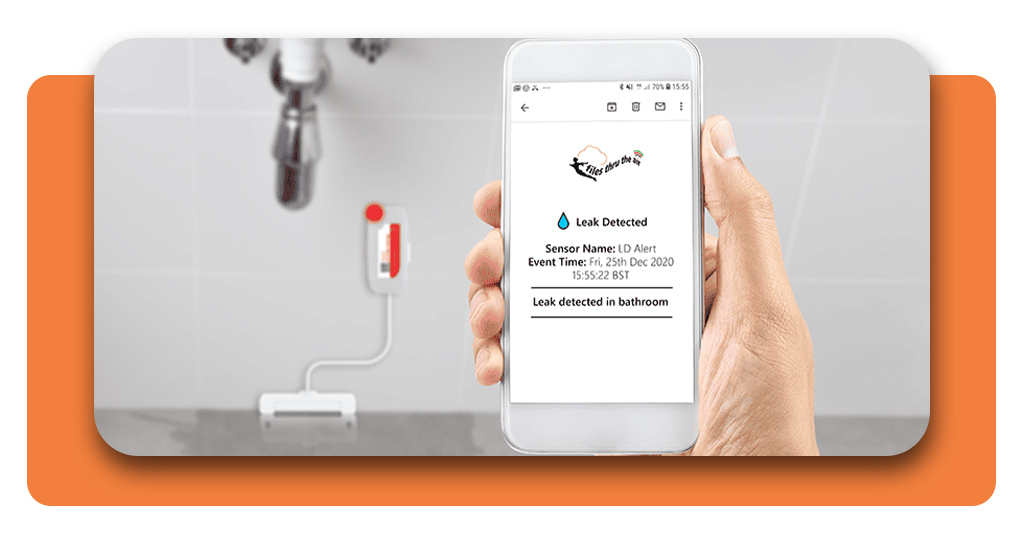
Most modern leak finder setups involve a central hub that clips onto your internal pipework near the stopcock.
Once the hardware is in place, the app walks you through a calibration phase where it learns your habits—like how long your showers usually last or when the dishwasher runs.
From that point forward, the system acts as a digital sentry, working in the background while you go about your life. If the app does flag an issue, don’t panic.
Having this data means that you can provide your plumber with specific information, reducing the time they spend diagnosing the problem (and the hourly rate you pay them).
Instead of saying “I think there’s a leak somewhere”, you can say “the system detected a constant flow of 0.5 liters per hour starting last Tuesday”, a level of detail that transforms you from a frustrated homeowner into a manager of your own household.
A final thought
By merging hardware sensors with intuitive software, we can now pinpoint moisture issues with a level of surgical precision that would make a veteran contractor jealous.