

Big goals feel exciting at first, even more when you wonder about a career change, a business launch, financial independence, or learning a new skill. Then, we start to face problems, and they never lie on a lack of ambition. Usually, long-term goals collapse because they remain too abstract and disconnected from weekly behavior.
That is where a long-term goals app changes everything. When your yearly vision is translated into weekly actions, progress gets visible, and you don’t need to chase motivation. This article by Insiderbits explores how the Strides app helps transform long dreams into weekly wins, and why that can completely redefine how you pursue success.
- Daylio Journal – Bullet Journal, Goals & Mood Tracker in One App
- Flynow – Conquer Your Goals with This Productivity App
- Habit Tracker – Habit Diary: Stay on Top of Your Goals
Long-term goals: turn big dreams into weekly action steps
Long-term goals always sound inspiring on paper, but without a clear breakdown, they remain distant milestones instead of actionable plans.
The key shift happens when you stop asking, “How do I achieve this in a year?”, and start to understand what you need to do when you are preparing for next week.
That’s because weekly action steps create organization and urgency without overwhelming you.
This way, you don’t need to stare at a massive objective, you focus on manageable commitments that fit into your actual schedule.
In this post, we highlight Strides, a habit tracker that lets you break a long-term goal into measurable milestones by setting weekly targets and tracking progress visually.
With this app, you get help with long-term goals and don’t need to rely on memory or vague intentions. You see exactly what needs to be done and how far you have already come.
All you need to do is download Strides (iOS), and you will notice how weekly action steps transform ambition into motivation.
With consistency, long-term goals stop feeling overwhelming when they are reduced to repeatable weekly wins.
Why most goals fail (and why weekly planning changes everything)
Of course, every situation is individual, but usually, goals fail for a simple reason: they stay inspirational but never get to the operational stage.
For instance, when you write that you need to lose 20 pounds or increase income it does feel productive, yet without defined checkpoints the brain treats them as distant intentions.
Another common issue is the illusion of time. A goal set for twelve months feels comfortably far away, and that creates a false sense of flexibility.
Then, weeks start to pass, progress remains minimal, and urgency only appears when deadlines approach. By then, pressure takes over, and strategy is all gone.
However, you can achieve your goals by weekly planning your long-term objective, and by translating it into seven-day commitments, you make accountability real.
Basically, it all comes to this: you either completed this week’s step or you did not. The feedback loop tightens, and motivation builds faster.
Since weekly planning also reduces overwhelm, you don’t need to solve the entire year at once—you focus on one controlled cycle at a time.
Overall, when goals are anchored to weekly action, consistency is sustainable, and long-term success is no longer dependent on bursts of motivation.
Best app for breaking down goals into milestones you can follow
You are learning that if you want to turn long-term goals into weekly wins, it is necessary to have way more than motivation.
Long-term goals demand organization, visual tracking, motivation, and reminders that keep momentum alive even when enthusiasm dips.
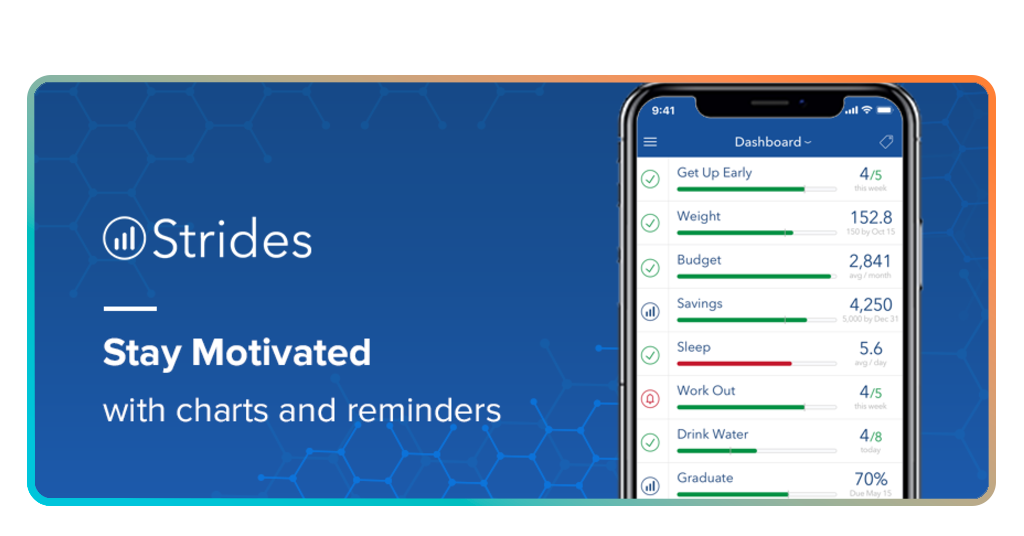
That is where Strides (iOS) stands out as a companion for ambitious plans. The app lets you break a large objective into measurable milestones with clear deadlines.
One of the main features is a visual dashboard that makes progress feel tangible through charts, streak indicators, and completion percentages.
All of this helps to create a sense of advancement that keeps motivation grounded in evidence.
Within the app, you can also set automated reminders and choose between different tracking formats, such as habit-based goals or smart targets.
This flexibility ensures that whether you are building a fitness routine or launching a business initiative, your tracking system adapts to the type of goal you are pursuing.

How AI creates personalized weekly plans based on your lifestyle
We have mentioned in this article how the biggest obstacle to achieving long-term goals is misalignment with your real routine.
Even a perfect plan on paper collapses quickly if it ignores your available time, energy levels, and existing commitments.
To make a difference, modern goal-tracking platforms increasingly integrate AI-driven logic to adjust realistic goals and adapt schedules based on your progress patterns.
Usually, these systems observe how consistently you complete tasks and recalibrate future targets accordingly.
With Strides (iOS), your input about deadlines, priorities, and workload helps shape a weekly structure that fits your lifestyle.
And there’s more: if a week becomes unusually busy, the app can help you redistribute milestones across upcoming cycles.
On the other hand, when consistency improves, targets can gradually intensify to maintain motivation.
This adaptive rhythm is what prevents burnout while preserving progress, making your weekly plan evolve with your capacity.
AI in this context is not replacing discipline. It is about supporting it by aligning weekly actions with your actual lifestyle.
Long-term goals: turn big dreams into weekly wins – Conclusion
As you can see, long-term goals are not achieved through motivation alone. They are built through consistent weekly action that aligns with your real schedule and capacity.
If you download Strides (iOS), your objectives become trackable and adaptable to your lifestyle, making you see what works and adjust what doesn’t.
When long-term goals feel distant, break them down, define this week’s actions, and begin building momentum today. Big dreams are achievable when progress is measured one week at a time.
Related: Try Mistral AI Now: Open-Source Power for Real Tasks
Enjoyed this article? Save Insiderbits to your favorites and discover the most useful tech tips!