
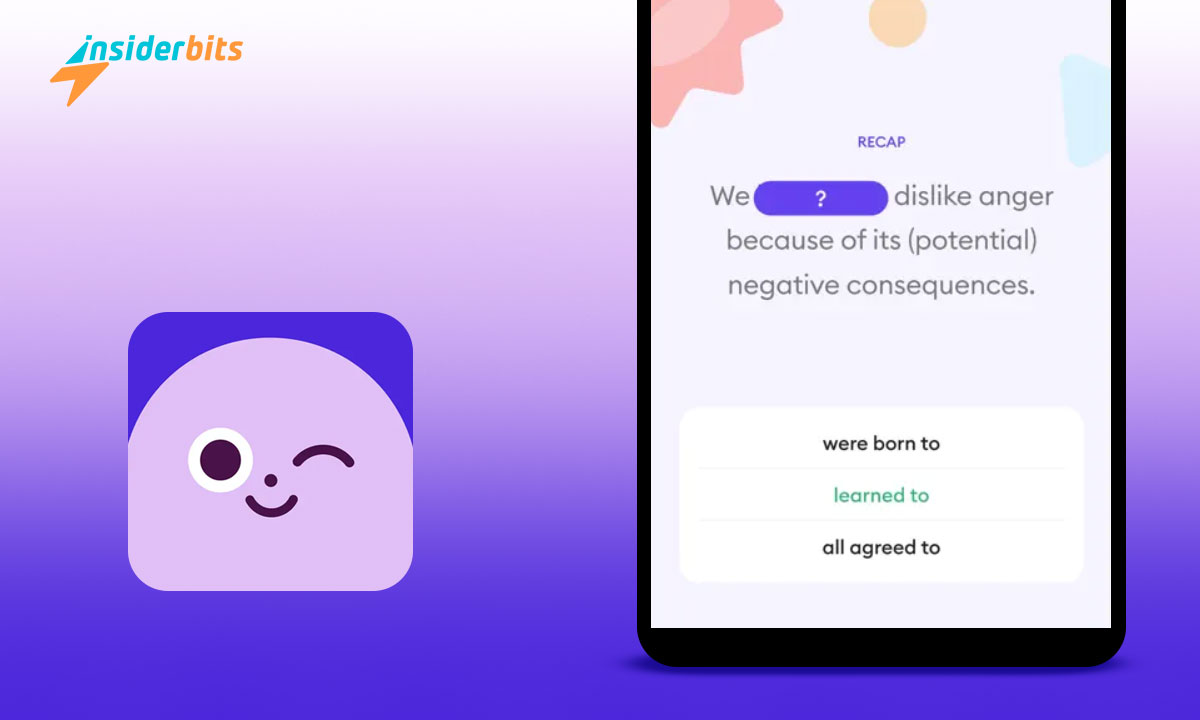
Duolingo’s Ahead App platform is an excellent alternative for maximizing, understanding, and treating emotional intelligence. This application will give you all the necessary tools to transform your behavior in different situations.
At Insiderbits, we will teach you how to use the application and its primary functions, advantages, and disadvantages. So don’t wait any longer; start reading this exciting post; it will surely benefit you.

4.7/5
Transforming emotional intelligence is now easier with the Ahead App
Improving and transforming emotional intelligence to lead an entire and productive life is essential. To make this process a reality, you already have it in the application store with the Ahead App.
The platform was created to provide users with the necessary resources to learn how to manage their emotional states. All the tools are suitable for adults and children; you can best use them wherever you want.
Duolingo Ahead App allows you to customize activities according to your needs. It also teaches you how to solve problems without risking your emotions.
Likewise, you will learn to control emotional reactions and strengthen your security to be a better person every day. To make all this possible, you have lessons and spaces to reflect on and follow up on your processes.
Download the Ahead App from your device’s app store
So that you can start managing and controlling your emotions now, we are going to explain how to download the application at Insiderbits. If you have an Android device, enter the Play Store and write the application’s name in the search bar.
When you find it, click on Install next so that the platform starts the download process on the device. Subsequently, once the installation is complete, access the app to learn about the different functions available.
If you have a mobile device with an iOS operating system, the process is similar to that executed with Android. The only difference is that you must authenticate your identity through the Touch ID tool or password.
It is worth noting that you must have a good internet connection so the process can be carried out more quickly. In addition, provide data from your Google or Apple account for greater security.
App Features
Within the Duolingo tool for emotional intelligence, you can find the following functions, from which you can get a lot of use:
- Personalized activities. These lessons or tasks are formulated to help you achieve emotional stability in a short time.
- Scientifically proven techniques. These consist of providing the user with the tools to confront and overcome emotions that are not helpful.
- Dynamic reflections. This function lets you stimulate your emotions and detect areas where you should work more.
- Instruments for managing emotions. This feature provides personalized tools to control the feelings that arise in each situation.
- Follow-up. At this point, you will be able to control the entire process within the app in detail.
- User community. This application lets you share your experiences, progress, and concerns with others.
All these functions are focused on ensuring a pleasant and productive user experience. In addition, the application can be easily integrated into daily activities.
How to use the app?
Getting started with Ahead App is very simple. Follow a series of steps to begin the journey towards improving your emotions. Here we show you what you should do:
- The first step is to download the app from the application store and install it on your favorite device, such as a tablet or phone.
- Proceed to create a user; to do this, you must access the platform and register an account. You only need to provide basic personal information, such as email, phone number, and name.
- Once the account is created, the next step is to choose a trip that suits your needs. There are activities to control emotions and others to teach you to stay calm. These activities can also help you feel more confident in making decisions.
- Then, you must select interactive lessons; each day, the application presents you with a list where you can choose the one that best suits you.
- Reflection is another activity available on the platform. This function allows you to connect with your emotions and gives you the necessary tools to manage them and improve every day.
- Implement what you learn in the application into your daily routine and use the various practice tools it provides.
- Monitor your progress with the application’s help. Observe how you react by controlling your emotions to detect failures and apply the necessary changes quickly.
Finally, access the application’s community, where hundreds of users meet daily to discuss their achievements and ask for advice. Remember to familiarize yourself with the application before starting to get the most out of it.
How to download the Ahead App?
The installation process is not very different from any other app. You have to follow the following steps:
- Enter the app store
- Search for Ahead App in the search engine
- Click on the “install” or “download” button
- After a few seconds, it is time to open the app that has been installed
- Start enjoying the app
- It is a simple process that can be completed in a few minutes so you can start having fun.
4.7/5
Advantages and disadvantages of Ahead App
We have identified various advantages and disadvantages within this versatile and educational application. Among them, we can mention the following:
| Advantages | Disadvantages |
| It provides the tools and mechanisms necessary for managing and controlling emotions. | For some people, the activities it offers may be straightforward. |
| It provides interactive lessons for users to expand their emotional skills. | The platform needs to adapt to the requirements of some users fully. |
| The user can keep personalized control of progress and improvements. | The interaction is different from that obtained with experts in emotion control. |
| It is helpful to improve your self-confidence. | It is not helpful for severe emotional management. |
As you can see, Ahead App has various advantages and disadvantages that you must analyze before downloading to your device. Likewise, allowing you to draw your conclusions doesn’t hurt.
Importance of Ahead App
At Insiderbits, we have concluded that the Duolingo Ahead App has the means and activities to help people. It has the essential functions and activities to improve the control of mild emotions.
Some of the benefits obtained with this application are developing skills and abilities and a better emotional environment. It also offers the opportunity to develop self-awareness and empathy, manage stress, and expand social skills.
Best of all, as a user, you have the advantage of interactive support, which improves the development and treatment of emotional intelligence.
What did you think of this application to maximize your emotions?
At Insiderbits, we hope all the information about this dynamic application will be helpful. Because it allows you to learn to control, treat, and express your emotions.
After conducting a personal analysis, it is only up to you to download it to your device. In addition, we take advantage of inviting you to the Insiderbits platform, where you will find more articles of interest.