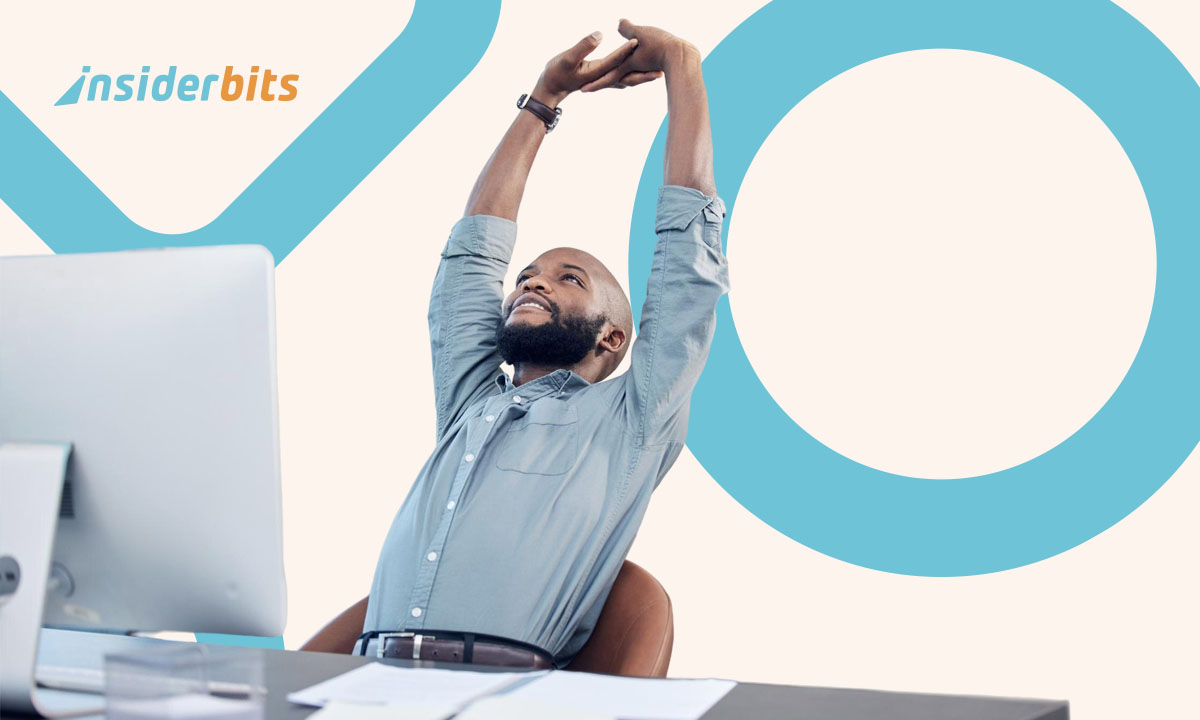
Why sitting too long impacts your body
Sitting too long chips away at your posture. Your spine compresses. Muscles lock up. That subtle neck tug or wrist tingle builds into something harder to shake off.
Even quick breaks stop helping when your body is stuck in the same hunched shape all day. Over time, that discomfort becomes part of your routine without warning.
That’s where Insiderbits steps in with solutions worth your time. Desk stretches can interrupt the spiral and bring real relief before the tension becomes something you carry everywhere.
Desk stretches: easy routines to reduce pain
Desk stretches help undo the wear that builds up while you work. These quick movements reduce pressure, wake up your posture, and make sitting for hours feel less punishing:
- Roll your shoulders backward in slow circles while breathing deeply. This quick reset opens your chest and breaks the buildup of upper back and neck tension at your desk;
- Tilt your head side to side and gently stretch the sides of your neck. This simple move helps reduce stiffness from leaning forward while looking at screens;
- Straighten one arm and pull back the fingers with your opposite hand. Great for releasing tight wrists after nonstop typing or phone scrolling throughout the day;
- Sit tall and twist your torso by holding your chair’s backrest. This movement activates your spine and relieves lower back pressure that sneaks in after long seated hours;
- Lift each leg one at a time and hold it out straight. A small action like this helps circulation and gives your legs a quick boost without standing.
PRO ADVICE: USE STRETCHES TO RESET YOUR BREATHING
Tension changes how you breathe. Most people begin shallow breathing when sitting for too long. Pair each stretch with deep inhales and long exhales. This not only helps muscles release more easily but also lowers stress. Even one deep breath during a neck tilt makes a difference. Use stretches as a reminder to reset your breathing rhythm throughout the workday.
What You’ll Need
Desk stretches work best when you’re set up for it. These quick habits and tools keep things comfortable, practical, and effective while helping you stay consistent every day.

A chair with back support
Helps align your spine and keeps your posture stable while you move gently.

A few minutes of free time
Just two to five minutes is enough to reset and recharge regularly.

A phone or timer nearby
Reminds you to pause and stretch throughout the day at regular intervals.

A water bottle within reach
Hydration supports muscle recovery and helps reduce cramps or fatigue after stretching.

Supportive shoes or bare feet
Grounds your movements and improves balance for stretches involving lower body effort.

Willingness to listen to your body
Tells you when to pause or shift stretches based on how you feel.
WARNING: PUSHING TOO HARD CAN BACKFIRE
Stretching is not about forcing movement. If you feel sharp pain or discomfort, that’s your body telling you to stop. Overstretching can strain muscles and worsen tension instead of relieving it. Always ease into the motion and breathe through it. Gentle pressure is enough. You’re looking for release, not resistance. The goal is comfort and recovery, not turning your desk into a gym.
Conclusion
Hours at your desk do not have to drain your focus or tighten your back. With consistent stretches, your body stays alert and your mind stays ready to perform. Insiderbits brings practical tools that actually help during the moments you usually ignore. Skip the strain and stay ahead by moving with purpose. Your next stretch might change how you work entirely.
FAQ
How often should I do desk stretches during the workday?
Stretch every one to two hours for the best results. Short breaks keep your muscles active and prevent stiffness from building up quietly while you sit.
Can desk stretches help with back or shoulder pain?
Yes, they can bring real relief. Gentle movements release built-up tension and improve posture, which often reduces the pressure that causes nagging shoulder or lower back pain.
Do I need equipment to perform desk stretches?
No special gear is required. Most stretches use your body weight and chair. All you need is a few clear minutes and a bit of space around you.
Are desk stretches safe for beginners?
They are designed to be gentle and beginner-friendly. Listen to your body, move slowly, and never force positions. Ease into each stretch and adjust based on comfort level.
Which desk stretches are best for long hours at the computer?
Focus on shoulder rolls, neck tilts, wrist pulls, and seated spinal twists. These target the muscles most affected by computer use and help you stay more comfortable throughout.