Water is a primary need of our body to function properly and yet we consume less of it. 78% of adults consume 7 or fewer cups of water a day as per the Food Attitudes and Behaviors Survey by National Cancer Institute.
To make matters worse, the average life has picked up the pace so much that we are barely conscious about our water consumption. This needs to be changed for the better.
That is why, our team at Insiderbits has come up with 5 best water reminder apps that keep your water drinking goal in check. So, rather than being at the mercy of your consciousness, they act as your assistant who makes sure you drink water enough. Here are they:
5 Best Water Reminder Apps
1. Water Reminder
Notable features:
- Calculate your daily water intake goal based on your gender and weight
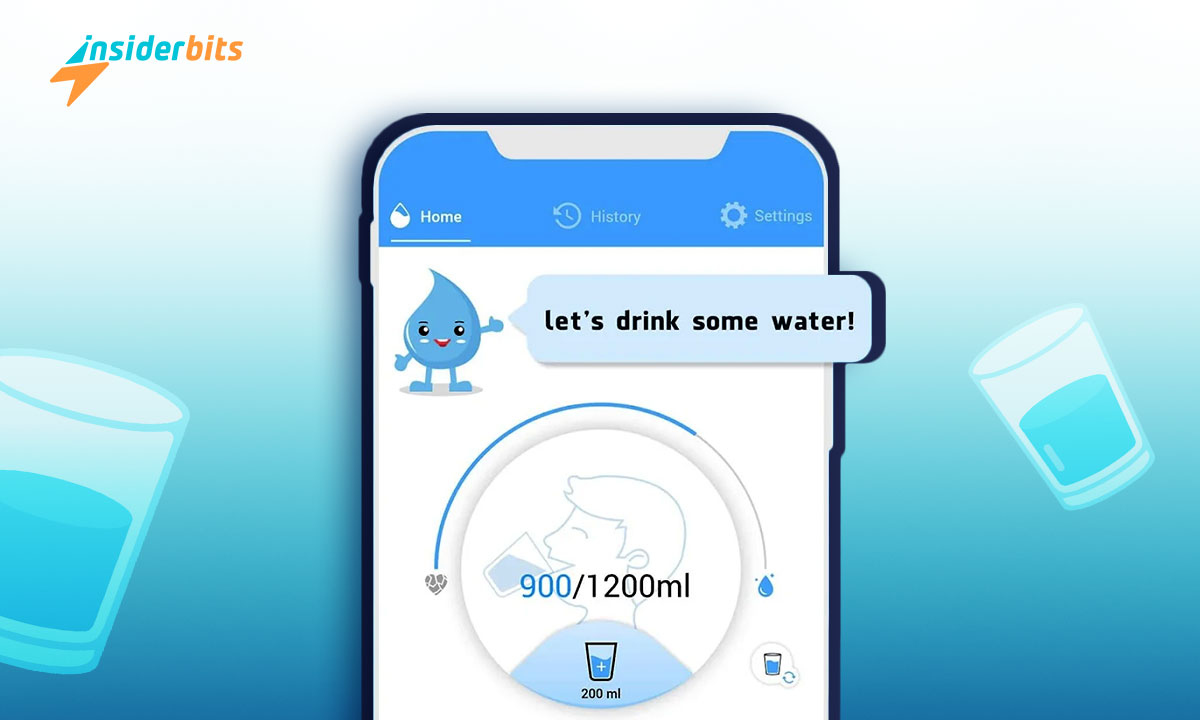
- See water intake progress with human body graphics
- Get a diverse menu of nearly 20 different drinks
- Record water consumption by week, month, and year
Water Reminder is a simple app designed to remind you consistently to stay hydrated by tracking your daily water intake. However, it isn’t about making everyone gulp down the same amount of water every day. This app gives all a personalized recommendation on water goals based on the user’s weight and gender.
You can choose the size of your cup aka the amount of water you will consume each time (100 ml, 200 ml, etc.), and set your number of daily reminders accordingly to meet your goal. Water Reminder also gives you reports to show your daily water consumption.
4.8/5
2. Water Drink Reminder
Notable features:
- Reminds you when and how much water to drink
- Syncs weight and drink water data with Google Fit and S Health
- Set start and end times for daily water intake
- Compatible with Android Wear OS devices
Available on: Android
Water Drink Reminder is a highly rated app featured as the best health app in over 30 countries and among the top 5 in over 90 countries by Google Play. Its purpose is simple – to remind you to drink enough water to keep your skin healthy and help you lose weight.
Just enter your current weight and it will automatically calculate how much water your body needs daily. Then update the app whenever you drink water to remind you when it is time to intake more water. It will also make sure to remind you to drink water only during your wake time.
4.8/5
3. Water Reminder – Daily Tracker
Notable features:
- Create and adjust drink volumes as per your personal preference
- Set notifications based on your waking and sleeping times
- Track your daily nutrition values
- Track your water consumption for the past day, week, and month
Available on: iOS
Water Reminder by VGFIT is straightforward. It will help you calculate the amount of water your body needs, track your daily water intake, and regularly remind you to drink water for enough hydration. It not only sends personalized notifications but also allows you to customize drink volumes and set notification intervals.
It supports imperial and metric units and integrates well with HealthKit – Apple’s framework to access health data – to provide nutritional information to the Apple Health app. Water Reminder’s premium plan offers you an ad-free experience with an app widget, unlimited access to all drinks, and more.

4.7/5
4. BeWet: Drink Water Reminder
Notable features:
- Set a daily water goal personalized as per your weight
- Adjust water targets based on weather and your physical activity
- Monitor different drinks and their hydration indices
- Track weight and body mass index
Available on: Android
BeWet understands the importance of water in our bodies. That is why it was created to be a perfect solution for those who want to lose weight, maintain an ideal water balance, or improve their metabolism. It works as a convenient reminder to all to drink water on time and in sufficient quantities.
However, it doesn’t track just plain water. This app also overlooks your consumption of other beverages such as tea, coffee, juice, and milk, and their hydration indices to calculate water saturation correctly. BeWet further provides you with a weight and BMI tracker to show your progress in losing weight.

4.8/5
5. Water Tracker – Hydro Coach
Notable features:
- Personalize water goals based on age, weight, lifestyle, and current weather
- Set motivating reminders for various beverages
- Syncs with Fitbit, Samsung Health, and Google Fit
- Stay motivated with statistics and achievements
Available on: Android
Recommended by CNN, Everyday Health, Vogue, and Healthline, Hydro Coach is another great choice for a water tracker and drink reminder. But it is more than just that by providing you with essential support for better health, fitness, and well-being.
Its water goal calculator is as personalized as it can get because it also accounts for your lifestyle and weather on top of your age and weight. Hydro Coach motivates you as well with special achievements like “Hydrated as a Penguin” or “Hydrated as a Whale”.

4.6/5
Related: Track Your Daily Stepcount With These 5 Best Pedometer Apps
Conclusion
The benefits of drinking enough water a day are immense. It helps you lose weight, improve your skin, energize muscles, overcome fatigue, and much more. So, why not have it enough when it is essentially free? Any of these 5 apps will help you make this crucial change. Try them now.